GE DS200TCQAG1ADC: Industrial Data Link and Smart Factory Connectivity in Mark V Turbine
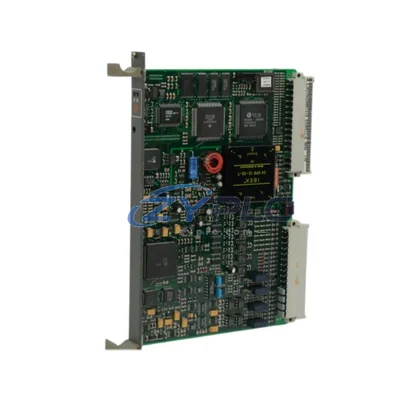
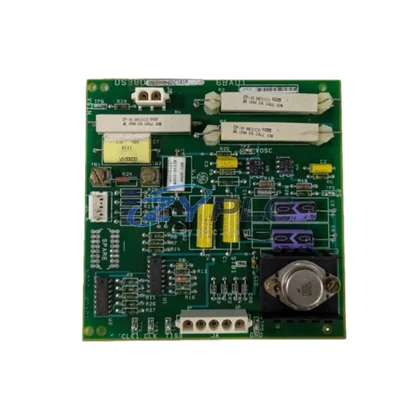
The GE DS200TCQAG1ADC is a precision-engineered termination board designed for deployment within GE’s Mark V Speedtronic turbine control platform. Far from a passive wiring interface, this board occupies a critical node in the industrial data chain — bridging field-level signal inputs with the high-speed backplane communication of the Mark V control system. In modern industrial environments where data integrity, system uptime, and real-time diagnostics are non-negotiable, the DS200TCQAG1ADC delivers the structural reliability that keeps turbine control architectures performing at specification.
Understanding the DS200TCQAG1ADC requires viewing it not as a standalone component, but as an active participant in a layered automation hierarchy. From the moment a thermocouple, pressure transmitter, or proximity sensor generates a signal at the field level, that data must travel through a reliable termination interface before it can be processed, acted upon, or transmitted upstream to SCADA or HMI systems. The DS200TCQAG1ADC is precisely that interface — ensuring signal fidelity, reducing noise susceptibility, and maintaining the electrical integrity that the Mark V processor boards depend on for accurate turbine state assessment.
Compatibility & Integration Notes
| Attribute |
Specification |
| Product SKU |
DS200TCQAG1ADC |
| Brand / Manufacturer |
GE (General Electric) |
| Series |
Mark V Speedtronic Turbine Control |
| Product Type |
Termination Board |
| System Role |
Field Signal Termination & I/O Interface |
| Protocol Support |
Mark V internal backplane communication; compatible with Modbus RTU upstream via Mark V gateway modules |
| Interface Type |
Terminal block field wiring; backplane connector to Mark V rack |
| Signal Compatibility |
Analog inputs (4–20 mA, thermocouple, RTD), discrete I/O |
| Network Compatibility |
Mark V rack architecture; integrates with SCADA via DS200TCPSG1A or equivalent communication boards |
| Operating Environment |
Industrial panel / control cabinet; rated for turbine plant environments |
| Mounting |
Mark V rack-mount, standard GE Speedtronic form factor |
| Origin |
USA |
| Warranty |
Warranty and support terms confirmed before quote |
| Availability |
Verified Availability confirmed by RFQ; pre-shipment functional testing included |
Connected Automation Data Flow
In a fully integrated Mark V turbine control system, the DS200TCQAG1ADC sits at the convergence point between the physical process and the digital control layer. Field instruments — including thermocouple assemblies, vibration sensors, speed pickups, and 4–20 mA pressure transmitters — connect directly to the termination board’s screw-terminal field wiring interface. From there, conditioned signals pass through the backplane to processor boards such as the DS200TCDAG1AAA (TCDA I/O processor) or the DS200TCEAG1BHF (TCEA analog I/O board), where real-time turbine state calculations are performed.
The Mark V architecture is built around a triple-redundant TMR (Triple Modular Redundancy) design. In this configuration, the DS200TCQAG1ADC works in concert with redundant I/O boards and voting logic processors — including the DS200TCPSG1ARE power supply board — to ensure that no single point of failure can interrupt turbine protection or control. The termination board’s role in maintaining clean, consistent signal paths is therefore directly tied to the reliability of the entire redundancy scheme.
Upstream from the Mark V processor layer, communication gateway modules such as the DS200TCQCG1A or dedicated Modbus/TCP interface cards translate the internal Mark V data bus into standard industrial protocols. This enables real-time turbine data — shaft speed, exhaust temperature, vibration amplitude, fuel valve position — to be transmitted to plant-level SCADA systems (such as GE iFIX, Wonderware, or Ignition-based platforms) and operator HMI stations. The DS200TCQAG1ADC’s signal integrity at the field termination layer is what makes this entire upstream data chain trustworthy.
In plants where the Mark V system is integrated with a distributed control system (DCS) or plant information network, the termination board also plays a role in ensuring that analog signal ranges are correctly mapped and that wiring shield grounds are properly managed — preventing ground loops that could corrupt sensor readings and trigger false alarms in the SCADA alarm management layer. Alongside components like the DS200TCRAG1AAA relay output board and the DS200TCTSG1A terminal board, the DS200TCQAG1ADC forms part of a coherent, maintainable I/O subsystem that field engineers can troubleshoot and replace without disrupting the broader control architecture.
For plants operating mixed-generation turbine fleets, the DS200TCQAG1ADC also supports phased migration strategies. As older Mark IV systems are upgraded to Mark V or Mark VIe, the consistent termination board form factor allows wiring harnesses to be reused, reducing retrofit engineering costs and minimizing outage windows. When paired with a Mark VIe UCVEH controller and appropriate I/O packs, the termination board’s field wiring interface can be adapted to the newer platform with minimal re-engineering.
Solving Data Isolation in Industrial Sites
One of the most persistent challenges in turbine plant operations is data isolation — the condition where critical process data exists at the field level but cannot be efficiently accessed, aggregated, or acted upon by plant management systems. The DS200TCQAG1ADC directly addresses this challenge by providing a reliable, low-resistance signal path from field instruments into the Mark V control system, where data becomes available for both real-time control and upstream reporting.
Protocol fragmentation is another common issue in aging turbine plants. Many facilities operate a mix of legacy 4–20 mA analog loops, discrete relay outputs, and newer digital fieldbus devices. The DS200TCQAG1ADC’s multi-signal termination capability allows engineers to consolidate these diverse signal types into a single, organized interface — reducing panel wiring complexity and making future protocol upgrades more manageable.
Remote monitoring and diagnostics are increasingly demanded by plant operators seeking to reduce on-site maintenance visits and extend mean time between failures (MTBF). By ensuring that the DS200TCQAG1ADC maintains clean signal termination, plants can rely on the accuracy of remote diagnostic data transmitted to SCADA dashboards — enabling condition-based maintenance scheduling rather than time-based overhauls. This is particularly valuable in remote power generation sites, offshore platforms, and pipeline compression stations where on-site engineering resources are limited.
Production line transparency — the ability to see real-time turbine performance data across an entire fleet — depends on every node in the data chain performing reliably. A degraded termination board can introduce signal noise, offset errors, or intermittent faults that are difficult to diagnose and can mask genuine equipment problems. Replacing aging or suspect DS200TCQAG1ADC boards with verified, tested units is a cost-effective way to restore data confidence across the entire monitoring architecture.
System expansion in Mark V installations — adding new measurement points, integrating additional turbine units, or extending the control system to cover auxiliary equipment — always begins at the termination layer. Having a reliable supply of DS200TCQAG1ADC boards in inventory ensures that expansion projects can proceed on schedule without waiting for long-lead procurement cycles.
Product Compatibility FAQ
Q1: Is the DS200TCQAG1ADC compatible with both Mark V TMR and Mark V simplex configurations?
Yes. The DS200TCQAG1ADC is designed for use within the GE Mark V Speedtronic platform and is compatible with both Triple Modular Redundancy (TMR) and simplex system configurations. In TMR systems, multiple termination boards are used in parallel voting architectures; in simplex systems, a single board handles all field terminations for the associated I/O channel group. Always verify the specific rack slot assignment and cable harness configuration against your system’s wiring diagrams before installation.
Q2: How does the DS200TCQAG1ADC support SCADA and HMI integration in a Mark V system?
The DS200TCQAG1ADC itself is a field termination interface and does not directly handle SCADA communication — that function is performed by dedicated communication boards within the Mark V rack. However, the termination board’s role in maintaining signal accuracy is foundational to SCADA data quality. Accurate field signals processed through the DS200TCQAG1ADC are transmitted via the Mark V backplane to communication modules, which then relay data to SCADA platforms via Modbus RTU, Modbus/TCP, or proprietary GE protocols. Any degradation at the termination layer will propagate as data errors in the SCADA historian and alarm system.
Q3: What pre-shipment testing is performed on the DS200TCQAG1ADC, and what does the Warranty and support terms confirmed before quote cover?
Every DS200TCQAG1ADC unit shipped by ZYPLC undergoes functional verification testing prior to dispatch, including continuity checks, terminal block integrity inspection, and backplane connector examination. The Warranty and support terms confirmed before quote covers manufacturing defects and functional failures under normal operating conditions. It does not cover damage resulting from incorrect installation, overvoltage events, or physical mishandling. Warranty claims are supported by our technical team at plc.sales@zyplc.com, with replacement or repair turnaround coordinated to minimize plant downtime.
Q4: What is the typical lead time, and do you confirm availability by RFQ for urgent turbine outage requirements?
ZYPLC maintains verified Availability confirmed by RFQ inventory of the DS200TCQAG1ADC to support urgent turbine outage and planned maintenance requirements. Standard orders are dispatched within 1–3 business days via DHL or FedEx international express, with tracking provided. For emergency outage situations requiring same-day or next-day dispatch, please contact our team directly at +86 19859288691 to confirm availability and arrange priority shipping.