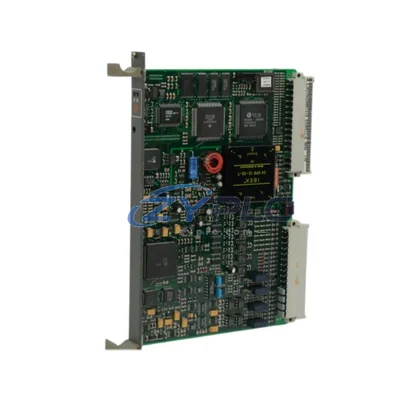
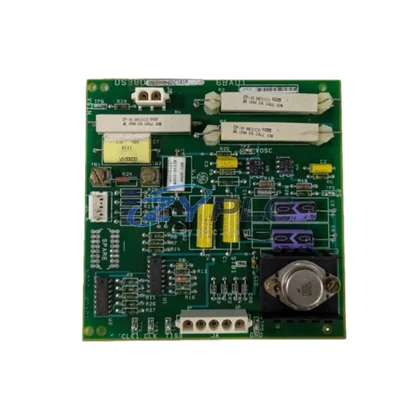
GE DS200TCQEG2AED Turbine Control Board for Mark V
The GE DS200TCQEG2AED is a precision-engineered turbine control board designed as a core functional layer within the GE Mark V control system architecture. Rather than operating as a standalone component, the DS200TCQEG2AED is purpose-built to integrate seamlessly across the control layer, I/O layer, power layer, and communication layer of a complete turbine automation system. Its role is to ensure signal integrity, coordinated control response, and long-term operational stability across the entire Mark V platform — from field instrumentation through to supervisory control.
In a layered Mark V architecture, the DS200TCQEG2AED occupies a critical position in the turbine control signal chain. It interfaces directly with the DS200 I/O subsystem, receiving analog and digital signals from thermocouples, pressure transmitters, speed sensors, and vibration probes mounted on the turbine skid. These signals are conditioned, processed, and forwarded to the Mark V CPU modules — typically the DS200TCDAG1A or DS200TCDAG1AED — which execute the turbine protection and sequencing logic. The DS200TCQEG2AED acts as the bridge between raw field data and the deterministic control decisions that govern turbine startup, load ramp, trip response, and shutdown sequences.
At the power layer, the DS200TCQEG2AED operates in coordination with the DS200 power supply modules, which provide regulated DC voltages to the control boards and I/O racks. Stable power delivery is essential for the board’s analog signal conditioning circuits, and the Mark V architecture is designed to support redundant power feeds to eliminate single points of failure. When paired with a redundant power module configuration, the DS200TCQEG2AED maintains continuous operation even during power supply switchover events — a critical requirement in gas turbine and steam turbine applications where unplanned trips carry significant operational and financial consequences.
The communication layer of the Mark V system connects the DS200TCQEG2AED’s processed data to higher-level systems. The Mark V uses the ARCNET communication protocol for inter-panel data exchange, allowing the DS200TCQEG2AED’s outputs to be shared with the Mark V HMI workstation, the DS200 DSPX processor board, and remote SCADA platforms. In modern retrofit environments, the Mark V communication gateway — such as the DS200TCQCG1A — bridges ARCNET data to Ethernet-based SCADA and DCS systems, enabling real-time turbine performance monitoring, alarm management, and remote diagnostics without replacing the core Mark V hardware.
At the human-machine interface layer, operators interact with DS200TCQEG2AED-processed data through the Mark V HMI, which displays turbine speed, exhaust temperature spreads, vibration levels, and control mode status. The HMI’s alarm and event logging functions rely on the accuracy and timeliness of the data delivered by the DS200TCQEG2AED, making board health a direct factor in operator situational awareness. In facilities running GE’s Cimplicity SCADA platform, the DS200TCQEG2AED’s data stream feeds into trend historians and performance dashboards that support predictive maintenance programs.
From a system redundancy perspective, the DS200TCQEG2AED is typically deployed in a TMR (Triple Modular Redundancy) or dual-redundant Mark V panel configuration. In TMR systems, three independent control paths — each containing a DS200TCQEG2AED or equivalent board — vote on control outputs, ensuring that a single board failure does not result in a turbine trip or unsafe condition. This architecture is standard in critical power generation and petrochemical applications where availability requirements exceed 99.9%. The DS200TCQEG2AED’s design supports this redundancy model, with board-level diagnostics that allow the Mark V system to detect and flag a degraded board while the remaining channels maintain control.
For maintenance engineers, the DS200TCQEG2AED supports a structured replacement and commissioning workflow. Board swap procedures within the Mark V architecture are well-documented, and the DS200TCQEG2AED is designed for hot-swap compatibility in redundant panel configurations. After installation, the Mark V system performs automatic self-diagnostics, verifying board communication, I/O channel integrity, and power rail status before returning the replaced channel to active control. This minimizes commissioning time and reduces the risk of human error during maintenance windows.
Every DS200TCQEG2AED supplied by ZYPLC undergoes pre-shipment functional testing, verifying board communication, signal conditioning accuracy, and power consumption within GE Mark V specification limits. Units are shipped with full anti-static packaging and are Warranty terms are confirmed during quotation.
Product Specification Table
| Specification |
Details |
| System Role |
Turbine Control Signal Processing Board — Mark V Control Layer |
| Compatible Series |
GE Mark V Turbine Control System (DS200 Series) |
| Key Function |
Analog/digital signal conditioning, turbine I/O coordination, control layer integration |
| Communication Protocol |
ARCNET (Mark V inter-panel); gateway-compatible with Ethernet/Modbus via DS200 gateway modules |
| Redundancy Support |
TMR (Triple Modular Redundancy) and dual-redundant Mark V panel configurations |
| Power Requirements |
Regulated DC supply via Mark V DS200 power supply modules |
| Operating Environment |
Industrial control panel; temperature and humidity per GE Mark V environmental specifications |
| Signal Compatibility |
Thermocouple, RTD, 4–20 mA analog, discrete digital I/O |
| Installation |
Mark V panel rack-mount; board-level hot-swap in redundant configurations |
| Warranty |
Warranty and support terms confirmed before quote — pre-shipment tested, anti-static packaged, global DHL/FedEx shipping |
System Compatibility Notes
The DS200TCQEG2AED does not function in isolation — its value is realized through its coordinated role within a complete Mark V control system. In a typical gas turbine control panel, the DS200TCQEG2AED works alongside the DS200TCDAG1A CPU board, which executes the turbine protection and sequencing algorithms. The CPU board relies on the DS200TCQEG2AED to deliver conditioned, validated signal data from the field, ensuring that control decisions are based on accurate real-time inputs rather than raw, unprocessed sensor signals.
The DS200 I/O terminal boards — including the DS200TCEAG1A and DS200TCRAG1A — connect field wiring to the Mark V panel and route signals to the DS200TCQEG2AED for processing. In the power layer, the DS200 power supply module maintains the regulated voltages required by the DS200TCQEG2AED’s analog circuits, while the DS200TCQCG1A communication gateway bridges the Mark V’s ARCNET network to external Ethernet-based SCADA and DCS systems. At the HMI layer, the Mark V operator workstation displays the processed turbine data, with alarm and event records that trace directly to the signal quality delivered by the DS200TCQEG2AED.
In steam turbine applications, the DS200TCQEG2AED integrates with the DS200EXPSG1A expansion board to extend the I/O capacity of the Mark V panel, supporting additional thermocouple inputs for exhaust temperature spread monitoring. In combined-cycle plants, the board’s data feeds into the plant DCS — often a GE Speedtronic or third-party Honeywell or ABB system — via the Mark V communication gateway, enabling unified plant-wide monitoring and coordinated control between the gas turbine, steam turbine, and heat recovery steam generator (HRSG) systems.
Industrial Application Notes
The DS200TCQEG2AED is deployed across a wide range of industrial sectors where GE Mark V turbine control systems are in service. In power generation — including gas-fired peaker plants, combined-cycle facilities, and cogeneration plants — the board supports turbine protection, load control, and emissions compliance monitoring. Its signal conditioning accuracy is critical for exhaust temperature spread calculations, which are used to detect combustion anomalies and prevent hot-section damage.
In the oil and gas sector, the DS200TCQEG2AED is found in gas compression stations, LNG facilities, and offshore platforms where GE Frame 5, Frame 6, and Frame 7 gas turbines drive compressors and generators. The board’s TMR-compatible design supports the high-availability requirements of these facilities, where unplanned turbine trips can result in production losses measured in millions of dollars per day. In petrochemical plants, the DS200TCQEG2AED supports continuous process turbines driving critical rotating equipment, where the Mark V system’s reliability directly impacts plant throughput and safety.
In the mining and metals sector, GE Mark V systems control turbine-driven blowers, compressors, and generators at smelters and mineral processing facilities. The DS200TCQEG2AED’s robust design supports operation in high-vibration, high-temperature environments typical of these facilities. In water and wastewater treatment, turbine-driven pumping systems equipped with Mark V controls rely on the DS200TCQEG2AED for reliable signal processing across extended operating cycles with minimal maintenance intervention.
Product Compatibility FAQ
Q1: Is the DS200TCQEG2AED compatible with all Mark V panel configurations, including TMR and simplex systems?
A: Yes. The DS200TCQEG2AED is designed for use in both simplex and TMR Mark V panel configurations. In TMR systems, three boards operate in parallel with voted outputs, providing fault tolerance at the board level. In simplex configurations, the board operates as the single control channel, with Mark V diagnostics monitoring board health and flagging faults for maintenance action. Compatibility should be verified against the specific Mark V panel revision and software version in use at your facility.
Q2: What is the commissioning procedure after replacing a DS200TCQEG2AED in a live Mark V system?
A: In redundant Mark V configurations, the DS200TCQEG2AED can be replaced with the turbine online, following GE’s board swap procedure. After installation, the Mark V system performs automatic self-diagnostics, verifying board communication, I/O channel integrity, and power rail status. The replaced channel is returned to active control after successful diagnostics. In simplex configurations, a controlled turbine shutdown is required before board replacement. ZYPLC recommends consulting the Mark V maintenance manual and engaging a qualified GE controls engineer for commissioning support.
Q3: What warranty and quality assurance does ZYPLC provide for the DS200TCQEG2AED?
A: Every DS200TCQEG2AED supplied by ZYPLC is covered by a Warranty and support terms confirmed before quote from the date of shipment. Prior to dispatch, each unit undergoes functional testing to verify board communication, signal conditioning performance, and power consumption within GE Mark V specification limits. Units are packaged in anti-static materials and shipped via DHL or FedEx with full tracking. ZYPLC supports RFQ-based sourcing of DS200 series boards to support urgent maintenance requirements, with same-day or next-day dispatch available for RFQ-confirmed units.