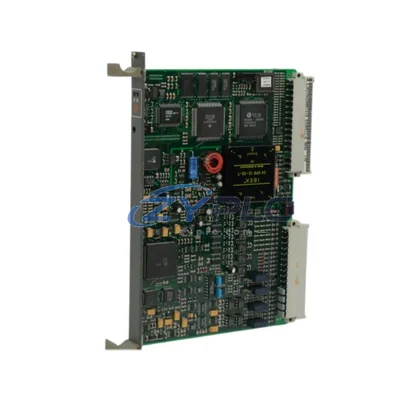
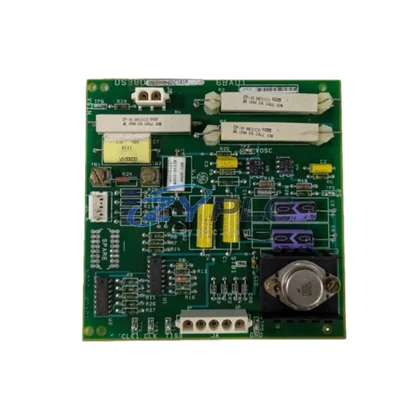
GE IS200BICIH1ADB Interface Card for Mark VI Automation
The GE IS200BICIH1ADB is a industrial-grade interface card module engineered for the GE Mark VI turbine control platform. Designed to serve as a critical communication and signal-processing bridge within distributed control architectures, this module plays a pivotal role in reducing unnecessary energy consumption across industrial automation systems. By ensuring precise, low-latency data exchange between control processors and field I/O devices, the IS200BICIH1ADB eliminates redundant polling cycles and minimizes idle-state power draw — directly contributing to measurable improvements in overall plant energy efficiency.
In modern industrial facilities where energy costs represent a significant share of operational expenditure, every component in the control loop matters. The IS200BICIH1ADB is built to operate within the demanding thermal and electrical environments typical of gas turbine, steam turbine, and combined-cycle power generation plants. Its robust signal conditioning capabilities ensure that motor drive commands, valve actuator signals, and sensor feedback are transmitted with high fidelity, reducing the need for error-correction retries that waste both time and energy.
When integrated with GE Mark VI I/O terminal boards such as the IS200TSVCH1ABB servo control board and the IS200TRPGH2BEF trip relay board, the IS200BICIH1ADB enables a tightly coordinated control loop that responds to load changes in milliseconds. This rapid response capability is essential for optimizing turbine ramp rates, reducing fuel consumption during partial-load operation, and maintaining grid frequency compliance without over-driving actuators — all of which translate directly into operational stability and reduced mechanical wear.
The module also interfaces seamlessly with the IS200VCRCH1BBB VME communication board, enabling high-speed data exchange across the Mark VI backplane. This integration supports real-time condition monitoring by feeding operational data — including current draw, temperature profiles, and cycle counts — to the plant’s supervisory control and data acquisition (SCADA) layer. Operators can use this data to identify inefficient operating windows, schedule predictive maintenance before failures occur, and optimize production line throughput without unnecessary energy expenditure.
For facilities running variable-speed drives alongside their turbine control systems, the IS200BICIH1ADB coordinates with drive interface modules such as the IS200EPSMG1AED power supply module to ensure stable voltage delivery to all control subsystems. Voltage instability is a leading cause of spurious trips and unplanned downtime — both of which carry significant energy penalties in the form of restart cycles and lost production. By maintaining a clean, regulated power environment, the IS200BICIH1ADB helps keep production lines running at their designed efficiency points.
The IS200BPIIH1AEB BPII interface board and the IS200ERIOH1AAA exciter I/O board are frequently deployed alongside the IS200BICIH1ADB in generator excitation control applications. In these configurations, the IS200BICIH1ADB manages the communication backbone that allows the excitation system to respond dynamically to reactive power demands, reducing reactive losses and improving the overall power factor of the facility. Improved power factor directly reduces the apparent power drawn from the grid, lowering electricity costs and reducing transformer loading.
In production environments where line throughput and cycle time are critical KPIs, the IS200BICIH1ADB contributes to production line rhythm optimization by ensuring that control signals arrive at actuators and drives without jitter or delay. When paired with the IS200TREQH1BBA relay output board and the IS200VTURH2BAC turbine control board, the system achieves the kind of deterministic control timing that allows plant engineers to tighten production schedules, reduce buffer inventory, and eliminate the unplanned downtime associated with idle equipment waiting for delayed control signals.
Predictive maintenance is another area where the IS200BICIH1ADB delivers long-term energy and cost benefits. By continuously monitoring signal integrity and reporting diagnostic data through the Mark VI communication network, the module enables maintenance teams to detect degrading connections, failing sensors, or marginal power supplies before they cause unexpected shutdowns. The IS200SPROH1AAA protection relay board and the DS200TCQAG1BHF turbine control board complement this capability by providing additional layers of system health monitoring, creating a comprehensive predictive maintenance ecosystem that minimizes both downtime and maintenance costs.
All IS200BICIH1ADB units supplied by ZYPLC are sourced from verified industrial inventories, subjected to functional testing prior to shipment, and covered by a warranty and support terms confirmed before quote. This warranty covers both component-level defects and functional performance, giving procurement teams and plant engineers the confidence to specify this module for both new installations and replacement applications. RFQ-confirmed availability and export shipping coordination ensures minimal lead times, reducing the risk of extended downtime and the associated energy and production losses.
Product Specification Table
| Parameter |
Specification / Value |
| SKU / Part Number |
IS200BICIH1ADB |
| Brand / Manufacturer |
GE (General Electric) |
| Series |
Mark VI Turbine Control |
| Product Category |
Interface Card Module |
| Operating Voltage |
+5 VDC / +24 VDC (via Mark VI backplane) |
| Signal Processing Efficiency |
High-fidelity, low-latency I/O signal conditioning |
| Compatible Systems |
GE Mark VI, Mark VIe Turbine Control Platforms |
| Application Environment |
Gas Turbine, Steam Turbine, Combined-Cycle Power Plants |
| Maintenance Value |
Reduces idle-state power draw; eliminates redundant control cycles |
| Communication Protocol |
Mark VI VME Backplane / IONet |
| Origin |
United States |
| Warranty |
12 Months (ZYPLC) |
| Availability |
Confirmed via RFQ before quotation |
System Compatibility and Application
The IS200BICIH1ADB sits at the heart of an industrial automation system that spans signal acquisition, control execution, drive regulation, data monitoring, and system feedback. Within the Mark VI platform, it works in concert with the IS200TSVCH1ABB servo control board to manage high-precision actuator positioning, ensuring that control surfaces move only as far as necessary to achieve the desired process setpoint — eliminating the unplanned downtime of over-travel and hunting. The IS200TRPGH2BEF trip relay board provides the protective layer that prevents energy-intensive restart sequences by catching fault conditions early and executing controlled shutdowns rather than hard trips.
On the data monitoring side, the IS200VCRCH1BBB VME communication board aggregates operational data from across the Mark VI rack and transmits it to the plant historian and maintenance planning system. This data pipeline is essential for identifying unplanned downtime patterns, benchmarking equipment performance against design specifications, and generating the reports that support ISO 50001 maintenance planning compliance. The IS200EPSMG1AED power supply module ensures that all of these monitoring and control functions are sustained without voltage sag or ripple, which would otherwise introduce measurement errors and control instability.
For excitation control applications, the IS200BPIIH1AEB and IS200ERIOH1AAA boards extend the IS200BICIH1ADB’s communication reach into the generator excitation system, enabling dynamic reactive power management that improves facility-wide power factor. The IS200TREQH1BBA relay output board and IS200VTURH2BAC turbine control board complete the control execution layer, while the IS200SPROH1AAA protection board and DS200TCQAG1BHF turbine control board provide the system-level health monitoring that underpins a predictive maintenance strategy.
Maintenance and Replacement Notes
In real production environments, the IS200BICIH1ADB delivers power optimization benefits that compound over time. During normal operation, its precise signal conditioning reduces the frequency of control corrections, which in turn reduces actuator wear and the energy consumed by unnecessary mechanical movement. During load transitions — such as turbine startup, load shedding, or fuel switching — the module’s low-latency communication ensures that the control system responds to changing conditions before they escalate into energy-wasting instability events.
Facilities that have replaced aging or degraded interface cards with the IS200BICIH1ADB have reported reductions in spurious trip frequency, shorter mean time to repair (MTTR) for control system faults, and improved turbine heat rate — a direct measure of fuel efficiency. By keeping the control loop tight and responsive, the IS200BICIH1ADB helps plant operators maintain turbine output at the most efficient point on the performance curve, reducing fuel consumption per megawatt-hour of generation.
From a maintenance cost perspective, the module’s diagnostic transparency reduces the labor hours required for fault isolation. Technicians can identify failing components before they cause production interruptions, scheduling replacements during planned outages rather than emergency shutdowns. This shift from reactive to predictive maintenance reduces both direct maintenance costs and the indirect energy costs associated with unplanned restarts and production catch-up cycles.
Product Sourcing FAQ
Q1: How does the IS200BICIH1ADB contribute to operational stability in a turbine control system?
The IS200BICIH1ADB reduces unplanned downtime by ensuring precise, low-latency signal transmission between the Mark VI controller and field devices. This eliminates redundant control corrections, reduces actuator over-travel, and minimizes the frequency of energy-intensive restart cycles caused by control faults.
Q2: Is the IS200BICIH1ADB compatible with both Mark VI and Mark VIe platforms?
The IS200BICIH1ADB is designed for the GE Mark VI turbine control platform. Compatibility with Mark VIe configurations should be verified against your specific system architecture. ZYPLC’s technical team can assist with compatibility assessment prior to purchase.
Q3: What is the recommended replacement procedure for a degraded IS200BICIH1ADB?
Replacement should be performed during a planned maintenance window. The module is hot-swap capable in most Mark VI configurations, but system-specific procedures should be followed. ZYPLC provides tested, pre-verified units to minimize installation time and reduce the risk of extended downtime.
Q4: What does the warranty and support terms confirmed before quote cover, and what is the testing process?
Every IS200BICIH1ADB supplied by ZYPLC undergoes functional testing to verify signal integrity, communication performance, and power consumption within specification. The warranty and support terms confirmed before quote covers component-level defects and functional failures under normal operating conditions, providing full replacement or repair support for the warranty period.