GE IS200DSPXH2DBD Industrial Network Interface for Mark VI Systems: Bridging the Industrial Data Link
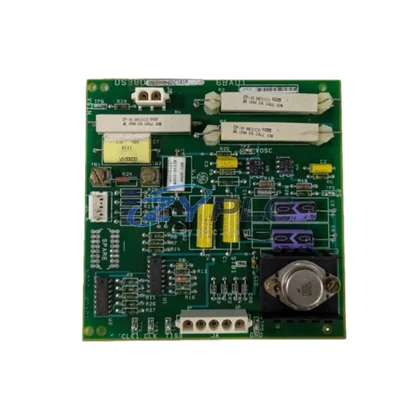
In modern smart factory environments, the integrity of the data link between field devices and supervisory systems determines the efficiency, safety, and uptime of the entire operation. The GE IS200DSPXH2DBD Digital Signal Processor Board is engineered to serve as a high-performance industrial network interface within GE’s Mark VI turbine control platform — delivering real-time signal acquisition, protocol-level communication, and seamless integration across distributed control architectures. Whether deployed in gas turbine power generation, combined-cycle plants, or heavy industrial automation, the IS200DSPXH2DBD anchors the data flow from physical sensors and actuators through to SCADA dashboards and enterprise-level monitoring systems.
The IS200DSPXH2DBD operates at the core of the Mark VI control system’s signal processing chain. It receives analog and digital inputs from field instrumentation — including thermocouples, pressure transmitters, vibration sensors, and proximity probes — and converts these raw signals into structured digital data that the Mark VI controller can process, log, and transmit upstream. This signal conditioning and digitization function is foundational to any industrial network architecture where data accuracy and latency directly impact control decisions.
Compatibility & Integration Notes
| Parameter |
Specification |
| Product SKU |
IS200DSPXH2DBD |
| Brand / Series |
GE (General Electric) / Mark VI |
| Product Type |
Digital Signal Processor Board |
| Communication Protocol |
IONet (GE Proprietary), Ethernet (IONET backbone), RS-485 |
| Interface Type |
Backplane I/O, IONet Network Port |
| Signal Input Types |
Analog (4–20 mA, thermocouple, RTD), Digital I/O |
| Network Compatibility |
Mark VI / Mark VIe Control System Architecture |
| SCADA / HMI Integration |
Compatible via IONet gateway to OPC-DA / OPC-UA, Modbus TCP |
| System Application |
Gas Turbine Control, Power Generation, Industrial Automation |
| Origin |
United States |
| Warranty |
Warranty and support terms confirmed before quote |
| Availability |
Confirmed via RFQ before quotation |
Connected Automation Data Flow
The IS200DSPXH2DBD does not operate in isolation — it is a critical node within a broader industrial network ecosystem. In a typical Mark VI turbine control deployment, the data flow begins at the sensor layer. Thermocouples and RTDs connected through terminal boards such as the IS200TREQH2B feed temperature data into the DSP board, where signals are digitized and validated before being passed to the main controller over the IONet backbone. Simultaneously, vibration and proximity data from Bently Nevada sensors arrive via dedicated I/O boards like the IS200ERIOH1A, which handles excitation and resolver I/O, ensuring that shaft dynamics are captured with the precision required for turbine protection logic.
On the control output side, the IS200DSPXH2DBD works in concert with boards such as the IS200VCRCH1BBB (Voltage Regulator Control Board) and the IS200EPSMG2A (Exciter Protection and Signal Management Board) to close the control loop — translating processed data into actuator commands that govern fuel valves, inlet guide vanes, and generator excitation systems. The IS200BPIIH1A backplane interface board provides the physical interconnect layer, ensuring that data packets traverse the Mark VI chassis with minimal latency and maximum reliability.
At the network transport layer, the IONet protocol — GE’s proprietary deterministic Ethernet variant — carries time-stamped data frames between the DSP board, the IS200DTURH1ABB turbine control board, and the IS200VSVOH1B servo valve output board. This deterministic communication architecture guarantees that control commands and feedback signals arrive within defined cycle times, a non-negotiable requirement for turbine overspeed protection and load control. For facilities integrating the Mark VI into a plant-wide SCADA system, the IS200SPROH1A serial protocol board enables Modbus RTU or RS-485 communication to legacy field devices, while the IS200ACLNH1A and IS200EDEXG1A boards extend the system’s I/O capacity for auxiliary control loops and external device interfacing.
This interconnected architecture — spanning signal acquisition, protocol conversion, network transport, and supervisory integration — is precisely what makes the IS200DSPXH2DBD indispensable in any Mark VI-based smart factory or power generation facility. Every data point captured at the field level is processed, validated, and delivered to the HMI and SCADA layer with the fidelity and speed that modern industrial operations demand.
Solving Data Isolation in Industrial Sites
One of the most persistent challenges in industrial automation is data isolation — the condition where field devices, controllers, and supervisory systems operate in silos, unable to share information in real time. The GE IS200DSPXH2DBD directly addresses this challenge within the Mark VI ecosystem by serving as the protocol-aware signal processor that bridges the gap between raw field data and structured network communication.
In legacy installations, analog signals from turbine sensors were often processed locally with limited visibility at the SCADA or DCS level. Operators had to rely on periodic manual readings or delayed alarm notifications, making proactive maintenance and remote diagnostics nearly impossible. The IS200DSPXH2DBD changes this dynamic by digitizing signals at the source and injecting them into the IONet data stream, where they become immediately accessible to the Mark VI HMI, the plant historian, and any OPC-UA-compatible SCADA platform.
For facilities undergoing digital transformation, the IS200DSPXH2DBD enables production line transparency by ensuring that every sensor reading — from exhaust temperature to compressor discharge pressure — is timestamped, logged, and available for trend analysis and predictive maintenance algorithms. Remote diagnostics become practical when the data link is reliable and latency is controlled: maintenance engineers can monitor turbine health from a central control room or even a remote operations center, reducing the need for on-site inspections and accelerating fault isolation.
System expansion is equally straightforward within the Mark VI architecture. Additional I/O boards can be added to the chassis, and the IS200DSPXH2DBD’s processing capacity accommodates increased signal loads without requiring changes to the network topology. This scalability makes it a future-proof investment for facilities planning to expand their turbine fleet or integrate additional process units into the existing control infrastructure.
Industrial Connectivity FAQ
Q1: What communication protocols does the GE IS200DSPXH2DBD support, and is it compatible with third-party SCADA systems?
The IS200DSPXH2DBD communicates natively over GE’s IONet protocol within the Mark VI chassis. For integration with third-party SCADA or DCS platforms, the Mark VI system supports OPC-DA, OPC-UA, and Modbus TCP/RTU via gateway modules, enabling connectivity to Wonderware, IgnitionSCADA, ABB System 800xA, and other industrial supervisory platforms.
Q2: How does the IS200DSPXH2DBD ensure network stability and low-latency data transmission in a turbine control environment?
The board is designed for deterministic communication over the IONet backbone, which uses a time-division multiplexing scheme to guarantee fixed cycle times for critical control data. This architecture eliminates the packet collision and variable latency issues associated with standard Ethernet, ensuring that turbine protection and control loops operate within their required response windows.
Q3: Can the IS200DSPXH2DBD be used in systems that require remote monitoring and alarm management?
Yes. When integrated into a Mark VI system connected to a plant SCADA or historian, the IS200DSPXH2DBD’s processed signal data is continuously available for remote monitoring, alarm threshold evaluation, and event logging. Operators can configure alarm setpoints at the HMI level, and the system will generate alerts based on real-time data from the DSP board, supporting both local and remote alarm management workflows.
Q4: What quality assurance and warranty coverage does ZYPLC provide for the IS200DSPXH2DBD?
Every IS200DSPXH2DBD unit supplied by ZYPLC undergoes pre-shipment functional testing to verify signal processing integrity, communication port operation, and board-level diagnostics. Warranty terms are confirmed during quotation. RFQ-confirmed units are dispatched via DHL or FedEx with full tracking, and our technical team is available to support installation, commissioning, and troubleshooting queries.