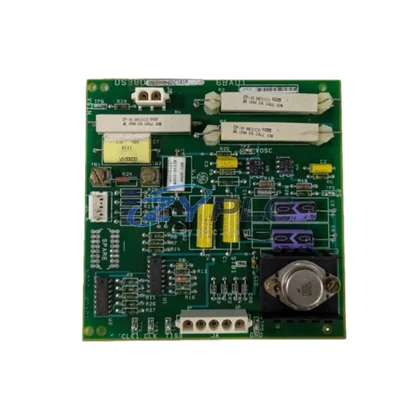
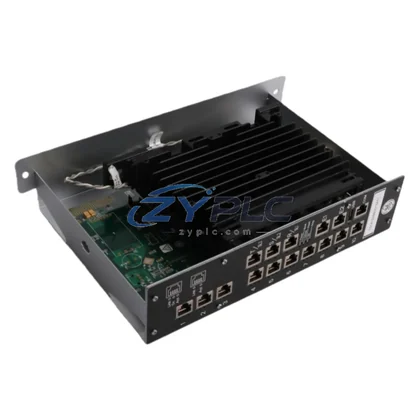
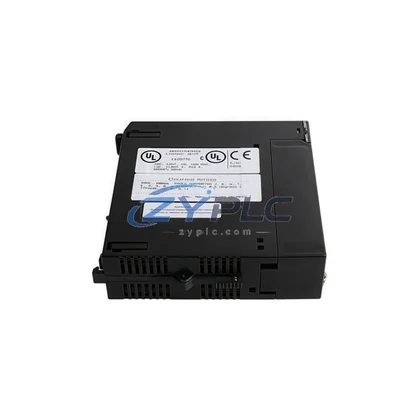
GE IS200EPSMG1AED Exciter Power Supply Module for Mark VI Systems: availability, compatibility, and sourcing support
The GE IS200EPSMG1AED is a high-reliability Exciter Power Supply Module engineered for the GE Mark VI turbine control platform — one of the most widely deployed distributed control architectures in power generation, oil & gas, and heavy industrial environments. Far beyond a simple power component, the IS200EPSMG1AED serves as a critical node in the industrial data chain, sustaining the continuous, stable energy delivery that underpins real-time communication between field excitation systems, control processors, and supervisory networks.
In modern smart factory and power plant environments, every millisecond of signal integrity matters. The IS200EPSMG1AED ensures that the Mark VI controller backbone — including the IS200VCRCH1B VME communication card and the IS200DSPXH1D digital signal processor — receives uninterrupted, conditioned power, enabling deterministic data exchange across the entire control loop. When the exciter power supply falters, the downstream cascade affects PLC scan cycles, remote I/O polling intervals, and ultimately the fidelity of SCADA historian data.
Compatibility & Integration Notes
| Attribute |
Specification |
| Compatible Platform |
GE Mark VI Turbine Control System |
| Communication Protocol Support |
IONet (GE proprietary), Modbus RTU/TCP (via gateway), PROFIBUS DP (via IS200 gateway modules) |
| Interface Type |
VME Backplane, Internal Power Bus |
| Transmission Capability |
Stable DC power delivery for exciter field circuits; supports high-frequency control loop timing |
| Network Compatibility |
GE Mark VI IONet, Ethernet-based SCADA backbone, DCS integration via OPC-DA/UA gateway |
| System Application |
Gas turbine excitation control, generator AVR systems, power plant DCS, SCADA/HMI integration |
| Warranty |
Warranty and support terms confirmed before quote — tested and verified before shipment |
Connected Automation Data Flow
Understanding the IS200EPSMG1AED requires tracing the full industrial data flow it supports. In a typical combined-cycle power plant, the Mark VI controller orchestrates signal acquisition from field sensors — thermocouples, RTDs, vibration probes, and flame detectors — through I/O packs such as the IS200TBCIH1C terminal board and IS200VTURH1BEC turbine I/O module. These signals are digitized and transmitted over the IONet communication ring to the Mark VI processor rack, where the IS200EPSMG1AED sustains the power integrity of the exciter control loop.
From the processor rack, conditioned data flows upstream to the GE ToolboxST engineering workstation and the plant SCADA system — commonly GE iFIX or Wonderware System Platform — via OPC-UA gateways. HMI panels, such as those running GE Cimplicity, display real-time exciter field voltage, rotor current, and AVR setpoints derived from the stable control loop that the IS200EPSMG1AED anchors. Any power instability in the exciter supply module directly degrades the quality of this data stream, introducing noise into historian records and triggering spurious alarms at the SCADA level.
For facilities integrating the Mark VI with broader plant networks, protocol conversion modules — such as the IS200ECTBG1A Ethernet communication board — bridge the IONet domain to standard TCP/IP infrastructure, enabling remote diagnostics from control rooms and cloud-based asset performance management platforms. The IS200EPSMG1AED’s role in this architecture is foundational: without stable exciter power, the AVR cannot maintain generator terminal voltage within tolerance, and the entire data chain from field device to enterprise dashboard loses its reference anchor.
In multi-unit power stations, the IS200EPSMG1AED is often deployed alongside redundant Mark VI racks, with hot-standby configurations managed by the IS200VSVOH1B servo output module and coordinated through the plant DCS. Remote I/O extensions using IS200TRLYH1C relay output boards further extend the data acquisition perimeter, feeding alarm states and trip signals back through the IONet ring to the central historian. This end-to-end connectivity — from exciter field winding to enterprise MES — is what defines the IS200EPSMG1AED’s value in a smart factory context.
Solving Data Isolation in Industrial Sites
One of the most persistent challenges in legacy power plant and heavy industrial environments is data isolation — the condition where critical process variables are trapped within proprietary control domains, invisible to plant-wide SCADA systems, energy management platforms, and predictive maintenance analytics engines. The GE IS200EPSMG1AED, as part of the Mark VI ecosystem, directly addresses this challenge by providing the stable power foundation that makes continuous, high-integrity data transmission possible.
When exciter power supply modules degrade or fail, the first symptom is often not a hard trip but a subtle degradation in communication quality: increased IONet retransmission rates, intermittent loss of AVR feedback signals, and gaps in SCADA historian records. These data gaps create the illusion of a healthy machine while masking developing faults — a classic data isolation scenario that costs plants millions in unplanned outages.
By maintaining a verified, tested IS200EPSMG1AED in service, plant engineers ensure that the Mark VI’s IONet ring operates at full bandwidth, that protocol gateways to Modbus TCP and PROFIBUS DP networks receive clean, stable power, and that remote monitoring systems — including mobile HMI clients and cloud-based APM dashboards — receive uninterrupted, high-fidelity data streams. This transparency is the foundation of production line visibility, predictive maintenance scheduling, and regulatory compliance reporting.
System expansion is equally straightforward: the Mark VI’s modular VME architecture allows additional I/O packs, communication boards, and exciter modules to be integrated without disrupting the existing control topology. The IS200EPSMG1AED’s compatibility with the full IS200 series ensures that capacity additions — new generator units, additional sensor strings, expanded remote I/O networks — can be commissioned without protocol renegotiation or network reconfiguration.
Industrial Connectivity FAQ
Q1: What communication protocols does the GE Mark VI system support when using the IS200EPSMG1AED?
The Mark VI platform natively uses GE’s proprietary IONet protocol for internal rack communication. External connectivity to SCADA, DCS, and MES systems is achieved through gateway modules supporting Modbus RTU/TCP, PROFIBUS DP, and OPC-DA/UA. The IS200EPSMG1AED provides the stable power foundation that ensures these communication interfaces operate within their specified timing tolerances, preventing latency spikes that can trigger false alarms in supervisory systems.
Q2: How does a failing exciter power supply module affect network stability and SCADA data quality?
A degrading IS200EPSMG1AED introduces voltage ripple into the exciter control loop, which can cause the Mark VI processor to increase IONet error correction overhead. This manifests as increased communication latency, intermittent data gaps in SCADA historians, and in severe cases, spurious trip signals. Replacing the module with a tested, verified unit restores deterministic communication timing and eliminates data quality issues at the source.
Q3: Is the IS200EPSMG1AED compatible with expanded Mark VI configurations and third-party SCADA systems?
Yes. The IS200EPSMG1AED is designed for the Mark VI VME backplane architecture and is compatible with all standard IS200 series I/O and communication modules. Integration with third-party SCADA platforms — including Wonderware, Ignition, and OSIsoft PI — is achieved through OPC-UA or Modbus TCP gateways, with the IS200EPSMG1AED ensuring the power stability required for reliable gateway operation.
Q4: What quality assurance and warranty coverage is provided with the IS200EPSMG1AED?
Every IS200EPSMG1AED unit supplied by ZYPLC undergoes functional testing prior to shipment, including power output verification, communication interface checks, and thermal cycling validation. Warranty terms are confirmed during quotation. Availability confirmed by RFQ inventory ensures RFQ-confirmed dispatch to minimize plant downtime, with global logistics support for urgent replacement requirements.