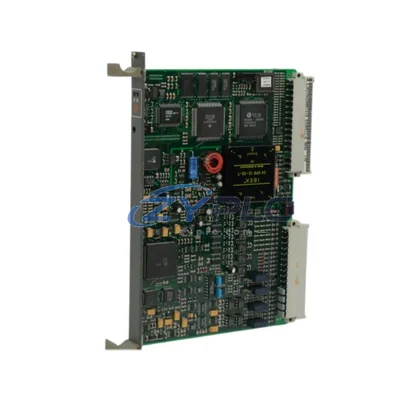
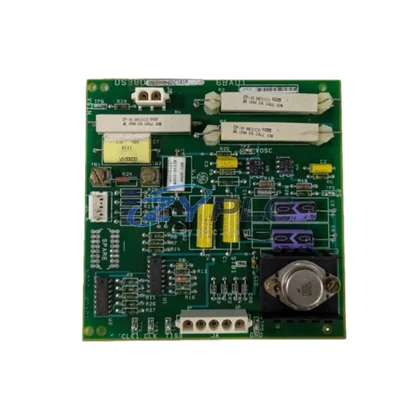
GE IS200EXHSG4A Industrial Network Interface for Mark VI Systems: Powering the Industrial Data Link in Smart Factory Environments
The GE IS200EXHSG4A Static Exciter Terminal Board is a precision-engineered communication and control interface designed for deployment within GE’s Mark VI turbine control architecture. As industrial facilities accelerate their transition toward smart factory frameworks, the IS200EXHSG4A serves as a critical node in the data chain — bridging field-level excitation signals with higher-level control, monitoring, and diagnostic systems. Whether integrated into a gas turbine power plant, combined-cycle facility, or heavy industrial process environment, this board ensures that real-time excitation data flows reliably from the generator field to the Mark VI controller, and onward to SCADA, HMI, and enterprise-level platforms.
In modern industrial automation, the integrity of the data link between field devices and control systems defines the operational efficiency of the entire plant. The IS200EXHSG4A occupies a foundational role in this architecture: it receives analog and digital excitation signals from the generator exciter system, conditions and transmits those signals through the Mark VI backplane, and makes them available for real-time processing by the Mark VI VCMI (VME Communication Module Interface) and associated I/O boards. This seamless signal flow enables operators to monitor generator excitation levels, field current, voltage regulation status, and fault conditions — all in real time, without communication latency that could compromise turbine protection logic.
Compatibility & Integration Notes
| Parameter |
Specification |
| Product SKU |
IS200EXHSG4A |
| Brand / Manufacturer |
GE (General Electric) |
| Series |
Mark VI Turbine Control System |
| Product Type |
Static Exciter Terminal Board |
| Protocol Support |
Mark VI Backplane Communication, Modbus RTU (via gateway), PROFIBUS DP (via gateway), OPC-UA (via SCADA integration) |
| Interface Type |
VME Backplane, Terminal Block I/O, Analog Signal Interface |
| Communication Role |
Excitation Signal Conditioning & Transmission to Mark VI Controller |
| Network Compatibility |
GE Mark VI / Mark VIe Control Network, SCADA via OPC Server, HMI via Ethernet Gateway |
| System Application |
Gas Turbine Control, Steam Turbine Control, Generator Excitation Management, Power Plant Automation |
| Operating Environment |
Industrial Panel / Control Cabinet, DIN Rail Compatible Enclosure |
| Origin |
United States |
| Warranty |
Warranty and support terms confirmed before quote |
| Shipping |
DHL / FedEx Global Express, Availability confirmed by RFQ Ready |
| Testing |
Pre-shipment Functional Test Included |
Connected Automation Data Flow
Understanding the IS200EXHSG4A’s role requires mapping the full data flow within a Mark VI-based turbine control system. At the field level, the exciter system generates analog voltage and current signals that represent the generator’s field excitation state. The IS200EXHSG4A terminal board receives these signals, applies signal conditioning, and routes them through the Mark VI VME backplane to the core controller — typically the GE IS200VCMIH2C (VME Communication Module Interface), which manages inter-board communication and data arbitration across the Mark VI rack.
From the Mark VI controller, processed excitation data is transmitted over the plant’s industrial Ethernet network — often a redundant 100 Mbps ring topology — to the GE Mark VI HMI workstation running GE’s Toolbox software. Operators at the HMI can view real-time excitation parameters, set voltage regulation targets, and acknowledge alarms generated by the IS200EXHSG4A’s signal monitoring logic. Simultaneously, the same data stream feeds into the plant’s SCADA system via an OPC-DA or OPC-UA server, enabling supervisory-level monitoring across multiple turbine units from a centralized control room.
For facilities integrating remote I/O expansion, the Mark VI architecture supports additional terminal boards such as the GE IS200IOCIH2A (I/O Controller Interface Board), which extends the system’s ability to collect field signals from distributed sensors and transmit them back to the central controller. In excitation-heavy applications, the IS200EXHSG4A works in parallel with boards like the GE IS200EXHSG2A and GE IS200EXHSG3A — earlier revisions in the same EXHSG series — ensuring backward compatibility and system scalability as plant configurations evolve.
At the drive and power conversion layer, the excitation data managed by the IS200EXHSG4A directly informs the operation of the GE EX2100e Static Excitation System, which regulates generator field current based on the terminal board’s signal outputs. This closed-loop data path — from field sensor, through the IS200EXHSG4A, through the Mark VI controller, and back to the excitation drive — is the backbone of generator voltage stability in modern power plants. Any interruption in this data chain can trigger protective relay actions, making the reliability of the IS200EXHSG4A terminal board mission-critical.
For plants deploying edge computing solutions, the Mark VI network can be extended to an industrial edge gateway — such as a Moxa MGate or similar protocol converter — enabling Modbus TCP or PROFIBUS DP translation for legacy field devices that cannot natively communicate with the Mark VI Ethernet backbone. This gateway layer allows older sensors, transmitters, and actuators to participate in the plant’s unified data network, with the IS200EXHSG4A’s excitation data appearing alongside process variables from PLCs, remote I/O modules, and smart field instruments in a single SCADA dashboard. Additional Mark VI I/O boards such as the GE IS200TBCIH2C (Terminal Board for Control Interface) further extend signal collection capacity, while the GE IS200DSPXH1D (Digital Signal Processor Board) handles high-speed computation tasks that support real-time excitation control loops.
Solving Data Isolation in Industrial Sites
One of the most persistent challenges in industrial power generation and process automation is data isolation — the condition where critical operational data is trapped within proprietary control systems, inaccessible to plant-wide monitoring, analytics, and optimization platforms. The GE IS200EXHSG4A directly addresses this challenge within the Mark VI ecosystem by providing a standardized, reliable interface between the excitation subsystem and the broader control network.
In older turbine installations, excitation data was often available only at the local control panel, with no pathway to the plant’s SCADA or historian systems. Operators had to physically inspect panel meters or rely on periodic manual readings to assess generator health. The IS200EXHSG4A, as part of the Mark VI architecture, eliminates this data silo by digitizing excitation signals and making them available on the plant’s industrial Ethernet network in real time. This enables continuous monitoring of field current, excitation voltage, and AVR (Automatic Voltage Regulator) status from any authorized workstation on the network — including remote access terminals for off-site engineering teams.
Protocol fragmentation is another common source of data isolation in multi-vendor industrial environments. A typical power plant may include GE Mark VI controllers, Siemens S7 PLCs, ABB drives, and Yokogawa DCS systems — each using different communication protocols. By integrating the IS200EXHSG4A’s data output through an OPC-UA server or protocol gateway, plant engineers can normalize excitation data into a common format compatible with any SCADA platform, including GE iFIX, Wonderware AVEVA, Ignition by Inductive Automation, or OSIsoft PI historian. This protocol normalization is essential for plants pursuing digital twin implementations, predictive maintenance programs, or ISO 55000-compliant asset management frameworks.
Remote diagnostics capability is another key benefit delivered through the IS200EXHSG4A’s integration with the Mark VI network. When an excitation fault occurs — such as field overcurrent, AVR failure, or terminal board communication loss — the Mark VI controller generates a structured alarm that is immediately visible on the HMI and transmitted to the SCADA alarm management system. Remote engineers can diagnose the fault condition, review historical trend data from the PI historian, and coordinate corrective action without requiring an on-site visit. This remote diagnostic capability reduces mean time to repair (MTTR) and minimizes turbine downtime — a critical advantage in power generation environments where every hour of unplanned outage carries significant financial and operational consequences.
System scalability is also a core strength of the IS200EXHSG4A’s architecture. As plant capacity expands — through the addition of new turbine units, generator upgrades, or renewable energy integration — the Mark VI control network can be extended by adding terminal boards, I/O modules, and communication interfaces without redesigning the core control architecture. The IS200EXHSG4A’s standardized VME backplane interface ensures compatibility with current and future Mark VI hardware revisions, protecting the plant’s control system investment over a multi-decade operational lifecycle.
Industrial Connectivity FAQ
Q1: What communication protocols does the GE IS200EXHSG4A support for SCADA integration?
The IS200EXHSG4A operates natively within the GE Mark VI VME backplane communication architecture. For integration with external SCADA systems, the Mark VI controller supports OPC-DA and OPC-UA server connectivity, enabling data exchange with any OPC-compliant SCADA platform. For legacy protocol environments, Modbus TCP or PROFIBUS DP translation can be achieved through an industrial protocol gateway connected to the Mark VI Ethernet network. This multi-protocol approach ensures compatibility with virtually any plant-level supervisory system.
Q2: How does the IS200EXHSG4A ensure network stability and minimize communication latency in turbine control applications?
The IS200EXHSG4A is designed for deterministic, low-latency signal transmission within the Mark VI backplane. The VME bus architecture provides cycle times in the millisecond range, ensuring that excitation data is available to the Mark VI controller within the turbine’s protection response window. For plant-level network communication, the Mark VI supports redundant Ethernet ring topologies (RSTP/MRP), which provide automatic failover in the event of a network segment failure — maintaining continuous data flow to SCADA and HMI systems without operator intervention.
Q3: Can the IS200EXHSG4A be integrated into an existing Mark VI system without a full control system upgrade?
Yes. The IS200EXHSG4A is designed as a drop-in replacement for compatible EXHSG series terminal boards within the Mark VI rack. It maintains backward compatibility with existing Mark VI firmware and configuration files, allowing it to be installed during a planned maintenance window without requiring a full system reconfiguration. Pre-shipment functional testing is performed on every unit to verify signal integrity and backplane communication before dispatch, reducing commissioning time and risk.
Q4: What warranty and quality assurance does ZYPLC provide for the GE IS200EXHSG4A?
Every GE IS200EXHSG4A supplied by ZYPLC is covered by a warranty and support terms confirmed before quote from the date of shipment. Each unit undergoes pre-shipment functional testing to verify terminal board integrity, signal conditioning performance, and backplane communication compatibility. Units are shipped via DHL or FedEx Express with full tracking, and our technical team is available to support installation, commissioning, and troubleshooting queries. Availability and shipment timing are confirmed by RFQ to minimize plant downtime.