Product identification and sourcing context
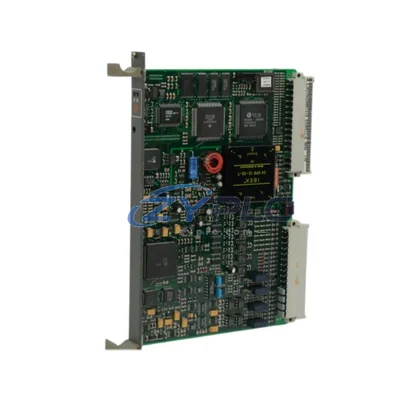
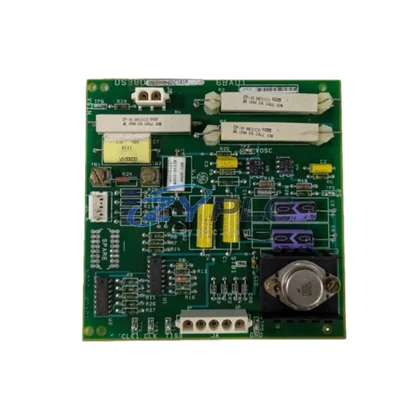
GE IS200STAIH2ACB IS230STAIH2A Analog Input Board Mark VI is handled as a quote-based GE Speedtronic / Mark turbine-control spare part for turbine-control, DCS, PLC, and industrial maintenance projects. ZYPLC checks the full model number, board revision, installed platform, required condition, quantity, and destination country before quotation.
| Brand |
GE |
| Model / SKU |
IS200STAIH2ACB IS230STAIH2A |
| Series context |
Mark VI |
| Part type |
Industrial Automation Spare Parts |
| RFQ basis |
Availability, condition, lead time, and export shipment options are confirmed before quote. |
Where this part is typically used
This item is requested for gas turbine, steam turbine, generator excitation, protection, and plant control-system maintenance. GE Mark V, Mark VI, Mark VIe, and PACSystems installations often require exact board revision, firmware, terminal-board pairing, and rack context before a spare part can be safely sourced.
RFQ information for maintenance teams
- Exact model number, revision suffix, and any board assembly code from the label.
- Installed platform context such as Mark V, Mark VI, Mark VIe, Speedtronic, or PACSystems RX3i where applicable.
- Quantity, urgency, required condition, and destination country.
- Photos of front label, board barcode, connector area, or existing spare packaging.
Browse related GE spare parts, review the Mark VI series, or compare similar Industrial Automation Spare Parts records. If the exact revision is not shown, send the model and photos so the RFQ can be checked manually.
Request quote for this model
GE IS200STAIH2ACB IS230STAIH2A: Industrial Data Link for Mark VI Smart Factory Networks
The GE IS200STAIH2ACB (interchangeable with IS230STAIH2A) is a high-integrity Analog Input Terminal Board engineered for GE’s Mark VI Turbine Control System. Designed to serve as the critical interface between field-level sensors and the Mark VI controller backbone, this board enables precise signal acquisition, real-time data transmission, and seamless integration into plant-wide SCADA and HMI architectures. In modern smart factory and power generation environments where data continuity is non-negotiable, the IS200STAIH2ACB delivers the analog signal fidelity and network reliability that industrial operators demand.
At its core, the IS200STAIH2ACB functions as the analog front-end of the Mark VI’s Triple Modular Redundancy (TMR) architecture. It collects analog process signals — including 4–20 mA current loops, thermocouple inputs, RTD measurements, and millivolt-level signals from pressure transmitters and flow sensors — and conditions them for processing by the Mark VI’s VCMI or VCRC controller cards. This signal chain forms the foundation of the plant’s real-time monitoring loop, feeding live process values into the IONet communication network and ultimately into the operator’s SCADA or DCS platform via OPC-UA or Modbus TCP gateways.
Compatibility & Integration Notes
| Parameter |
Specification |
| Compatible System |
GE Mark VI Turbine Control System |
| Communication Protocol |
IONet (GE Proprietary), OPC-UA (via gateway), Modbus TCP |
| Interface Type |
Analog Input Terminal Board (TMR / Simplex) |
| Signal Types Supported |
4–20 mA, Thermocouple, RTD, mV, Voltage |
| Network Compatibility |
Mark VI IONet, SCADA/DCS via OPC-UA, Modbus TCP/IP |
| Redundancy Architecture |
Triple Modular Redundancy (TMR) supported |
| System Application |
Gas Turbine, Steam Turbine, Combined Cycle, Power Generation |
| SCADA/HMI Integration |
GE ToolboxST, Cimplicity HMI, third-party OPC-UA clients |
| Remote Diagnostics |
Supported via IONet and ToolboxST engineering workstation |
| Warranty |
Warranty and support terms confirmed before quote | Tested Before Shipment |
Connected Automation Data Flow
Understanding the IS200STAIH2ACB’s role requires tracing the full data path from field device to control room. At the field level, process sensors — including Rosemount 3051 pressure transmitters, Pt100 RTD temperature sensors, and thermocouple arrays mounted on turbine exhaust stacks — generate analog signals that are wired directly to the IS200STAIH2ACB terminal board. The board’s signal conditioning circuitry filters, scales, and digitizes these inputs before passing them to the Mark VI’s VCMI (VME Communications and Memory Interface) card over the internal backplane bus.
From the VCMI, digitized process values enter the IONet — GE’s deterministic, high-speed industrial Ethernet network that interconnects all Mark VI controller racks, I/O packs, and the engineering workstation running GE ToolboxST. The IONet carries real-time process data at scan rates fast enough to support turbine protection logic, where millisecond-level response is critical. Alongside the IS200STAIH2ACB, companion boards such as the IS200STCIH2A (Contact Input Terminal Board) and IS200STCIH1A handle discrete signal inputs from limit switches and proximity sensors, while the IS200SVOEH2A manages servo valve output commands — together forming a complete I/O layer for turbine control.
At the network boundary, an OPC-UA gateway or Modbus TCP bridge translates IONet data into standard industrial protocols, making live process values available to plant-wide SCADA platforms such as GE Cimplicity, Wonderware System Platform, or Ignition by Inductive Automation. HMI screens in the control room display real-time turbine parameters — exhaust temperature, compressor inlet pressure, fuel flow rate — sourced directly from the IS200STAIH2ACB’s analog inputs. Alarm management systems subscribe to these OPC-UA data points and trigger operator alerts when process values exceed defined thresholds, enabling rapid response to abnormal conditions.
For remote monitoring and diagnostics, the Mark VI’s IONet connects to a plant historian such as OSIsoft PI or GE Proficy Historian, archiving every analog measurement at configurable intervals. Remote engineers can access the ToolboxST workstation via secure VPN to review live I/O diagnostics, check IS200STAIH2ACB channel health, and perform calibration verification without dispatching field technicians. This remote diagnostic capability is especially valuable in offshore platforms and unmanned substations where physical access is costly and time-consuming.
In combined-cycle power plants, the IS200STAIH2ACB often operates alongside the IS200VCMIH2A (VCMI controller card) and IS200TRLYH1A (Relay Output Board), with the complete Mark VI rack communicating upstream to a plant DCS via a Modbus TCP or PROFIBUS gateway module. Edge computing nodes — such as GE’s Predix-based edge gateways — can also subscribe to IONet data streams for AI-driven predictive maintenance analytics, identifying early signs of sensor drift or bearing wear before they escalate into unplanned outages.
Solving Data Isolation in Industrial Sites
One of the most persistent challenges in legacy power generation and process control facilities is data isolation — the condition where critical process measurements exist only within a proprietary control system and cannot be accessed by plant-wide IT systems, ERP platforms, or remote operations centers. The IS200STAIH2ACB, as part of the Mark VI ecosystem, directly addresses this challenge through its support for open protocol gateways and standardized data interfaces.
Plants running older Mark V or Mark IV turbine control systems often face a protocol fragmentation problem: analog signals are captured locally but never reach the SCADA layer in a structured, queryable format. Upgrading to or maintaining Mark VI hardware with IS200STAIH2ACB boards, combined with an OPC-UA server configured in ToolboxST, breaks down these data silos. Every analog channel — whether measuring compressor discharge pressure or generator stator temperature — becomes a named, addressable OPC-UA node accessible to any compliant SCADA or MES client on the plant network.
Production line transparency is another key benefit. With IS200STAIH2ACB boards providing high-fidelity analog data across all turbine measurement points, operations managers gain a complete, real-time picture of turbine health without relying on manual rounds or paper-based logs. Alarm rationalization becomes more effective when every analog input has a defined engineering range, alarm setpoint, and historical trend — all configured and monitored through the Mark VI’s integrated diagnostic framework.
System expansion is straightforward within the Mark VI architecture. Additional IS200STAIH2ACB or IS230STAIH2A boards can be added to existing racks to accommodate new measurement points as plant capacity grows, without requiring changes to the IONet infrastructure or SCADA configuration beyond adding new OPC-UA tags. This scalability makes the Mark VI platform — and the IS200STAIH2ACB in particular — a long-term investment for facilities planning phased expansions or technology upgrades.
Industrial Connectivity FAQ
Q1: What communication protocols does the IS200STAIH2ACB support for SCADA integration?
The IS200STAIH2ACB itself communicates over GE’s proprietary IONet within the Mark VI system. For SCADA integration, the Mark VI uses OPC-UA (configured via ToolboxST) and Modbus TCP gateways to expose analog input data to third-party SCADA platforms such as Cimplicity, Wonderware, or Ignition. This makes the board compatible with virtually any modern industrial monitoring system.
Q2: How does the TMR architecture affect network stability and data reliability?
In TMR (Triple Modular Redundancy) configurations, three IS200STAIH2ACB boards simultaneously process the same analog inputs. The Mark VI’s voting logic compares all three readings and uses the majority value, automatically isolating a faulty channel without interrupting control or data transmission. This architecture ensures continuous IONet data flow even during single-board failures, making it ideal for critical turbine protection applications.
Q3: Can the IS200STAIH2ACB be used in simplex (non-redundant) Mark VI configurations?
Yes. The IS200STAIH2ACB and its IS230STAIH2A variant are compatible with both TMR and simplex Mark VI configurations. In simplex systems, a single board handles all analog inputs for a given rack, with the Mark VI providing diagnostic alarms if a channel fault is detected. Simplex configurations are commonly used in balance-of-plant applications where full TMR redundancy is not required.
Q4: What does the warranty and support terms confirmed before quote cover, and how is pre-shipment testing performed?
Every IS200STAIH2ACB unit supplied by ZYPLC is tested on GE Mark VI-compatible test benches prior to shipment, verifying analog channel accuracy, signal conditioning performance, and IONet communication integrity. The warranty and support terms confirmed before quote covers hardware defects and functional failures under normal operating conditions. Units are shipped with full traceability documentation, and our technical team provides remote support for installation and commissioning queries.