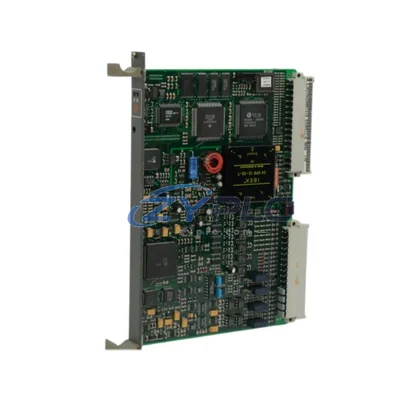
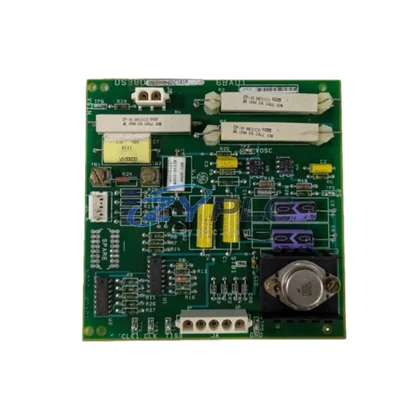
GE IS200STCIH2A Terminal Board for Mark VI
The GE IS200STCIH2A is a precision-engineered terminal board designed to operate as a critical signal interface node within the GE Mark VI turbine control system architecture. Rather than functioning as a standalone component, the IS200STCIH2A is conceived as an integral layer within a multi-tier automation hierarchy — bridging field-level I/O signals with the core control processors that govern gas turbine, steam turbine, and combined-cycle power generation assets. Its role in the system is to ensure clean, reliable, and electrically isolated signal conditioning between the physical process environment and the digital control domain, maintaining system coherence across the full operational lifecycle.
In a complete Mark VI control architecture, the IS200STCIH2A occupies the I/O termination layer, receiving analog and discrete signals from field instruments, thermocouples, RTDs, proximity probes, and actuator feedback loops. These signals are then routed through the board’s terminal blocks and conditioning circuitry to the corresponding I/O pack modules — such as the VCMI, VTUR, VDSP, or VPRO processor boards — which execute the real-time control logic. This layered signal flow ensures that the control processor is never exposed to raw field-level electrical noise, protecting both the integrity of the control computation and the longevity of the hardware platform.
System architects integrating the IS200STCIH2A into a Mark VI panel will typically pair it with companion boards such as the IS200STCIH2B or IS200STCIG1A for redundant termination configurations, and with the IS215VCMIH2A or IS215VCMIH2B VME communication interface modules that manage the backplane data exchange. The IS200STCIH2A is mounted within the Mark VI control cabinet alongside power supply modules such as the IS200EPBAG1A, which provides the regulated DC bus required for stable I/O operation. In TMR (Triple Modular Redundant) configurations, three parallel IS200STCIH2A boards may be deployed in a voting architecture, with the PPRO or TPRO processor modules arbitrating signal validity across all three channels to achieve fault-tolerant control.
From a network and communications perspective, the Mark VI system in which the IS200STCIH2A operates typically employs the IONet Ethernet-based I/O network, connecting terminal boards and I/O packs to the UCSC or UCSA controller modules. This architecture supports deterministic, high-speed data exchange between the termination layer and the control layer, enabling sub-millisecond scan times for critical turbine protection functions. The IS200STCIH2A’s physical layout is designed to accommodate the cable routing and connector pinouts required for this IONet topology, ensuring that field wiring can be terminated cleanly without compromising signal shielding or ground isolation.
For human-machine interface integration, the Mark VI system communicates upward through the control network to GE’s Cimplicity HMI or third-party SCADA platforms via OPC-DA or OPC-UA protocols. The IS200STCIH2A’s role in this chain is foundational: accurate signal termination at the board level directly determines the quality of process variable data displayed at the operator workstation. Misconfigured or degraded terminal connections at the IS200STCIH2A level will propagate measurement errors through the entire control hierarchy, underscoring the importance of correct installation, torque specifications, and periodic inspection of all terminal points.
In layered automation systems across power generation, petrochemical processing, and heavy industrial applications, the IS200STCIH2A supports long-term maintainability by providing clearly labeled, individually accessible terminal points that can be inspected, tested, and replaced without disturbing adjacent wiring. This design philosophy aligns with the Mark VI platform’s emphasis on modular serviceability — allowing maintenance engineers to isolate and address individual signal channels during scheduled outages without requiring full panel shutdowns. Spare board availability is a key consideration for asset managers operating aging Mark VI installations, and ZYPLC maintains RFQ-confirmed availability of the IS200STCIH2A to support both emergency replacement and planned maintenance programs.
All IS200STCIH2A units supplied by ZYPLC are covered by a Warranty and support terms confirmed before quote and have undergone functional verification prior to dispatch. Each board is shipped with appropriate anti-static packaging and documentation to support incoming inspection and installation qualification. Global logistics support ensures that critical replacement parts reach operational sites within the shortest possible lead time, minimizing turbine downtime and protecting generation revenue.
Product Specification Table
| System Role |
I/O Signal Termination Board — Mark VI Turbine Control Architecture |
| Part Number |
IS200STCIH2A |
| Brand / Manufacturer |
GE (General Electric) |
| Compatible Platform |
GE Mark VI Turbine Control System |
| Board Type |
Terminal Board (Signal Termination & Conditioning) |
| Signal Types Supported |
Analog inputs (4–20 mA, thermocouple, RTD), discrete I/O, proximity probe inputs |
| Electrical Isolation |
Channel-to-channel and field-to-logic isolation per GE Mark VI design standard |
| Operating Voltage |
24 VDC nominal (supplied via Mark VI power distribution bus) |
| Communication Interface |
IONet Ethernet (via paired I/O pack and VCMI module) |
| Mounting |
DIN rail / panel-mount within Mark VI control cabinet |
| Operating Temperature |
0°C to +60°C (standard industrial enclosure environment) |
| Redundancy Support |
TMR (Triple Modular Redundant) architecture compatible |
| Country of Origin |
United States |
| Warranty |
Warranty and support terms confirmed before quote — all units functionally verified prior to shipment |
System Compatibility Notes
The IS200STCIH2A does not operate in isolation — its value is realized through coordinated integration with the full suite of Mark VI hardware. In a typical turbine control panel, the IS200STCIH2A works in concert with the IS215VCMIH2A VME communication interface module, which manages backplane data routing between the termination layer and the processor. The IS200EPBAG1A power supply board provides the regulated 24 VDC bus that energizes the terminal board and its associated I/O packs. Processor-level control is executed by the IS215UCVEH2A or IS215UCVEH2B controller modules, which receive conditioned signal data from the IS200STCIH2A via the IONet network.
For redundant I/O configurations, the IS200STCIH2A is paired with companion terminal boards such as the IS200STCIH2B and IS200STCIG1A, forming a parallel termination architecture that supports TMR voting logic. The IS200VTURH1B turbine I/O board and IS200VSPAH1A speed sensor interface module are commonly installed in the same cabinet, handling specialized turbine speed and vibration signal conditioning that complements the IS200STCIH2A’s general-purpose termination function. Communication gateways such as the IS215UCVEH2A Ethernet module extend the Mark VI control network to plant-level DCS or SCADA systems, completing the vertical integration from field sensor to operator display.
Industrial Application Notes
The IS200STCIH2A finds application across a broad range of heavy industrial sectors where the GE Mark VI platform is the established control standard. In power generation facilities — including gas-fired combined-cycle plants, steam turbine installations, and co-generation units — the board serves as the primary field wiring interface for turbine protection and control loops, including exhaust temperature arrays, inlet guide vane position feedback, and fuel valve actuator signals.
In petrochemical and refinery environments, Mark VI systems equipped with IS200STCIH2A terminal boards control compressor trains, process gas turbines, and rotating equipment protection systems. The board’s robust electrical isolation characteristics make it suitable for installations in classified hazardous areas when housed within appropriately rated enclosures. Water treatment and pumping stations utilizing GE turbine-driven pump sets also benefit from the IS200STCIH2A’s reliable signal termination, particularly in remote or unmanned installations where maintenance access is infrequent and hardware reliability is paramount.
For mining and metallurgical operations running large rotating equipment on Mark VI platforms, the IS200STCIH2A supports the high channel-count termination requirements typical of multi-drive, multi-sensor installations. Its modular design allows maintenance teams to replace individual boards during planned shutdowns without disturbing the broader wiring infrastructure, reducing outage duration and associated production losses.
Product Compatibility FAQ
Q1: Is the IS200STCIH2A compatible with both simplex and TMR Mark VI configurations?
Yes. The IS200STCIH2A is designed to operate in simplex, dual, and TMR Mark VI architectures. In TMR configurations, three boards are installed in parallel, with each board’s signal output fed independently to the corresponding R, S, and T processor channels. The PPRO or TPRO voting modules arbitrate across all three channels, ensuring that a single board failure does not interrupt turbine control. Confirm the specific revision compatibility (H2A vs. H2B) with your Mark VI system documentation before installation.
Q2: Can the IS200STCIH2A be installed and commissioned without a GE service engineer on-site?
Experienced control system engineers familiar with the Mark VI platform can install and terminate the IS200STCIH2A using the GE Mark VI Installation and Maintenance Manual (GEH-6421). Key steps include verifying terminal torque specifications, confirming shield grounding at the designated ground bus, and validating signal continuity using the Mark VI Toolbox diagnostic software before energizing the I/O pack. ZYPLC can provide technical support documentation to assist qualified engineers during commissioning.
Q3: What does the Warranty and support terms confirmed before quote cover, and what is the process for a warranty claim?
The Warranty and support terms confirmed before quote provided by ZYPLC covers manufacturing defects and functional failures under normal operating conditions for a period of twelve months from the date of shipment. If the IS200STCIH2A exhibits a verified functional fault within the warranty period, ZYPLC will arrange for repair or replacement at no additional cost. To initiate a warranty claim, contact ZYPLC at plc.sales@zyplc.com or +86 19859288691 with the order reference, installation date, and a description of the observed fault. Units must not have been subjected to physical damage, unauthorized modification, or operation outside the specified environmental parameters.