GE IS200TBCIH1BBC Industrial Network Interface for Mark VI Systems: Bridging the Industrial Data Link in Smart Factory Environments
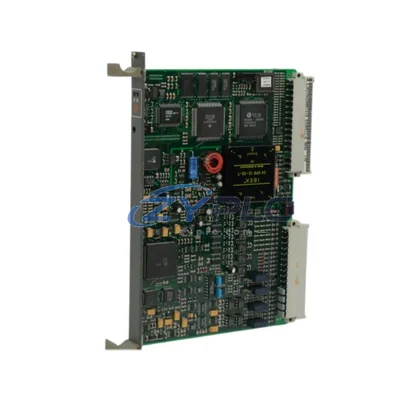
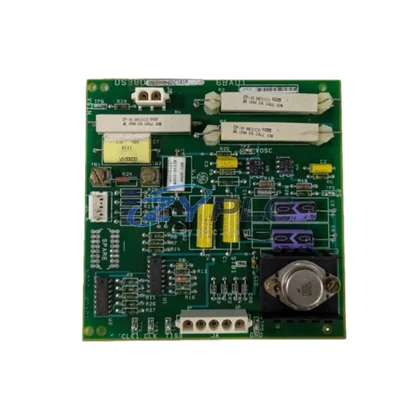
The GE IS200TBCIH1BBC is a high-integrity terminal board engineered for the GE Mark VI Turbine Control System, one of the most widely deployed distributed control system (DCS) platforms in power generation, oil & gas, and heavy industrial automation. Designed to serve as a critical node in the industrial data chain, the IS200TBCIH1BBC facilitates reliable signal acquisition, protocol-level communication, and real-time data exchange between field instrumentation and upper-level control architectures. In an era where smart factory connectivity defines operational efficiency, this terminal board delivers the backbone infrastructure that keeps turbine assets visible, controllable, and diagnostically transparent across the entire automation hierarchy.
At the field level, the IS200TBCIH1BBC interfaces directly with sensors, thermocouples, RTDs, and discrete I/O devices mounted on gas turbines, steam turbines, and combined-cycle units. These field signals — temperature, vibration, pressure, speed, and flame detection — are conditioned and routed through the terminal board into the Mark VI controller core, where they are processed in real time. The board’s robust terminal architecture ensures signal integrity even in high-noise industrial environments, supporting the deterministic data acquisition that turbine protection and control algorithms demand.
Compatibility & Integration Notes
| Attribute |
Specification |
| SKU |
IS200TBCIH1BBC |
| Brand / Manufacturer |
GE (General Electric) |
| Series |
Mark VI Turbine Control System |
| Product Type |
DCS Terminal Board / I/O Interface Board |
| Communication Protocol |
IONET (GE Proprietary), Modbus RTU/TCP (via gateway), PROFIBUS DP (via gateway) |
| Interface Type |
Terminal Block I/O, Ribbon Cable Backplane Connector |
| Transmission Capability |
Real-time analog/digital signal acquisition and relay to Mark VI controller |
| Network Compatibility |
GE Mark VI IONET, Ethernet-based SCADA integration via IS200 series gateways |
| System Application |
Gas Turbine, Steam Turbine, Combined Cycle, Power Plant DCS |
| SCADA / HMI Integration |
Compatible with GE Cimplicity, iFIX, and third-party SCADA via OPC-DA/UA |
| Origin |
USA |
| Warranty |
Warranty and support terms confirmed before quote |
| Availability |
Confirmed via RFQ before quotation |
Connected Automation Data Flow
The IS200TBCIH1BBC sits at the intersection of physical process signals and digital control intelligence. In a typical Mark VI turbine control architecture, field sensors — including thermocouple inputs processed by companion boards such as the IS200TCTDG1A and vibration probes interfaced through the IS200VTURH1BAA — feed raw analog data into the terminal board layer. The IS200TBCIH1BBC aggregates these signals and passes them via the Mark VI backplane to the core controller modules, such as the IS215UCVEH2A VME controller card, which executes the turbine protection and sequencing logic in real time.
From the controller layer, processed data travels upstream through the GE IONET communication network — a deterministic, high-speed industrial Ethernet backbone proprietary to the Mark VI platform. The IS200EACFG1A Ethernet adapter card bridges the IONET segment to the plant’s standard TCP/IP network, enabling data flow to SCADA servers running GE Cimplicity or iFIX HMI platforms. Operators at the control room level gain real-time visibility into turbine exhaust temperatures, rotor speed, fuel valve positions, and protective relay states — all originating from signals first captured at the IS200TBCIH1BBC terminal interface.
For plants integrating legacy field devices or third-party instrumentation using Modbus RTU or PROFIBUS DP protocols, protocol gateway modules such as the IS200BICLH1A communication interface board provide the necessary translation layer, converting legacy protocol frames into IONET-compatible data packets. This gateway function eliminates data silos between older field devices and the Mark VI control core, ensuring that every sensor on the turbine skid contributes to the unified data stream flowing to the SCADA layer.
Remote I/O expansion is supported through the Mark VI’s distributed I/O architecture, where additional terminal boards — including the IS200TBCIH1BBC itself in multi-board configurations — extend the system’s signal acquisition capacity without requiring additional controller hardware. This scalability is essential in combined-cycle plants where a single Mark VI system may supervise both gas turbine and heat recovery steam generator (HRSG) instrumentation simultaneously. Edge data from these distributed terminal boards is aggregated at the controller level and forwarded to plant historians and MES systems, supporting production analytics, predictive maintenance scheduling, and regulatory compliance reporting.
Variable frequency drives (VFDs) controlling auxiliary equipment — cooling fans, fuel pumps, and lube oil systems — communicate their operational status back to the Mark VI via discrete I/O signals routed through terminal boards in the IS200 series. Similarly, flame detectors and combustion monitoring sensors connected through the IS200FTURH1BAA flame detector interface board feed critical safety signals into the same data chain, ensuring that turbine protection logic has access to the full spectrum of process variables in real time.
Solving Data Isolation in Industrial Sites
One of the most persistent challenges in industrial automation is the fragmentation of data across incompatible protocols, proprietary networks, and isolated control islands. The GE IS200TBCIH1BBC addresses this challenge at the hardware level by providing a standardized, high-density terminal interface that consolidates field signals from diverse sensor types into a single, coherent data stream within the Mark VI architecture.
Plants operating mixed fleets — combining GE Mark VI-controlled turbines with third-party PLCs or legacy DCS platforms — often struggle with protocol incompatibility that prevents unified SCADA visibility. By deploying the IS200TBCIH1BBC alongside IONET-to-Modbus or IONET-to-OPC gateway solutions, engineering teams can bridge these protocol gaps and achieve plant-wide data transparency without replacing existing field infrastructure. The result is a unified operational picture where turbine performance data, alarm states, and diagnostic information from the Mark VI system appear alongside data from other plant assets in a single SCADA dashboard.
Remote diagnostics capability is another critical value delivered by the IS200TBCIH1BBC’s role in the Mark VI network. Because all field signals pass through the terminal board layer before reaching the controller, fault isolation during troubleshooting is straightforward: engineers can identify whether a signal anomaly originates at the sensor, the terminal board wiring, or the controller logic by examining data at each layer of the communication chain. This structured diagnostic approach reduces mean time to repair (MTTR) and minimizes unplanned turbine downtime — a key performance indicator for power generation operators.
Production line transparency is further enhanced by the IS200TBCIH1BBC’s compatibility with plant historian systems. Real-time data flowing from the terminal board through the Mark VI controller and SCADA layer can be archived at high resolution, enabling post-event analysis, performance trending, and regulatory audit trails. For operators pursuing digital transformation initiatives, this data foundation supports the deployment of advanced analytics, machine learning-based predictive maintenance, and remote operations center (ROC) integration.
System expansion is seamless within the Mark VI architecture. Additional IS200TBCIH1BBC boards can be added to existing Mark VI panels to accommodate new instrumentation points as turbine upgrades or plant expansions are implemented, without disrupting the existing control configuration. This modularity protects capital investment and reduces the engineering cost of future capacity additions.
Industrial Connectivity FAQ
Q1: What communication protocols does the GE IS200TBCIH1BBC support, and can it integrate with Modbus or PROFIBUS systems?
The IS200TBCIH1BBC is a terminal board within the GE Mark VI DCS, which natively uses GE’s proprietary IONET communication protocol for controller-to-I/O and controller-to-SCADA data exchange. Integration with Modbus RTU/TCP or PROFIBUS DP field devices is achieved through dedicated communication interface modules within the Mark VI system, such as the IS200BICLH1A, which perform protocol translation transparently. OPC-DA and OPC-UA server software running on the Mark VI workstation further enables integration with third-party SCADA and MES platforms.
Q2: How does the IS200TBCIH1BBC ensure network stability and data integrity in high-noise turbine environments?
The IS200TBCIH1BBC is designed to meet the electromagnetic compatibility (EMC) requirements of industrial turbine control environments. Its terminal block architecture provides secure, vibration-resistant field wiring connections, and the board’s signal conditioning circuitry filters electrical noise from field cables before signals enter the Mark VI controller. The IONET network backbone uses deterministic communication protocols that guarantee fixed scan cycle times, ensuring that controller inputs are updated at consistent intervals regardless of network load — a critical requirement for turbine protection applications.
Q3: Can the IS200TBCIH1BBC support system expansion without reconfiguring the existing Mark VI control system?
Yes. The Mark VI architecture supports modular I/O expansion through the addition of terminal boards, including the IS200TBCIH1BBC, within existing or new I/O panels. New terminal boards are recognized by the Mark VI controller during configuration updates using GE’s Toolbox software, and existing control logic is preserved. This modular expansion capability allows plants to add new instrumentation points — for turbine upgrades, emissions monitoring, or auxiliary system integration — without replacing the core controller hardware or disrupting ongoing operations.
Q4: What pre-shipment testing and warranty coverage is provided for the IS200TBCIH1BBC?
Every IS200TBCIH1BBC unit supplied by ZYPLC undergoes pre-shipment functional verification to confirm terminal integrity, backplane connector condition, and board-level electrical performance. Units are inspected against GE’s original hardware specifications and shipped with full documentation. A warranty and support terms confirmed before quote is provided on all IS200TBCIH1BBC boards, covering manufacturing defects and functional failures under normal operating conditions. Our inventory is maintained in climate-controlled storage to preserve component integrity, and global shipping with export documentation is available for all orders.