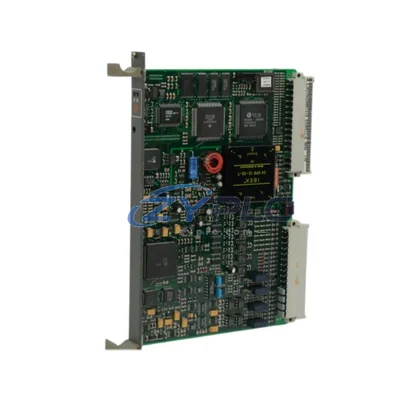
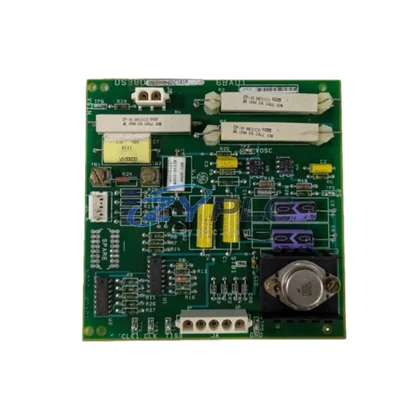
GE IS210AEPSG1BCB Circuit Board for Mark VI Automation
The GE IS210AEPSG1BCB is a industrial-grade excitation power supply board engineered for the GE Mark VI Turbine Control System. Designed to operate within demanding industrial environments, this circuit board plays a critical role in regulating excitation power delivery to generator and turbine drive systems — directly influencing energy consumption, equipment uptime, and overall plant efficiency. For facilities seeking to reduce idle power losses, stabilize control loop performance, and extend the operational lifespan of rotating machinery, the IS210AEPSG1BCB represents a precision-engineered solution backed by GE’s legacy in industrial automation.
In modern energy-intensive production environments, every watt of unnecessary consumption translates into measurable cost. The IS210AEPSG1BCB addresses this by providing stable, regulated excitation output that minimizes reactive power waste and prevents voltage fluctuation-induced stress on downstream components. When integrated into a properly configured Mark VI control architecture, this board contributes to tighter control loop timing, reduced thermal cycling on power electronics, and more predictable turbine response — all of which directly support energy efficiency targets at the plant level.
Product Specification Table
| Parameter |
Specification / Value |
| Part Number / SKU |
IS210AEPSG1BCB |
| Product Series |
GE Mark VI Turbine Control |
| Board Function |
Excitation Power Supply |
| Operating Voltage Range |
Regulated DC excitation output (Mark VI spec) |
| Power Efficiency Class |
industrial-grade regulated supply |
| Compatible Systems |
GE Mark VI, Mark VIe Turbine Control Platforms |
| Application Environment |
Gas turbine, steam turbine, generator excitation control |
| Maintenance Value |
Reduces reactive power loss; stabilizes excitation loop for lower heat generation |
| Condition |
New / Refurbished — Tested & Verified |
| Warranty |
Warranty and support terms confirmed before quote |
| Origin |
United States |
| Availability |
Confirmed via RFQ before quotation |
System Compatibility and Application
The IS210AEPSG1BCB does not operate in isolation — its efficiency contribution is amplified when deployed within a complete, well-integrated Mark VI control architecture. In a typical turbine automation setup, the board interfaces with the IS215UCVEH2A Mark VI VCMI Communication Board, which manages high-speed data exchange between the excitation subsystem and the central control processor. Accurate, low-latency communication ensures that excitation adjustments are executed in real time, preventing energy-wasting oscillation in the generator output.
On the I/O side, the IS200TREGH1B Turbine Regulation I/O Board collects analog and digital signals from field sensors — including temperature, speed, and voltage feedback — and feeds them into the Mark VI processor. This closed-loop data flow allows the IS210AEPSG1BCB to respond dynamically to load changes, reducing the energy penalty associated with over-excitation during partial-load operation. Complementing this, the IS200VTURH1BDD Turbine Control Board coordinates overall turbine sequencing, ensuring that the excitation system ramps up and down in alignment with actual power demand rather than fixed setpoints.
For drive-level maintenance planning, facilities running parallel motor-driven auxiliary systems — such as cooling fans, fuel pumps, and compressors — often pair the Mark VI excitation architecture with GE AF-650GP or AF-300E Series Variable Frequency Drives (VFDs). These drives regulate motor speed in proportion to actual process demand, eliminating the fixed-speed unplanned downtime that accounts for a significant share of auxiliary power consumption in turbine plants. The IS210AEPSG1BCB’s stable excitation output ensures that generator voltage remains within tolerance even as VFD-driven loads create harmonic disturbances on the bus.
Power quality monitoring is handled upstream by the IS200EPSMG1A Excitation Power Supply Monitor Board, which tracks input voltage, current draw, and thermal status of the excitation circuit. When anomalies are detected — such as rising junction temperatures or input voltage sag — the monitor board triggers protective responses before efficiency-degrading conditions escalate into faults. This predictive feedback loop is essential for maintaining the IS210AEPSG1BCB’s operating efficiency over extended production cycles.
At the HMI level, operators interact with the turbine control system through GE Cimplicity SCADA or the Mark VI Toolbox Engineering Workstation, where real-time energy dashboards display excitation current, generator output, and system efficiency metrics. These interfaces allow maintenance teams to identify drift in excitation performance before it results in measurable energy loss or unplanned downtime. The IS200DSPXH1D Digital Signal Processor Board within the Mark VI rack performs the high-speed calculations that underpin these efficiency metrics, processing feedback from the IS210AEPSG1BCB and adjacent boards at millisecond intervals.
Communication between the Mark VI system and plant-level maintenance planning platforms is typically handled via Modbus TCP, Profibus DP, or GE’s proprietary IONet protocol, supported by the IS215VCMIH2B Communication Interface Module. This connectivity enables the IS210AEPSG1BCB’s performance data to be aggregated into plant-wide energy reporting systems, supporting ISO 50001 maintenance planning compliance and continuous improvement initiatives.
Maintenance and Replacement Notes
In gas turbine power generation facilities, excitation system instability is one of the leading causes of reactive power inefficiency. When the excitation power supply board operates outside its calibrated parameters — due to component aging, thermal stress, or voltage transients — the generator’s power factor degrades, increasing reactive current draw from the grid and raising the facility’s overall energy cost. Replacing a degraded excitation board with a verified GE IS210AEPSG1BCB restores the excitation loop to factory specification, directly improving power factor and reducing reactive power penalties on the utility bill.
Beyond power factor correction, a properly functioning IS210AEPSG1BCB reduces the frequency of turbine trips caused by excitation faults. Each unplanned trip carries a significant energy cost: the turbine must be restarted from cold or warm state, consuming fuel and auxiliary power during the ramp-up sequence. By maintaining stable excitation output, the board supports continuous operation at optimal load points, where turbine thermal efficiency is highest. Facilities that have replaced aging excitation boards report measurable reductions in trip frequency and associated restart energy consumption.
Maintenance scheduling also benefits from a reliable excitation supply board. When the IS210AEPSG1BCB operates within specification, the Mark VI system’s diagnostic routines can accurately assess the health of connected components — including the excitation transformer, AVR (Automatic Voltage Regulator), and field winding insulation. This enables condition-based maintenance rather than time-based replacement, reducing unnecessary maintenance downtime and the energy cost of repeated startup cycles. Combined with the warranty and support terms confirmed before quote coverage provided with every unit, facilities can plan maintenance intervals with confidence, knowing that the board’s performance is guaranteed for a full year of operation.
For production lines where turbine-driven generators supply power to variable loads — such as batch processing plants, refineries, or large-scale manufacturing facilities — the IS210AEPSG1BCB’s contribution to load-following accuracy is particularly valuable. Tight excitation control allows the generator to track load changes without the voltage overshoot and undershoot that waste energy through resistive dissipation in load-side equipment. The result is a more stable plant electrical environment, lower unplanned downtime, and reduced stress on sensitive automation equipment throughout the facility.
Product Sourcing FAQ
Q1: How does the IS210AEPSG1BCB contribute to measurable operational stability in a turbine plant?
The IS210AEPSG1BCB regulates excitation power delivery to the generator, directly controlling the machine’s reactive power output and power factor. A calibrated, fully functional excitation board minimizes reactive current draw, reduces I²R losses in the generator windings, and prevents the unplanned downtime associated with over-excitation during partial-load operation. Facilities replacing degraded excitation boards typically observe improved power factor readings and reduced reactive power charges within the first billing cycle after installation.
Q2: Is the IS210AEPSG1BCB compatible with both Mark VI and Mark VIe control platforms?
The IS210AEPSG1BCB is designed for the GE Mark VI turbine control platform. Compatibility with Mark VIe systems depends on the specific rack configuration and firmware revision in use. We recommend providing your system’s rack layout and software version when inquiring, so our technical team can confirm compatibility before shipment. All units are tested against Mark VI specifications prior to dispatch.
Q3: What is the recommended replacement and testing process for this board?
Each IS210AEPSG1BCB unit undergoes functional testing prior to shipment, including excitation output verification, thermal cycling, and communication interface checks. Upon receipt, the board should be installed by a qualified Mark VI system engineer following GE’s standard board replacement procedure. Post-installation, the Mark VI Toolbox should be used to verify excitation loop calibration and confirm that all diagnostic flags are clear before returning the turbine to service. Our team can provide technical support documentation upon request.
Q4: What does the warranty and support terms confirmed before quote cover, and how is it claimed?
The warranty and support terms confirmed before quote covers manufacturing defects, functional failures under normal operating conditions, and premature component failure not caused by physical damage, incorrect installation, or operation outside specified parameters. To initiate a warranty claim, contact our support team with the unit’s serial number, purchase date, and a description of the observed fault. Replacement or repair will be arranged promptly to minimize your facility’s downtime. Warranty support is available via +86 19859288691 or plc.sales@zyplc.com.