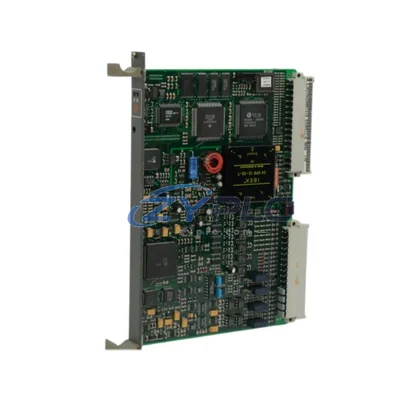
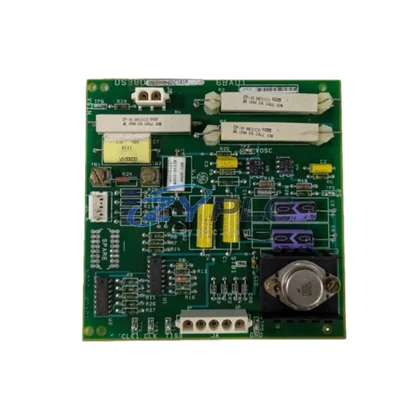
GE IS215REBFH1A Redundancy Ethernet Board for Mark VI
The GE IS215REBFH1A is a dedicated Redundancy Ethernet Board engineered for deployment within GE’s Mark VI Speedtronic turbine control platform. Rather than functioning as a standalone component, this board occupies a critical position within the layered architecture of a complete industrial control system — bridging the communication layer, the control layer, and the redundancy framework that modern power generation and process automation facilities depend upon. Understanding its role requires examining how it interacts with upstream controllers, downstream I/O modules, peer communication nodes, and the broader network infrastructure that sustains continuous, fault-tolerant operation.
Product Specification Table
| Parameter |
Specification |
| System Role |
Redundancy Ethernet Communication Board — Mark VI Control Backbone |
| Compatible Platform |
GE Mark VI Speedtronic Turbine Control System |
| Communication Protocol |
Ethernet (IONET / ARCNET compatible architecture) |
| Redundancy Support |
Triple Modular Redundancy (TMR) and Simplex configurations |
| Backplane Interface |
Mark VI VME-based backplane integration |
| Operating Voltage |
+5 VDC via backplane supply |
| Operating Temperature |
0°C to +60°C (industrial panel environment) |
| Form Factor |
Single-slot VME board |
| Mounting |
Mark VI controller rack / IS200 series enclosure |
| Warranty |
warranty terms confirmed during quotation — tested, verified, and ready for system integration |
System Compatibility Notes
The IS215REBFH1A does not operate in isolation. Its value is realized only when it is correctly positioned within a fully coordinated Mark VI control architecture. In a typical turbine control cabinet, the IS215REBFH1A works in concert with the IS215UCVEH2A — the primary Mark VI controller card — which handles the core logic execution and communicates redundancy status across the control network. The Ethernet board ensures that this controller can maintain synchronized communication with its peer controllers in a TMR configuration, where three independent control paths vote on output decisions to eliminate single-point failures.
At the I/O layer, the IS215REBFH1A supports reliable data exchange with terminal boards such as the IS200TSVCH1B (servo control terminal board) and the IS200VCRCH1B (voltage regulator control board), both of which depend on consistent, low-latency communication from the controller rack to execute precise actuator commands. Any disruption in the Ethernet redundancy path can cascade into servo instability or voltage regulation errors — making the IS215REBFH1A a foundational reliability component rather than a peripheral accessory.
Power integrity across the system is maintained by modules such as the IS200EPSMG2A power supply board, which provides regulated DC power to the VME backplane. The IS215REBFH1A draws its operating voltage from this backplane, and its stable operation is directly dependent on the quality of power conditioning upstream. In redundant power configurations, dual power supply modules ensure that the Ethernet board remains energized even during a single power supply failure.
For network-layer connectivity, the IS215REBFH1A interfaces with the plant’s IONET or Ethernet-based communication infrastructure, enabling the Mark VI system to exchange data with HMI stations running GE’s ToolboxST configuration environment, as well as with higher-level SCADA or DCS platforms. The IS200BPIIH1A backplane interconnect board and IS215ACLEH1A analog control board further extend the system’s I/O reach, while the IS200TREQH1B excitation terminal board manages generator field control — all relying on the communication stability that the IS215REBFH1A provides.
In systems where legacy ARCNET communication coexists with modern Ethernet infrastructure, the IS215REBFH1A serves as a bridge component, ensuring backward compatibility while supporting the migration toward higher-bandwidth Ethernet-based control networks. Components such as the IS200TRPGH2B protection terminal board and the DS200TCQAG1B analog I/O board are commonly found in the same control cabinet, and their reliable operation depends on the communication backbone that the IS215REBFH1A anchors.
Industrial Application Notes
The IS215REBFH1A finds its primary application in power generation facilities — gas turbine plants, combined-cycle power stations, and steam turbine installations — where the Mark VI platform is the standard control architecture. In these environments, the redundancy Ethernet board is essential for maintaining continuous turbine operation during scheduled maintenance windows, where one control path may be taken offline for inspection while the remaining paths sustain full operational control.
In petrochemical and refinery applications, the Mark VI system with IS215REBFH1A is deployed to control compressor trains, where process uptime is measured in years rather than hours. The board’s role in sustaining TMR communication integrity directly supports the facility’s safety instrumented system (SIS) architecture, ensuring that protective shutdowns are executed reliably and that false trips — which carry significant economic penalties — are minimized through voting logic integrity.
Water treatment and municipal utility facilities operating GE Mark VI systems benefit from the IS215REBFH1A’s ability to maintain communication continuity across geographically distributed control nodes. In these installations, the Ethernet board supports remote I/O communication over extended cable runs, enabling centralized control of pump stations, valve actuators, and flow measurement systems without sacrificing redundancy or response time.
Mining and metals processing operations, where environmental conditions include elevated dust, vibration, and temperature cycling, rely on the IS215REBFH1A’s industrial-grade design to maintain communication stability in harsh panel environments. The board’s compatibility with the Mark VI’s sealed enclosure designs ensures that it can operate reliably in conditions that would compromise commercial-grade networking hardware.
Product Compatibility FAQ
Q1: Is the IS215REBFH1A compatible with both TMR and Simplex Mark VI configurations?
Yes. The IS215REBFH1A supports both Triple Modular Redundancy (TMR) and Simplex Mark VI architectures. In TMR systems, three boards are installed — one per control path — and they synchronize redundancy status across the IONET communication network. In Simplex configurations, a single board provides the Ethernet communication function without the voting logic overhead. Confirm your system’s configuration with your GE Mark VI documentation or ToolboxST project file before ordering.
Q2: Can the IS215REBFH1A be installed and commissioned without taking the turbine offline?
In TMR configurations, it is possible to replace a failed IS215REBFH1A on one control path while the remaining two paths maintain turbine control — a procedure known as hot-swap maintenance. However, this procedure requires strict adherence to GE’s Mark VI maintenance protocols, including proper ESD precautions, backplane power sequencing, and post-installation communication verification via ToolboxST. ZYPLC recommends consulting your site’s maintenance procedures and GE documentation before attempting live replacement. All units supplied by ZYPLC are covered by a warranty terms confirmed during quotation and are tested prior to shipment to minimize commissioning risk.
Q3: What is included with the warranty terms confirmed during quotation, and how does ZYPLC support long-term spare parts availability?
Every IS215REBFH1A supplied by ZYPLC includes a warranty terms confirmed during quotation covering functional defects identified under normal operating conditions. Prior to shipment, each board undergoes functional testing to verify communication integrity and backplane compatibility. ZYPLC maintains a dedicated inventory of Mark VI series components — including related boards such as the IS215UCVEH2A, IS200TSVCH1B, and IS200EPSMG2A — to support long-term spare parts programs for facilities operating GE Mark VI systems beyond their original OEM support lifecycle. Contact our engineering team at plc.sales@zyplc.com or +86 19859288691 to discuss your spare parts strategy.