GE IS215WEMAH1BB Excitation Control Mark VIe: Control System and Upstream–Downstream Coordination
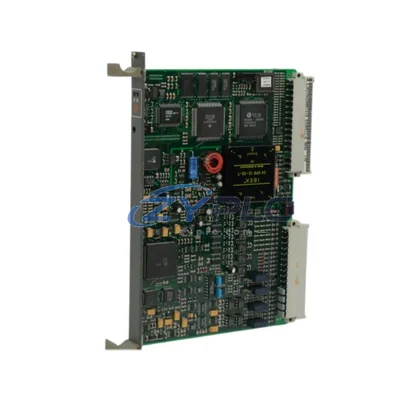
The GE IS215WEMAH1BB is a dedicated excitation control module engineered for deployment within the Mark VIe turbine control platform — one of GE’s most advanced distributed control architectures for gas turbines, steam turbines, and combined-cycle power generation systems. Rather than functioning as a standalone component, the IS215WEMAH1BB occupies a precisely defined role within a layered automation hierarchy, coordinating with upstream controllers, downstream actuators, I/O subsystems, communication networks, and human-machine interfaces to deliver consistent, reliable excitation management across the full operational lifecycle of the generating unit.
In modern power generation control architectures, excitation management is not an isolated function. The IS215WEMAH1BB interfaces directly with the Mark VIe controller backbone — typically anchored by a IS420UCSBH3A or IS420UCSBH2A UCB controller board — receiving real-time setpoints, protection commands, and synchronization signals through the IONet Ethernet-based control network. This tight integration ensures that excitation response is always coordinated with turbine speed, load demand, and grid frequency, eliminating the latency and signal degradation that can occur in loosely coupled architectures.
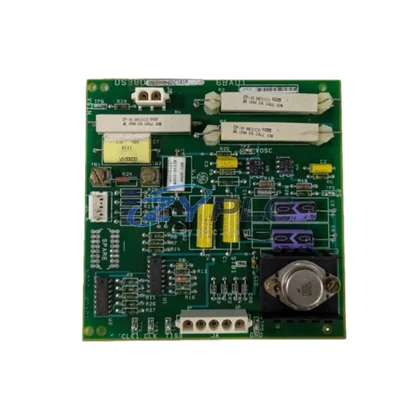
At the I/O layer, the IS215WEMAH1BB works in conjunction with analog and digital I/O modules such as the IS215ACLEH1A AC line excitation module and the IS200WEMAH1A — a closely related excitation management board that shares the same functional family and is often deployed in parallel or redundant configurations. Together, these modules handle voltage regulation feedback, field current sensing, reactive power control, and protective relay coordination, forming a coherent excitation subsystem that responds predictably to both steady-state and transient grid conditions.
From a network architecture perspective, the IS215WEMAH1BB communicates over the Mark VIe IONet, a deterministic Ethernet network that connects all control, I/O, and protection modules within the turbine control cabinet. This network layer also interfaces with IS420ESWAH1A Ethernet switches embedded within the Mark VIe cabinet, ensuring low-latency, high-reliability data exchange between the excitation module and the central controller. For plants operating dual or triple redundant control configurations, the IONet architecture supports seamless failover without interrupting excitation output — a critical requirement for grid-connected generation assets.
At the power supply layer, the IS215WEMAH1BB relies on stable DC bus power delivered through the Mark VIe power distribution system, typically sourced from IS200EPCTG1A or equivalent power conditioning modules. Voltage stability at the power layer directly affects excitation regulation precision; therefore, proper power supply sizing and redundancy planning are essential when integrating the IS215WEMAH1BB into new or retrofit control cabinet designs. Engineers specifying this module should verify that the cabinet power budget accommodates the module’s operating current draw under full excitation load conditions.
The human-machine interface layer in Mark VIe systems is typically served by GE’s ToolboxST configuration environment and operator displays connected via the plant data highway. Through ToolboxST, commissioning engineers can configure excitation setpoints, protection thresholds, AVR (Automatic Voltage Regulator) gain parameters, and alarm logic for the IS215WEMAH1BB without requiring hardware modifications. This software-defined configuration approach significantly reduces commissioning time and supports remote parameter adjustment during scheduled maintenance windows — an important advantage for plants operating under tight outage schedules.
At the execution layer, the IS215WEMAH1BB drives field excitation through thyristor bridge assemblies or IGBT-based excitation converters, coordinating with IS215WEMAH1BB-compatible field flashing circuits and protection relays to ensure safe generator startup, synchronization, and load pickup. The module’s output characteristics are tuned to match the generator’s field winding impedance, ensuring stable voltage regulation across the full load range from no-load to rated MVA output.
For plants implementing redundant excitation architectures — a common requirement in critical power generation facilities — the IS215WEMAH1BB supports hot-standby configurations where a secondary excitation channel, often built around a parallel IS200WEMAH1A board set, remains synchronized and ready to assume control within milliseconds of a primary channel fault. This redundancy design eliminates single points of failure in the excitation path and supports the high-availability requirements of grid operators and plant reliability engineers.
From a long-term maintenance perspective, the IS215WEMAH1BB’s modular design allows field replacement without disturbing adjacent modules in the Mark VIe rack. Spare module management is simplified by the board’s compatibility with the standard Mark VIe VME-style backplane, and diagnostic data logged through the IONet can be used to trend module health indicators — including thermal performance, voltage regulation error, and communication fault rates — enabling predictive maintenance strategies that reduce unplanned outages. Warranty terms are confirmed during quotation.
Product Specification Table
| Parameter |
Specification |
| System Role |
Excitation Control Module — Mark VIe Turbine Control Platform |
| Part Number |
IS215WEMAH1BB (also compatible: IS200WEMAH1A) |
| Brand / Series |
GE (General Electric) / Mark VIe |
| Module Type |
Excitation Management & Voltage Regulation |
| Control Network |
IONet (Deterministic Ethernet, Mark VIe backbone) |
| Backplane Compatibility |
Mark VIe VME-style rack backplane |
| Configuration Tool |
GE ToolboxST |
| Redundancy Support |
Hot-standby dual-channel excitation architecture |
| Power Input |
DC bus via Mark VIe power distribution (IS200EPCTG1A compatible) |
| Operating Environment |
Industrial control cabinet, IEC 61131-2 compliant environment |
| Application |
Gas turbine, steam turbine, combined-cycle generator excitation control |
| system integration |
Full system integration with Mark VIe controller, IONet, and ToolboxST |
| Warranty |
Warranty and support terms confirmed before quote — functional tested prior to shipment |
| Origin |
United States |
System Compatibility Notes
A complete Mark VIe excitation control system built around the IS215WEMAH1BB typically incorporates the following coordinated components: the IS420UCSBH3A UCB controller as the primary control processor; IS215ACLEH1A AC line excitation boards for field flashing and initial excitation; IS200WEMAH1A excitation management boards in redundant channel configurations; IS420ESWAH1A IONet Ethernet switches for deterministic control network communication; IS200EPCTG1A power conditioning modules for stable DC bus supply; and terminal board assemblies such as the IS200TBAIH2C for field wiring termination. HMI integration is achieved through GE ToolboxST workstations connected to the plant data highway, providing operators with real-time excitation status, AVR mode selection, and alarm management. This coordinated architecture ensures that every layer — from the controller to the field winding — operates as a unified, deterministic system rather than a collection of independent components.
Industrial Application Notes
The IS215WEMAH1BB is deployed across a wide range of power generation and industrial automation environments. In gas turbine power plants, it manages generator field excitation during startup, synchronization, and load following, coordinating with the Mark VIe turbine controller to maintain terminal voltage within grid code tolerances. In combined-cycle facilities, the module supports both gas turbine and steam turbine generators within a shared control architecture, simplifying spare parts management and reducing operator training requirements. In industrial cogeneration plants serving petrochemical, refinery, or steel mill loads, the IS215WEMAH1BB’s fast AVR response supports voltage stability during large motor starts and sudden load changes. In hydroelectric and pumped-storage facilities that have standardized on the Mark VIe platform, the module provides consistent excitation behavior across multiple generating units, simplifying fleet-wide maintenance and firmware management. For retrofit and modernization projects replacing legacy Mark V or Mark VI excitation systems, the IS215WEMAH1BB offers a direct upgrade path with improved diagnostics, network integration, and redundancy capabilities compared to earlier generation hardware.
Product Compatibility FAQ
Q1: Is the IS215WEMAH1BB compatible with both Mark VIe simplex and redundant (TMR) control configurations?
Yes. The IS215WEMAH1BB is designed for use within the Mark VIe platform, which supports simplex, dual-redundant, and Triple Modular Redundant (TMR) control architectures. In TMR configurations, three independent control channels — each with its own IS215WEMAH1BB or equivalent excitation module — vote on excitation output commands, ensuring that a single module failure does not interrupt generator operation. Configuration of the redundancy mode is performed through ToolboxST and does not require hardware modification of the module itself.
Q2: What commissioning steps are required when replacing an IS215WEMAH1BB in an operating plant?
Replacement of the IS215WEMAH1BB in an operating Mark VIe system follows a structured procedure: (1) download the existing ToolboxST configuration to a backup file; (2) de-energize the excitation cabinet and remove the faulty module; (3) install the replacement IS215WEMAH1BB and verify backplane seating; (4) restore the ToolboxST configuration to the new module; (5) perform a functional test of AVR setpoints, protection relay coordination, and IONet communication before returning the unit to service. ZYPLC supplies all modules with pre-shipment functional testing documentation to support this process.
Q3: What does the Warranty and support terms confirmed before quote cover, and what support is available during the warranty period?
The Warranty and support terms confirmed before quote provided by ZYPLC covers manufacturing defects, functional failures under normal operating conditions, and premature component degradation identified during the warranty period. Warranty claims are supported by ZYPLC’s technical team, who can assist with fault diagnosis, replacement logistics, and compatibility verification for the IS215WEMAH1BB within the customer’s specific Mark VIe architecture. Customers are encouraged to contact ZYPLC at plc.sales@zyplc.com or +86 19859288691 to initiate warranty support requests.