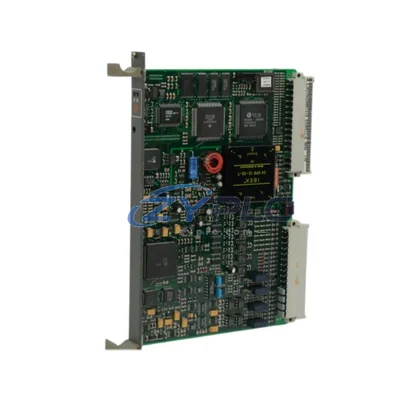
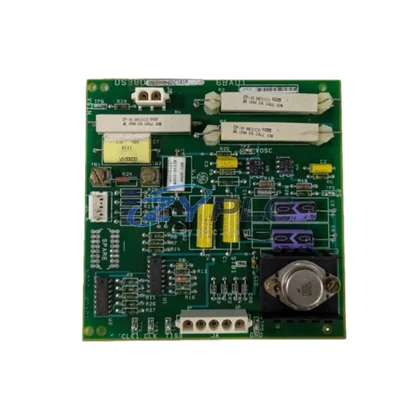
The GE IS215WERAH2B is a high-performance exciter regulator board engineered for the GE Mark VI turbine control platform. Designed to govern generator excitation with precision, this board plays a central role in maintaining voltage stability, optimizing reactive power output, and reducing downtime risk across industrial power generation and drive systems. For facilities operating gas turbines, steam turbines, or combined-cycle plants, the IS215WERAH2B delivers the closed-loop excitation control needed to sustain peak generator efficiency while minimizing thermal losses and idle energy draw.
At ZYPLC, every IS215WERAH2B unit is sourced from verified supply channels, subjected to full functional testing prior to shipment, and Warranty terms are confirmed during quotation. Fast dispatch and reliable stock availability ensure your production line stays operational without extended procurement delays.
Product Specification Table
| Parameter |
Specification / Value |
| Part Number |
IS215WERAH2B |
| Series |
GE Mark VI |
| Function |
Exciter Regulator / AVR Control |
| Operating Voltage |
24 VDC (nominal, Mark VI backplane) |
| Control Loop |
Closed-loop voltage and reactive power regulation |
| Compatible Systems |
GE Mark VI Turbine Control Platform |
| Application Environment |
Gas turbine, steam turbine, combined-cycle power plants |
| Maintenance Value |
Reduces excitation losses, stabilizes generator output, lowers reactive power waste |
| Communication Interface |
Mark VI I/O bus, IONET / ARCNET protocol support |
| Condition |
Tested, fully functional |
| Warranty |
Warranty and support terms confirmed before quote |
| Availability |
Confirmed via RFQ before quotation |
System Compatibility and Application
The IS215WERAH2B does not operate in isolation — it is one node in a tightly integrated maintenance planning architecture built around the GE Mark VI control platform. Understanding how this board interacts with surrounding components reveals its true value in reducing system-wide unplanned downtime.
At the controller level, the IS215WERAH2B interfaces directly with the Mark VI UCVEH processor module (IS215UCVEH2A), which coordinates turbine sequencing, load dispatch, and protection logic. The exciter board receives setpoint commands from this controller and adjusts field current accordingly, ensuring the generator tracks reactive power demand without over-exciting — a common source of unnecessary copper and iron losses.
On the I/O side, the IS200ERIOH1A exciter regulator I/O board works in tandem with the IS215WERAH2B to route analog feedback signals — including terminal voltage, field current, and power factor — back into the control loop. This real-time feedback enables the system to make continuous micro-adjustments that keep the generator operating at its efficiency peak rather than drifting into suboptimal excitation states.
For turbine speed and load sensing, the IS200VTURH1B turbine I/O board captures shaft speed and load angle data, feeding this into the Mark VI’s power management calculations. When combined with the IS215WERAH2B’s voltage regulation, the result is a coordinated response to load transients that minimizes fuel consumption per operating-hour generated.
The IS200TRPGH2B terminal protection board adds another layer of maintenance-focused control by monitoring for fault conditions — overvoltage, undervoltage, loss of excitation — that would otherwise force the turbine into an unplanned shutdown. By catching these conditions early and enabling controlled responses, the IS200TRPGH2B helps avoid the energy-intensive restart cycles that follow emergency trips.
Communication across the Mark VI architecture relies on the IONET and ARCNET protocols, with the IS200TSVCH1B serving as the communication interface board that links the exciter regulator subsystem to the broader plant DCS or SCADA network. This connectivity allows maintenance planning systems to pull real-time excitation data, enabling plant-level optimization decisions based on actual generator performance rather than estimated values.
Power supply integrity is maintained by the IS200EPBPG1A power supply board, which conditions the 24 VDC rail feeding the IS215WERAH2B and other Mark VI I/O modules. Stable, clean power delivery is essential for the precision analog circuits within the exciter regulator — voltage ripple or transients can introduce control errors that manifest as efficiency losses at the generator terminals.
For facilities that have integrated variable frequency drives into auxiliary systems — cooling fans, feedwater pumps, fuel gas compressors — the exciter regulator’s output stability directly influences drive performance. A well-regulated generator voltage reduces the harmonic distortion seen by connected VFDs, improving their efficiency and extending the service life of motor windings and drive capacitors.
The DS200TCQAG1B turbine control board rounds out the architecture by managing combustion sequencing and fuel control in gas turbine applications. Its interaction with the IS215WERAH2B ensures that as fuel flow and combustion efficiency change, the excitation system responds proportionally — preventing the reactive power swings that waste energy and stress the grid connection.
Maintenance and Replacement Notes
In a combined-cycle power plant running multiple GE Frame 7 or Frame 9 gas turbines, the IS215WERAH2B’s role in maintenance planning becomes immediately measurable. Excitation losses in a poorly regulated generator can account for 0.5–1.5% of total output — on a 100 MW unit, that represents 500 kW to 1.5 MW of continuous waste. The IS215WERAH2B’s closed-loop AVR function eliminates the manual trimming and reactive power hunting that characterizes older analog excitation systems, replacing it with deterministic, model-based control that holds the generator at its optimal operating point regardless of load fluctuations.
Downtime reduction is equally significant. Unplanned exciter failures are among the leading causes of forced outages in turbine-based generation. By maintaining a tested, warranted IS215WERAH2B in inventory — or replacing an aging board before failure — plant operators can eliminate this failure mode entirely. The warranty and support terms confirmed before quote provided with every ZYPLC-supplied unit means that if a board does exhibit a latent defect, replacement is covered without additional procurement cost.
For industrial facilities with cogeneration or captive power plants, the IS215WERAH2B also supports power factor correction at the generator level. By holding power factor close to unity or at a target leading/lagging value, the board reduces the reactive current flowing through plant distribution transformers and cables — lowering I²R losses throughout the facility’s electrical infrastructure. This effect compounds across shift cycles, delivering measurable reductions in monthly energy bills without any changes to production processes.
Predictive maintenance integration is another operational benefit. Because the IS215WERAH2B communicates excitation state data through the Mark VI I/O bus, condition monitoring systems can trend field current, terminal voltage deviation, and AVR output over time. Gradual drift in these parameters often signals developing faults in the exciter diode bridge, field winding insulation, or feedback sensor circuits — all of which can be addressed during planned maintenance windows rather than emergency shutdowns.
Product Sourcing FAQ
Q: How does the IS215WERAH2B reduce operating load compared to older excitation systems?
A: The IS215WERAH2B uses closed-loop digital AVR control to maintain generator terminal voltage and reactive power output at precise setpoints. Unlike older analog regulators that hunt around the setpoint and introduce reactive power oscillations, the IS215WERAH2B stabilizes excitation continuously — eliminating the excess field current and associated copper losses that result from over-excitation. The net effect is a measurable reduction in excitation system losses and improved generator efficiency across all load conditions.
Q: Is the IS215WERAH2B compatible with all Mark VI configurations?
A: The IS215WERAH2B is designed for the GE Mark VI turbine control platform and is compatible with standard Mark VI I/O bus architectures. It works alongside other Mark VI boards including the IS215UCVEH2A controller, IS200ERIOH1A I/O board, and IS200TSVCH1B communication interface. For specific frame configurations or custom Mark VI variants, contact ZYPLC’s technical team to confirm compatibility before ordering.
Q: Can the IS215WERAH2B replace a failed board directly, or does it require reconfiguration?
A: In most Mark VI installations, the IS215WERAH2B is a direct replacement for a failed unit of the same part number. The Mark VI platform stores configuration parameters in the controller, so the replacement board typically loads its operating parameters automatically upon installation. However, it is recommended to verify firmware revision compatibility and perform a functional test of the AVR loop after replacement to confirm correct operation before returning the unit to service.
Q: What does the warranty and support terms confirmed before quote cover, and what is the testing process?
A: Every IS215WERAH2B supplied by ZYPLC undergoes functional testing that verifies power-up behavior, I/O bus communication, and analog signal integrity before shipment. The warranty and support terms confirmed before quote covers defects in materials and workmanship — if a board fails under normal operating conditions within the warranty period, ZYPLC will provide a replacement unit. Warranty claims are processed through ZYPLC’s technical support team; contact details are provided below.