GE IS220PVIBH1A Industrial Data Link: Smart Factory Vibration Network Interface for Mark VI Systems
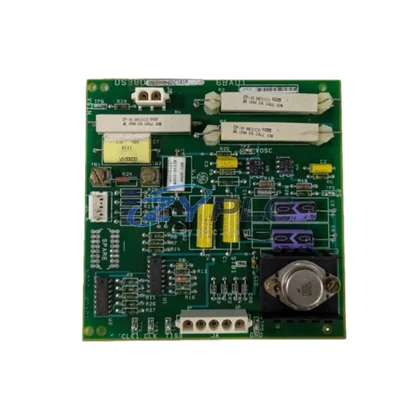
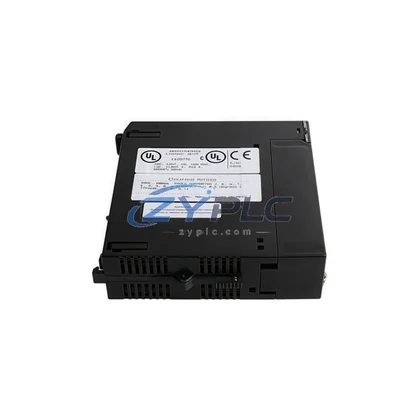
The GE IS220PVIBH1A (PVIB Vibration I/O Pack) is a precision-engineered industrial network interface module purpose-built for the GE Mark VI Turbine Control System. In modern smart factory and power generation environments, real-time vibration data is the backbone of predictive maintenance, asset protection, and operational continuity. The IS220PVIBH1A serves as the critical data acquisition and communication node between rotating machinery sensors, the Mark VI controller backbone, and upper-level SCADA and HMI platforms — enabling seamless, low-latency transmission of vibration signatures across the entire industrial data chain.
Designed to operate within GE’s IONet and ARCNET-based control architecture, this I/O pack acquires raw vibration signals from proximity probes, accelerometers, and velocity transducers mounted on turbines, compressors, and generators. It digitizes, conditions, and transmits this data in real time to the GE IS215UCVEH2A UCVE controller card, which acts as the central processing node for the Mark VI rack. From there, processed vibration vectors — including 1X, 2X amplitude, phase angle, and gap voltage — are forwarded via the IONet communication bus to the GE IS420UCSCH1A UCSC I/O terminal board and onward to the plant’s distributed control network.
Compatibility & Integration Notes
| Parameter |
Specification |
| SKU / Part Number |
IS220PVIBH1A |
| Brand / Manufacturer |
GE (General Electric) |
| Series |
Mark VI Turbine Control System |
| Module Type |
PVIB Vibration I/O Pack |
| Communication Protocol |
IONet (GE Proprietary), ARCNET |
| Interface Type |
I/O Pack — Rack-mounted, Mark VI backplane |
| Signal Input |
Proximity Probes, Accelerometers, Velocity Transducers |
| Transmission Capability |
Real-time vibration vector data (1X, 2X, Gap Voltage, Phase) |
| Network Compatibility |
GE Mark VI, Mark VIe, IONet, ARCNET, Modbus Gateway (via converter) |
| SCADA / HMI Integration |
Compatible via Mark VI controller to GE Cimplicity, iFIX, Wonderware |
| System Application |
Gas Turbine, Steam Turbine, Compressor, Generator Protection |
| Origin |
USA |
| Warranty |
Warranty and support terms confirmed before quote | Outgoing Inspection Tested |
Connected Automation Data Flow
In a fully integrated turbine control architecture, the IS220PVIBH1A sits at the front end of the vibration data pipeline. Proximity probes installed on the turbine shaft transmit raw Bently Nevada-compatible or GE-standard analog signals into the IS220PVIBH1A’s input channels. The module performs signal conditioning and analog-to-digital conversion before packaging the vibration data into IONet frames for transmission across the Mark VI backplane.
The GE IS215UCVEH2A UCVE controller receives these frames and executes protection logic — comparing live vibration amplitudes against configured alarm and trip thresholds. When a vibration anomaly is detected, the controller issues trip commands to the GE IS200TSVOH1A servo output terminal board, which actuates the turbine’s stop valves within milliseconds. Simultaneously, alarm data is broadcast via the plant’s Ethernet network to the GE Cimplicity HMI workstation, where operators receive real-time graphical trend displays and alarm banners.
For facilities integrating legacy Modbus RTU devices — such as older vibration transmitters or third-party PLCs — a Modbus-to-IONet protocol gateway can be inserted between the field device layer and the Mark VI rack, ensuring that all vibration data, regardless of source protocol, converges into a unified data stream. This gateway approach also enables the IS220PVIBH1A’s data to be forwarded to OSIsoft PI or similar historian platforms for long-term trend analysis and predictive maintenance modeling.
Within the Mark VI rack, the IS220PVIBH1A works in concert with companion I/O packs such as the GE IS220PTCCH1A (thermocouple I/O pack) and the GE IS220PRTDH1A (RTD temperature I/O pack), collectively feeding the UCVE controller with a comprehensive multi-parameter dataset covering vibration, temperature, and process variables. This multi-signal convergence is essential for turbine health monitoring algorithms that correlate vibration spikes with thermal excursions or load transients.
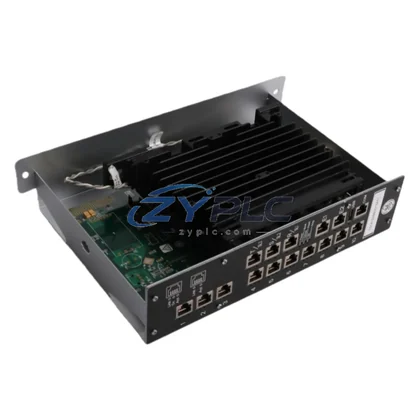
At the network layer, the Mark VI system’s IONet bus connects to the plant’s industrial Ethernet backbone via the GE IS420UCSCH1A communication terminal board, which bridges the proprietary IONet protocol to standard TCP/IP for integration with plant-wide SCADA systems. Remote I/O extensions using GE IS200 series terminal boards further expand the system’s reach to distributed field devices across large turbine halls or multi-unit power plants. Edge computing gateways installed at the substation level can aggregate data from multiple Mark VI racks, enabling fleet-wide vibration analytics and remote diagnostics accessible from centralized control rooms or cloud-based monitoring platforms.
Solving Data Isolation in Industrial Sites
One of the most persistent challenges in legacy power generation and heavy industrial facilities is protocol fragmentation — where vibration monitoring systems, DCS platforms, and safety instrumented systems each speak different communication languages, creating data silos that prevent holistic asset visibility. The IS220PVIBH1A, operating within the GE Mark VI’s unified IONet architecture, directly addresses this by standardizing vibration data acquisition at the source and making it immediately available to any system connected to the Mark VI network.
For plants running mixed-vendor environments — combining GE Mark VI turbine controllers with third-party Siemens S7, Allen-Bradley ControlLogix, or Yokogawa DCS platforms — protocol conversion modules can bridge the IONet data stream to Profibus DP, EtherNet/IP, or FOUNDATION Fieldbus, eliminating data islands and enabling a single SCADA dashboard to display vibration, process, and safety data from all assets simultaneously.
Remote monitoring is another critical capability enabled by the IS220PVIBH1A’s network integration. With the Mark VI system connected to a plant’s WAN or VPN infrastructure, maintenance engineers can access live vibration trend data, historical alarm logs, and diagnostic reports from any location — reducing the need for on-site inspections and enabling faster response to developing faults. This remote diagnostics capability is particularly valuable for offshore platforms, remote power stations, and multi-site industrial operations where travel costs and response times are significant operational constraints.
Production line transparency — knowing exactly which machine is vibrating at what amplitude, at what time, and under what load conditions — is the foundation of predictive maintenance programs. The IS220PVIBH1A’s high-resolution vibration data, when fed into analytics platforms, enables maintenance teams to move from reactive repair cycles to condition-based maintenance schedules, reducing downtime and extending equipment service life. System expansion is equally straightforward: additional IS220PVIBH1A modules can be added to the Mark VI rack to monitor additional measurement points as plant capacity grows, without requiring changes to the existing network architecture.
Industrial Connectivity FAQ
Q1: What communication protocols does the GE IS220PVIBH1A support, and can it integrate with non-GE control systems?
The IS220PVIBH1A communicates natively via GE’s IONet and ARCNET protocols within the Mark VI control architecture. Integration with non-GE systems — such as Siemens, Rockwell, or Yokogawa platforms — is achievable through protocol gateway modules that convert IONet data to Modbus TCP, EtherNet/IP, or Profibus DP, enabling cross-platform SCADA and historian integration without replacing the existing Mark VI infrastructure.
Q2: How does the IS220PVIBH1A ensure network stability and data integrity in high-vibration industrial environments?
The module is designed to operate in the harsh electrical and mechanical environments typical of turbine halls, with robust EMI shielding and deterministic IONet communication that guarantees fixed-cycle data transmission. The Mark VI system’s redundant controller architecture further ensures that a single module or communication path failure does not interrupt vibration monitoring or protection functions.
Q3: What is the typical communication latency for vibration data from the IS220PVIBH1A to the SCADA/HMI layer?
Within the Mark VI rack, IONet cycle times are typically in the range of 10–40 milliseconds, ensuring that vibration alarm conditions are detected and acted upon within one control cycle. End-to-end latency from the I/O pack to the HMI display depends on the plant network architecture but is generally well within the 100–500 millisecond range acceptable for operator alarm notification and trend display.
Q4: Does ZYPLC provide outgoing inspection testing and warranty coverage for the IS220PVIBH1A?
Yes. Every IS220PVIBH1A unit shipped by ZYPLC undergoes outgoing functional inspection to verify communication integrity and signal channel performance before dispatch. Warranty terms are confirmed during quotation. Availability and shipment timing are confirmed by RFQ via DHL or FedEx international express, with lead times typically under 3 business days for RFQ-confirmed availability items.
—