GE IS220PVIBH1AD: Industrial Data Link for Mark VIe Turbine Control Networks
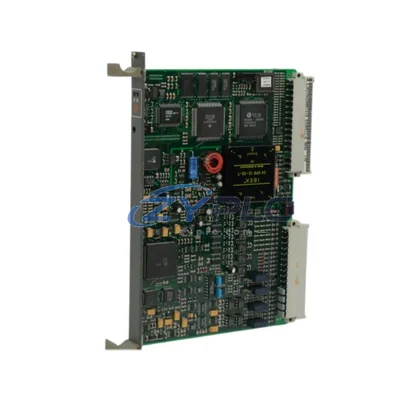
The GE IS220PVIBH1AD is a high-performance vibration monitoring module engineered for the GE Mark VIe Speedtronic turbine control platform. Designed to serve as a critical node in the industrial data chain, this module captures real-time vibration signals from rotating machinery — gas turbines, steam turbines, and compressors — and transmits structured diagnostic data across the Mark VIe distributed control network. In smart factory and power generation environments where milliseconds of latency can trigger unplanned shutdowns, the IS220PVIBH1AD delivers the signal integrity and network reliability that modern industrial automation demands.
As industrial sites move toward fully connected architectures, the IS220PVIBH1AD functions as a precision data acquisition node, bridging field-level vibration sensors with upper-layer SCADA systems, HMI workstations, and enterprise asset management platforms. Its role in the data flow is foundational: raw vibration waveforms from proximity probes and accelerometers are conditioned, digitized, and forwarded through the Mark VIe IONet communication backbone — enabling real-time monitoring, alarm management, and remote diagnostics without interrupting turbine operation.
Compatibility & Integration Notes
| Parameter |
Specification |
| Module SKU |
IS220PVIBH1AD |
| Compatible Platform |
GE Mark VIe Speedtronic Turbine Control System |
| Communication Protocol |
IONet (GE Proprietary Industrial Ethernet), Modbus TCP (via gateway) |
| Interface Type |
Backplane I/O Bus, RJ45 Ethernet Port |
| Signal Input |
Vibration (Proximity Probe / Accelerometer), Speed, Phase Reference |
| Transmission Capability |
Real-time vibration waveform, RMS, peak-to-peak, gap voltage data |
| Network Compatibility |
Mark VIe IONet, EtherNet/IP (via IS220PTURH1B gateway module) |
| System Application |
Gas Turbine, Steam Turbine, Compressor, Generator Protection |
| SCADA/HMI Integration |
GE ToolboxST, Cimplicity HMI, OSIsoft PI, third-party OPC-UA gateways |
| Warranty |
Warranty and support terms confirmed before quote | Tested & Verified Before Shipment |
Connected Automation Data Flow
In a fully integrated Mark VIe turbine control architecture, the IS220PVIBH1AD sits at the intersection of field instrumentation and the plant-wide communication network. Vibration signals originating from Bently Nevada-compatible proximity probes or GE-approved accelerometers are routed into the IS220PVIBH1AD’s analog input channels. The module performs signal conditioning and analog-to-digital conversion before packaging the data into IONet frames for transmission across the Mark VIe controller backplane.
The IS215VCMIH2CC VME communication module and the IS215UCVEH2A controller board work in tandem with the IS220PVIBH1AD to manage data routing within the Mark VIe rack. Processed vibration data — including shaft displacement, bearing temperature correlation, and rotational speed — is forwarded to the IS220PTURH1B turbine protection module, which cross-references vibration thresholds against trip setpoints in real time. If vibration amplitude exceeds configured limits, the protection chain triggers an automated shutdown sequence within milliseconds, preventing catastrophic mechanical failure.
At the network layer, the Mark VIe IONet backbone connects the IS220PVIBH1AD data stream to the IS215ACLEH1A analog control module and the IS220PTCCH1B thermocouple input module, enabling multi-parameter correlation between vibration, temperature, and pressure data. This correlated dataset is then made available to the plant SCADA system — typically GE Cimplicity or a third-party platform via an IS215UCVEH2A-hosted OPC-DA/OPC-UA server — where operators monitor turbine health trends on HMI dashboards in real time.
For remote diagnostic scenarios, the Mark VIe network gateway bridges the IONet segment to the plant’s industrial Ethernet backbone, allowing the IS220PVIBH1AD’s vibration data to be accessed by remote engineering workstations running GE ToolboxST configuration software. This enables off-site engineers to review vibration spectra, adjust alarm setpoints, and perform firmware diagnostics without physical access to the control cabinet — a critical capability for offshore platforms, remote power stations, and unmanned compressor stations.
Edge computing nodes and industrial data historians — such as OSIsoft PI or GE Predix — subscribe to the IS220PVIBH1AD data stream via the IONet-to-Ethernet gateway, archiving time-series vibration records for predictive maintenance analytics. When integrated with the IS220PSVOH1B servo output module and the IS215VPROH1B protection relay output module, the complete Mark VIe system forms a closed-loop condition monitoring and protection network that spans from raw sensor signal to enterprise-level asset management — with the IS220PVIBH1AD as the essential data origination point.
Solving Data Isolation in Industrial Sites
One of the most persistent challenges in turbine control environments is protocol fragmentation — legacy vibration monitoring systems using proprietary serial protocols that cannot communicate natively with modern Ethernet-based SCADA platforms. The IS220PVIBH1AD addresses this by operating natively within the Mark VIe IONet architecture, which supports seamless data exchange with EtherNet/IP, Modbus TCP, and OPC-UA endpoints through the Mark VIe gateway layer. This eliminates the data silos that arise when vibration data is trapped in standalone monitoring systems disconnected from the plant DCS.
For sites undergoing digital transformation, the IS220PVIBH1AD enables production line transparency by making vibration data continuously available to upper-layer systems without manual data extraction. Operators gain a real-time view of rotating equipment health across multiple turbine units simultaneously, with alarm events automatically propagated to SCADA dashboards and mobile notification systems. Remote monitoring capabilities reduce the need for on-site inspection rounds, lowering operational costs and improving safety in hazardous environments.
System scalability is another key advantage. The Mark VIe platform supports modular expansion — additional IS220PVIBH1AD modules can be added to the rack to monitor additional vibration measurement points as plant capacity grows, without requiring changes to the existing network infrastructure. This plug-and-play expandability, combined with the module’s backward compatibility with Mark VI configurations via appropriate gateway modules, protects the customer’s existing control system investment while enabling incremental modernization.
Every IS220PVIBH1AD unit supplied by ZYPLC undergoes functional verification testing prior to shipment, including communication link validation, channel accuracy verification, and network handshake confirmation with a Mark VIe test rack. This pre-shipment testing protocol ensures that the module arrives ready for installation, minimizing commissioning time and reducing the risk of field failures during turbine startup sequences.
Industrial Connectivity FAQ
Q1: What communication protocols does the IS220PVIBH1AD support, and can it integrate with third-party SCADA systems?
The IS220PVIBH1AD communicates natively over GE’s IONet industrial Ethernet protocol within the Mark VIe backplane. Integration with third-party SCADA systems — including Wonderware, Ignition, and OSIsoft PI — is achieved through the Mark VIe network gateway, which supports OPC-DA, OPC-UA, and Modbus TCP translation. This allows vibration data to be consumed by any SCADA platform with standard industrial protocol support.
Q2: How does the IS220PVIBH1AD handle network latency in real-time turbine protection applications?
The Mark VIe IONet architecture is designed for deterministic, low-latency communication, with scan cycle times typically in the range of 10–40 milliseconds depending on system configuration. The IS220PVIBH1AD’s onboard signal processing ensures that vibration data is pre-processed at the module level before transmission, reducing the computational load on the central controller and maintaining protection response times well within turbine trip requirements.
Q3: Is the IS220PVIBH1AD compatible with both Mark VI and Mark VIe control systems?
The IS220PVIBH1AD is designed for the Mark VIe platform. Compatibility with legacy Mark VI systems depends on the specific rack configuration and gateway modules in use. ZYPLC’s technical team can assess your existing system configuration and recommend the appropriate module variant or gateway solution to ensure seamless integration. Contact us at plc.sales@zyplc.com for a compatibility review.
Q4: What does the warranty and support terms confirmed before quote cover, and what is the lead time for RFQ-confirmed units?
All IS220PVIBH1AD modules supplied by ZYPLC are Warranty terms are confirmed during quotation. Shipment timing is confirmed after RFQ review, testing, and export packing. Each unit is tested and verified before shipment, with a test report available upon request. For urgent requirements, contact +86 19859288691 for expedited processing.