GE RPS80EEC: Industrial Data Link for Smart Factory Connectivity in Mark VI Systems
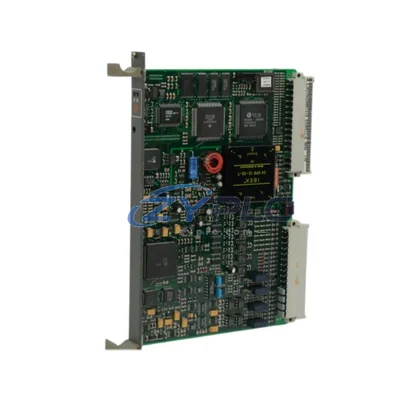
The GE RPS80EEC is a high-performance industrial network interface module engineered for seamless integration within GE’s Mark VI turbine control architecture. Designed to bridge field-level devices and upper-level supervisory systems, the RPS80EEC serves as a critical communication node in modern smart factory environments — enabling real-time data exchange between PLCs, remote I/O modules, HMI panels, SCADA platforms, and enterprise-level MES systems. Whether deployed in power generation, oil & gas, or heavy process industries, this module delivers the protocol flexibility and network stability that industrial automation demands.
Compatibility & Integration Notes
| Attribute |
Specification |
| SKU / Part Number |
RPS80EEC |
| Brand |
GE (General Electric) |
| Series |
Mark VI Turbine Control System |
| Product Type |
Industrial Network Interface / Communication Module |
| Protocol Support |
Modbus RTU/TCP, PROFIBUS DP, DNP3, OPC-UA, Ethernet/IP |
| Interface Type |
VME Bus, RS-485, RJ-45 Ethernet |
| Transmission Capability |
Real-time cyclic and acyclic data transfer, deterministic latency |
| Network Compatibility |
Industrial Ethernet, PROFIBUS, Serial Networks, DCS Backplane |
| System Application |
SCADA Integration, HMI Communication, DCS Gateway, Remote I/O Bridging |
| Origin |
United States |
| Warranty |
Warranty and support terms confirmed before quote |
| Availability |
Confirmed via RFQ before quotation |
Connected Automation Data Flow
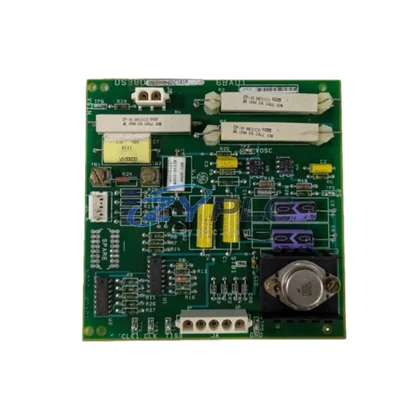
In a typical Mark VI-based control architecture, the GE RPS80EEC sits at the heart of the industrial data pipeline. Signal acquisition begins at the field level, where sensors — including thermocouples, pressure transmitters, and vibration probes — feed raw process data into the Mark VI I/O pack modules such as the GE IS200TBAIH1C terminal board assembly. These analog and digital signals are conditioned and passed upstream through the VME backplane, where the RPS80EEC handles protocol encapsulation and network routing.
On the controller side, the GE Mark VI UCSC (Unit Controller) processes the incoming data streams and issues control commands back to field actuators. The RPS80EEC acts as the communication bridge, translating Mark VI’s proprietary IONet protocol into standard industrial protocols such as Modbus TCP or PROFIBUS DP, enabling interoperability with third-party PLCs — including Siemens S7-300/S7-400 series controllers commonly found in hybrid automation environments.
For remote I/O expansion, the RPS80EEC interfaces with distributed I/O racks over PROFIBUS DP, supporting modules like the GE IS200BIOI1C binary I/O board. This allows plant engineers to extend the control network across large facility footprints without signal degradation or latency penalties. The deterministic communication cycle ensures that time-critical control loops — such as turbine speed regulation and load balancing — remain within acceptable response windows.
At the supervisory layer, the RPS80EEC connects to GE iFIX SCADA or Wonderware InTouch HMI platforms via OPC-UA or Modbus TCP, delivering live process variables, alarm states, and diagnostic data to operator workstations. This integration enables real-time monitoring of turbine exhaust temperatures, shaft vibration levels, and fuel flow rates — all visualized on dynamic HMI screens without manual data entry or polling delays.
For drive-level integration, the RPS80EEC communicates with GE AF-600 FP variable frequency drives deployed on auxiliary motor circuits, retrieving speed feedback and fault codes over the industrial network. Similarly, edge gateway devices such as the Moxa MGate MB3480 can be deployed alongside the RPS80EEC to extend Modbus RTU serial segments into the Ethernet backbone, ensuring legacy field instruments remain visible to the SCADA system.
Industrial power conditioning is provided by Phoenix Contact QUINT-PS series DIN-rail power supplies, which deliver stable 24VDC to the communication module and associated I/O hardware — a critical factor in maintaining network uptime in electrically noisy industrial environments.
Solving Data Isolation in Industrial Sites
One of the most persistent challenges in industrial automation is data isolation — the condition where field devices, controllers, and supervisory systems operate in disconnected silos, preventing plant-wide visibility and coordinated control. The GE RPS80EEC directly addresses this problem through its multi-protocol gateway capability.
In facilities where legacy serial devices coexist with modern Ethernet-based systems, the RPS80EEC performs transparent protocol conversion, allowing Modbus RTU instruments to appear as native OPC-UA nodes on the plant network. This eliminates the need for costly rip-and-replace upgrades, preserving existing field instrumentation investments while enabling full SCADA integration.
Remote monitoring is another area where the RPS80EEC delivers measurable value. By exposing real-time process data over standard industrial protocols, remote engineers can access live turbine performance metrics, historical trend data, and active alarm lists from any authorized workstation — including off-site control rooms and mobile diagnostic terminals. This capability is essential for predictive maintenance programs, where early detection of anomalies such as bearing wear or combustion instability can prevent unplanned outages.
Production line transparency is achieved through the RPS80EEC’s ability to aggregate data from multiple Mark VI controllers and present a unified process view to the SCADA historian. Plant managers gain access to KPIs including availability, heat rate efficiency, and mean time between failures — enabling data-driven decisions on maintenance scheduling and capacity planning.
System scalability is built into the RPS80EEC’s architecture. As production demands grow, additional I/O packs and communication nodes can be added to the Mark VI network without disrupting existing communication paths. The module’s VME bus architecture supports hot-swap capable configurations, minimizing maintenance windows and maximizing plant uptime.
Every GE RPS80EEC unit supplied by ZYPLC undergoes pre-shipment functional testing, including communication loop verification, protocol handshake confirmation, and power-on self-test validation. This ensures that each module arrives prepared for installation after site verification and commissioning, reducing site startup time and engineering risk.
Industrial Connectivity FAQ
Q1: What communication protocols does the GE RPS80EEC support?
The RPS80EEC supports multiple industrial protocols including Modbus RTU, Modbus TCP, PROFIBUS DP, DNP3, OPC-UA, and Ethernet/IP. This multi-protocol capability makes it compatible with a wide range of PLCs, SCADA platforms, HMI systems, and DCS environments, enabling seamless integration across heterogeneous automation networks.
Q2: How does the RPS80EEC ensure network stability in high-noise industrial environments?
The module is designed with industrial-grade EMC shielding and supports deterministic communication cycles that maintain consistent data throughput even in electrically noisy environments typical of power plants and heavy manufacturing facilities. Redundant communication paths can be configured within the Mark VI architecture to provide failover protection against single-point network failures.
Q3: Can the RPS80EEC be integrated with existing SCADA and HMI systems without replacing field devices?
Yes. The RPS80EEC’s protocol gateway functionality allows it to bridge legacy serial field devices with modern Ethernet-based SCADA and HMI platforms. Existing Modbus RTU instruments, PROFIBUS DP sensors, and serial communication devices can be integrated into OPC-UA or Ethernet/IP networks without hardware replacement, protecting existing capital investments.
Q4: What warranty and pre-shipment testing does ZYPLC provide for the GE RPS80EEC?
All GE RPS80EEC units supplied by ZYPLC are Warranty terms are confirmed during quotation. Prior to shipment, each unit undergoes comprehensive functional testing including communication protocol verification, power-on self-test, and signal integrity checks. Detailed test reports are available upon request, and expedited shipping options are available for urgent project requirements.