GE UR6EV Industrial Network Interface for UR Series Systems: Bridging Field Devices and Smart Factory Data Links
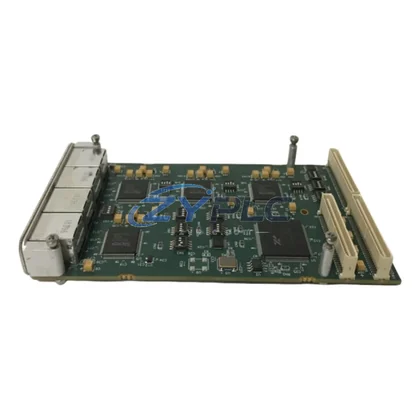
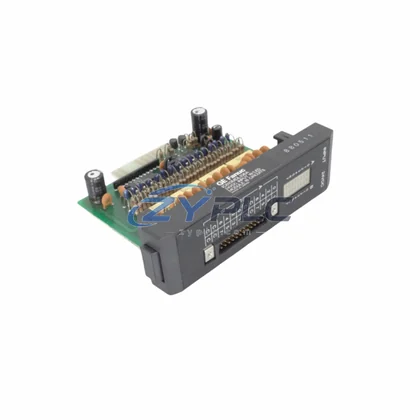
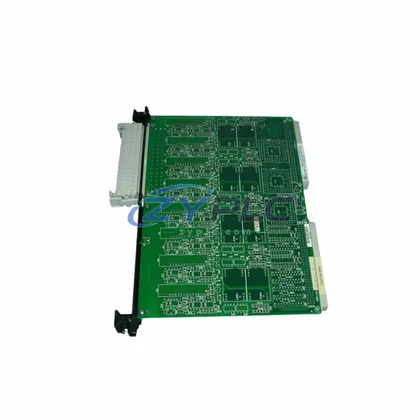
The GE UR6EV is a high-performance digital input module engineered for the GE UR Series platform — one of the most widely deployed protective relay and substation automation architectures in industrial power systems. Designed to capture discrete field signals from switchgear, circuit breakers, transformer status contacts, and auxiliary relay outputs, the UR6EV serves as a critical data acquisition node within the broader industrial communication chain. Whether integrated into a substation automation network, a SCADA-driven energy management system, or a distributed protection scheme, the UR6EV delivers reliable, real-time digital signal ingestion that feeds upstream control and monitoring platforms with the accuracy and speed that modern smart grid and smart factory environments demand.
Compatibility & Integration Notes
| Parameter |
Specification |
| Supported Protocols |
IEC 61850 GOOSE, DNP3, Modbus RTU, IEC 60870-5-101/104 |
| Interface Type |
Digital Input (Dry Contact / Wet Contact) |
| Transmission Capability |
High-speed discrete signal acquisition, sub-cycle response |
| Network Compatibility |
UR Series backplane, IEC 61850 station bus, SCADA LAN/WAN |
| System Application |
Substation Automation, Protection Relay, SCADA, HMI Integration |
| Product Category |
Industrial Digital Input Module — Protective Relay Platform |
| Origin |
United States |
| Warranty |
warranty terms confirmed during quotation, Pre-shipment Functional Test Included |
Connected Automation Data Flow
In a typical substation or industrial power protection architecture, the GE UR6EV sits at the signal acquisition layer, collecting discrete status inputs from field devices — breaker auxiliary contacts, transformer tap position indicators, motor run/stop feedback, and protection relay trip outputs. These signals are ingested by the UR6EV and passed across the UR Series backplane to the main processing module, where they are time-stamped and formatted for upstream transmission.
Within the UR Series chassis, the UR6EV works in close coordination with analog input modules such as the GE UR6AH (AC analog input) and current/voltage measurement cards like the UR6DH, which together provide a complete picture of both analog waveform data and discrete switching events. Communication modules such as the UR6CH and UR7CH handle protocol conversion and network transmission — translating the aggregated field data into IEC 61850 GOOSE messages or DNP3 data objects that are forwarded to the station HMI or SCADA master.
At the SCADA layer, platforms such as GE’s own GridSolutions EnerVista suite or third-party SCADA gateways receive the structured data streams from the UR Series relay. The UR6EV’s digital inputs contribute to real-time breaker status dashboards, protection event logs, and alarm annunciation panels. When a breaker trips or a transformer differential protection element operates, the UR6EV captures the associated auxiliary contact change-of-state within milliseconds, ensuring that the SCADA operator console reflects the actual field condition with minimal latency.
For distributed protection schemes spanning multiple substations, the UR6EV-equipped relay chassis communicates over fiber-optic or Ethernet-based station buses alongside peer devices such as the GE UR8DH and UR8AH modules, enabling inter-relay communication for line differential protection and busbar protection applications. Remote terminal units (RTUs) and industrial edge gateways aggregate the DNP3 or IEC 60870-5-104 data streams from multiple UR Series relays and forward consolidated datasets to the energy management system (EMS) or distribution management system (DMS) at the control center.
In smart factory and industrial power distribution applications, the UR6EV integrates with motor control centers (MCCs), variable frequency drives (VFDs), and intelligent electronic devices (IEDs) across the plant floor. Discrete feedback signals from VFD run/fault outputs, MCC contactor status, and PLC digital output modules are wired into the UR6EV inputs, creating a unified digital signal map that feeds both the local protection relay logic and the plant-wide SCADA historian. Modules such as the GE UR5AH and UR9CH extend this architecture to cover additional feeder bays and communication redundancy paths, ensuring that no single point of failure can isolate a section of the plant from the central monitoring system.
Solving Data Isolation in Industrial Sites
One of the most persistent challenges in industrial power and process automation is the fragmentation of field data across incompatible protocols and isolated device islands. Legacy substations often mix Modbus RTU devices, proprietary relay communication formats, and newer IEC 61850-capable IEDs — creating data silos that prevent operators from achieving a unified, real-time view of the electrical network.
The GE UR6EV, as part of the UR Series platform, directly addresses this challenge. By standardizing digital input acquisition within a multi-protocol relay chassis, the UR6EV eliminates the need for separate signal conditioning hardware or protocol converters at the field level. The UR Series relay processes the UR6EV’s digital inputs natively and exposes them through IEC 61850 data models, DNP3 binary input objects, and Modbus register maps simultaneously — allowing legacy SCADA systems and modern IEC 61850 station automation systems to coexist on the same network without data translation gaps.
Remote diagnostics are significantly enhanced by the UR6EV’s integration into the UR Series communication architecture. Maintenance engineers can remotely query the status of every digital input channel via the relay’s Ethernet port, review time-stamped event records, and verify wiring integrity without dispatching field personnel. This capability is particularly valuable for unmanned substations and remote industrial sites where on-site inspection is costly and time-consuming.
System expansion is equally straightforward. The modular UR Series backplane supports the addition of further input/output modules — including additional UR6EV cards for expanded digital input capacity — without requiring changes to the relay’s protection logic or communication configuration. This scalability ensures that the UR6EV investment remains relevant as plant layouts evolve, new feeders are added, or protection schemes are upgraded to meet revised grid codes.
Every GE UR6EV unit supplied by ZYPLC undergoes pre-shipment functional testing to verify channel continuity, input threshold response, and backplane communication integrity. Units are shipped with a warranty terms confirmed during quotation covering manufacturing defects and operational failures under normal service conditions. Availability confirmed by RFQ inventory ensures short lead times for urgent replacement and project commissioning requirements.
Industrial Connectivity FAQ
Q1: What communication protocols does the GE UR6EV support for SCADA integration?
The UR6EV operates within the GE UR Series relay platform, which natively supports IEC 61850 GOOSE and MMS, DNP3 (serial and TCP/IP), Modbus RTU, and IEC 60870-5-101/104. Digital input data captured by the UR6EV is exposed through all active protocol interfaces simultaneously, allowing seamless integration with both legacy SCADA masters and modern IEC 61850 station automation systems without additional protocol gateways.
Q2: How does the UR6EV handle communication latency in time-critical protection applications?
The UR6EV is designed for sub-cycle digital input response, with change-of-state detection and backplane reporting occurring within the relay’s fundamental processing cycle. For IEC 61850 GOOSE-based inter-relay communication, the UR Series platform achieves typical end-to-end latency well within the Performance Class P2/P3 requirements defined by IEC 61850-5, making the UR6EV suitable for high-speed busbar protection and line differential schemes.
Q3: Can the GE UR6EV be added to an existing UR Series chassis without reconfiguring the entire relay?
Yes. The UR Series backplane architecture supports hot-swap module insertion in many configurations, and the relay’s EnerVista UR Setup software allows new I/O modules to be mapped to protection and control logic without requiring a full relay reconfiguration. Consult the specific UR Series model’s hardware manual to confirm hot-swap support for your chassis revision before field installation.
Q4: What warranty and pre-shipment testing does ZYPLC provide for the GE UR6EV?
All GE UR6EV units supplied by ZYPLC are covered by a warranty terms confirmed during quotation from the date of shipment. Each unit undergoes pre-shipment functional testing including digital input channel verification, backplane communication checks, and visual inspection for physical integrity. Test records are available upon request. Expedited shipping options are available for urgent project and maintenance requirements.