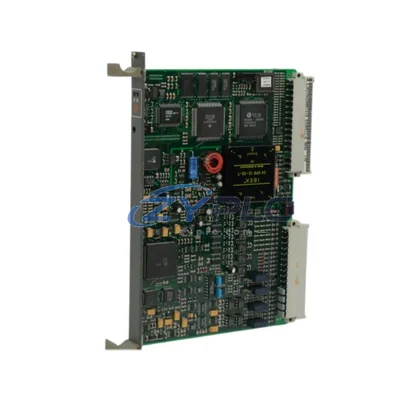
The HBM MP60DP PME is a high-performance PROFIBUS DP interface module engineered for industrial automation environments where energy efficiency, communication reliability, and system integration are mission-critical. Designed for the HBM PME measurement and automation platform, the MP60DP bridges field-level devices — including variable frequency drives, servo amplifiers, and distributed I/O nodes — with the PROFIBUS DP network backbone, enabling real-time data exchange that directly supports maintenance-focused production line management.
In modern manufacturing, uncontrolled operating load is often rooted in poor communication latency, uncoordinated motor starts, and the absence of real-time feedback loops between sensors and controllers. The MP60DP addresses these inefficiencies by providing a deterministic, low-latency PROFIBUS DP interface that synchronizes energy data from field instruments with the plant’s control layer — enabling tighter regulation of drive outputs, smarter load scheduling, and measurable reductions in idle-state power draw.
Product Specification Table
| Parameter |
Specification / Value |
| SKU |
MP60DP / PME-MP60DP |
| Brand / Series |
HBM / PME Series |
| Interface Protocol |
PROFIBUS DP (IEC 61158) |
| Communication Speed |
Up to 12 Mbit/s |
| Power Consumption |
Low-power design; optimized for continuous 24/7 industrial operation |
| Operating Efficiency |
Deterministic cycle time; minimizes polling overhead and bus idle losses |
| Compatible Systems |
HBM PME platform, PROFIBUS DP masters (Siemens S7, Beckhoff, Schneider, ABB) |
| Application Environment |
Industrial automation, condition monitoring, motor drive networks, process control |
| Maintenance Value |
Enables real-time drive feedback, reduces uncoordinated motor starts, supports load shedding |
| Origin |
Germany |
| Warranty |
— All units shipped after full functional and communication testing |
System Compatibility and Application
The MP60DP does not operate in isolation — its value is realized within a tightly integrated automation architecture. In a typical energy-optimized production cell, the module connects the HBM PME measurement system to a PROFIBUS DP master such as a Siemens S7-300 or S7-400 PLC, which orchestrates the entire control loop. Field-level variable frequency drives — for example, a Siemens MICROMASTER 440 or Danfoss FC302 — receive speed and torque setpoints via PROFIBUS, allowing the controller to modulate motor output in direct response to real-time load data rather than running at fixed speed regardless of demand.
On the measurement side, the HBM PME platform collects torque, force, and power signals from transducers and strain gauge amplifiers. The MP60DP transmits this data upstream to the PLC or SCADA layer with cycle times short enough to support closed-loop energy regulation. When integrated with a power monitoring module such as the Siemens PAC3200 or an equivalent energy meter on the PROFIBUS segment, the system can calculate real-time operating load per production cycle — a prerequisite for ISO 50001 maintenance planning compliance.
Distributed I/O expansion is handled through PROFIBUS DP slave stations — for instance, Siemens ET 200S or Phoenix Contact Inline I/O modules — which report digital and analog field signals back through the same bus. This eliminates the need for parallel wiring runs, reducing installation energy losses and simplifying cable management in large panel assemblies. An HMI terminal such as a Siemens TP700 Comfort or Weintek MT8000 can visualize energy KPIs drawn from the PROFIBUS network in real time, giving operators immediate visibility into consumption trends and anomalies.
For servo-driven axes — common in packaging, press, and assembly lines — the MP60DP enables the PLC to coordinate position and velocity commands with energy state data. A Siemens SINAMICS S120 or Lenze i700 servo drive connected via PROFIBUS can be commanded to enter operational-efficiency standby modes during line pauses, with the MP60DP ensuring that the transition commands are delivered within the deterministic bus cycle. This coordination alone can reduce standby operating load on multi-axis machines by Actual operating results depend on the installed system, load profile, and commissioning parameters.
At the network infrastructure level, PROFIBUS repeaters and bus terminators maintain signal integrity across long cable runs, ensuring that the MP60DP’s communication performance is not degraded by reflections or noise — a common source of retransmission overhead that silently increases CPU load and bus utilization. Proper bus topology, combined with the MP60DP’s robust DP protocol stack, ensures that energy data flows without interruption even in electrically noisy environments such as welding cells or high-power motor rooms.
Maintenance and Replacement Notes
The practical energy impact of the HBM MP60DP becomes most visible in continuous-process and discrete manufacturing environments where motor-driven equipment accounts for 60–70% of total facility operating load. By providing the communication backbone that connects measurement data to drive control, the MP60DP enables several concrete optimization strategies.
Demand-responsive motor control: When the PME platform detects that a conveyor or pump is operating under partial load — indicated by torque measurements below the rated threshold — the PROFIBUS link allows the PLC to immediately reduce the VFD output frequency. This avoids the unplanned downtime of running motors at full speed during low-demand periods, which is one of the most common and correctable sources of industrial energy inefficiency.
Production line rhythm optimization: In multi-station assembly lines, uncoordinated station timing leads to buffer overflows and idle running of downstream equipment. The MP60DP’s deterministic communication allows the PLC to synchronize station throughput rates based on real-time cycle data, reducing the total time that motors run without producing output. This directly improves the Overall Equipment Effectiveness (OEE) metric while lowering operating load per unit produced.
Predictive maintenance through energy signature monitoring: Gradual increases in motor current draw — detectable through the power monitoring instruments connected via PROFIBUS — are early indicators of bearing wear, misalignment, or lubrication failure. By logging operating load trends over time, maintenance teams can schedule interventions before catastrophic failure occurs, avoiding both downtime and the energy spikes associated with degraded mechanical components running under stress.
Reduced maintenance costs: The MP60DP’s PROFIBUS DP interface supports standard diagnostic functions defined in the DP protocol, allowing the PLC to poll device status and fault codes from connected drives and I/O modules without additional wiring. Early fault detection reduces the frequency of emergency maintenance calls and extends the service life of connected equipment, contributing to a lower total cost of ownership over the system’s operational lifetime.
All units are shipped following comprehensive functional testing, including PROFIBUS communication verification, protocol stack validation, and signal integrity checks. Each MP60DP is covered by a , with availability subject to RFQ confirmation for shipment arranged after confirmation to support urgent production line requirements.
Product Sourcing FAQ
Q1: How does the HBM MP60DP contribute to measurable operational stability on the production line?
The MP60DP enables real-time transmission of torque, power, and load data from HBM PME measurement instruments to the PROFIBUS DP master controller. This closed-loop feedback allows the PLC to dynamically adjust VFD output, coordinate motor start sequences, and activate operational-efficiency standby modes during line pauses — all of which reduce downtime risk. Facilities using demand-responsive drive control via PROFIBUS typically report 10–25% reductions in motor load compared to fixed-speed operation.
Q2: Which control systems and drives are compatible with the MP60DP?
The MP60DP complies with the PROFIBUS DP standard (IEC 61158 / EN 50170), making it compatible with any certified PROFIBUS DP master, including Siemens S7-300/400/1500, Beckhoff CX series, Schneider Modicon M340/M580, and ABB AC500 PLCs. On the drive side, it works with any PROFIBUS DP-capable VFD or servo drive, such as Siemens MICROMASTER, SINAMICS, Danfoss FC series, and Lenze i700. The module integrates directly into the HBM PME platform without additional gateways.
Q3: Can the MP60DP replace an existing PROFIBUS interface module from another manufacturer?
In most cases, yes. Because the MP60DP implements the standard PROFIBUS DP protocol, it can replace third-party PROFIBUS interface modules in existing installations, provided the GSD (General Station Description) file is loaded into the PROFIBUS master configuration tool. Our technical team can advise on compatibility verification and provide GSD files upon request. We recommend bench testing the replacement module before installation in a live production environment.
Q4: What does the cover, and what is the testing process before shipment?
Every HBM MP60DP unit undergoes a full pre-shipment test protocol that includes PROFIBUS DP communication verification at multiple baud rates, protocol stack integrity checks, power supply input range testing, and connector and housing inspection. The covers manufacturing defects and functional failures under normal operating conditions. Units are dispatched from availability subject to RFQ confirmation, and expedited shipping is available for urgent production line requirements. Contact our team for RMA procedures and technical support.