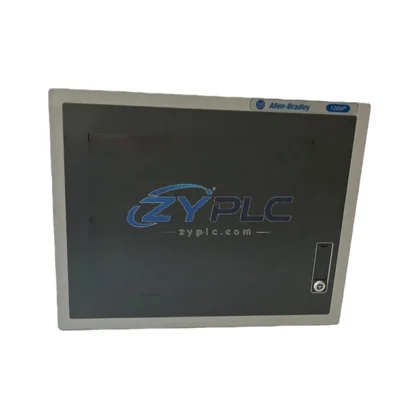
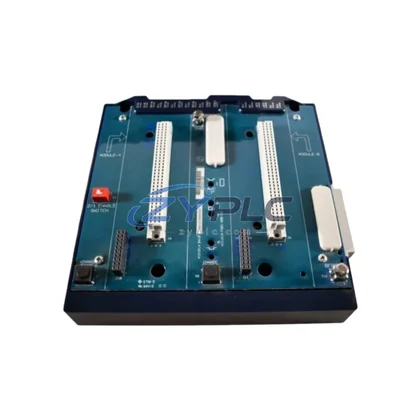
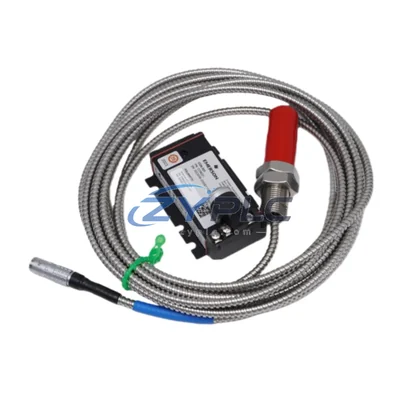
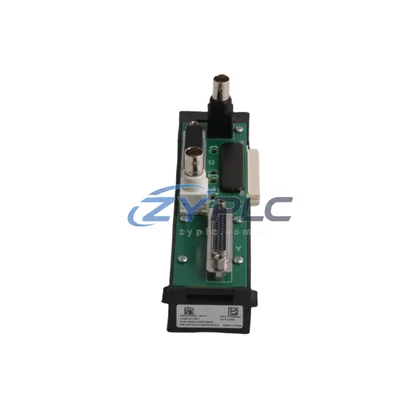
Honeywell 10310/3/1 CC-SIS Industrial Network Interface for Safety Manager Systems: Bridging the Industrial Data Link
In modern smart factory environments, the integrity and continuity of the industrial data link are paramount. The Honeywell 10310/3/1 CC-SIS Communication Gateway is engineered to serve as the critical bridge between Safety Instrumented Systems (SIS) and the broader plant automation network — connecting field devices, PLC controllers, remote I/O modules, HMI panels, SCADA platforms, variable frequency drives, and enterprise-level supervisory systems into a unified, real-time data fabric.
From the moment a field sensor detects an anomaly — whether a pressure spike, temperature deviation, or flow irregularity — the 10310/3/1 CC-SIS module ensures that signal data is captured, converted, and transmitted across the network with deterministic latency. This gateway module sits at the heart of the Safety Manager architecture, enabling seamless protocol translation between SIS logic solvers and higher-level control and monitoring systems, eliminating data silos that have historically plagued multi-vendor industrial environments.
Compatibility & Integration Notes
| Parameter |
Specification |
| SKU / Part Number |
10310/3/1 (CC-SIS) |
| Brand |
Honeywell |
| Series |
Safety Manager (CC-SIS) |
| Product Type |
SIS Communication Gateway |
| Communication Protocols |
Modbus RTU, Modbus TCP/IP, HART, OPC-UA, Profibus DP, Foundation Fieldbus |
| Interface Types |
RS-232, RS-485, Ethernet RJ45, Fiber Optic (optional) |
| Transmission Capability |
Real-time deterministic data transfer, redundant communication paths |
| Network Compatibility |
DCS, SCADA, PLC, HMI, Remote I/O, Edge Gateway platforms |
| System Application |
Safety Instrumented Systems, Process Automation, Smart Factory Integration |
| Operating Temperature |
0°C to +60°C |
| Power Supply |
24 VDC (nominal) |
| Certification |
SIL 2 / SIL 3 capable (per IEC 61508 / IEC 61511) |
| Origin |
United States |
| Warranty |
warranty terms confirmed during quotation — Tested before shipment |
Connected Automation Data Flow
The Honeywell 10310/3/1 CC-SIS does not operate in isolation — it is designed to function as the communication backbone within a layered Safety Manager architecture. In a typical deployment, field-level sensors and actuators feed analog and digital signals into Honeywell CC-PAIH01 Analog Input modules and CC-PDIL01 Digital Input modules, which aggregate process data at the I/O level. These signals are then routed through the CC-SCMB02 System Controller Module Bus, where the Safety Manager logic solver processes safety-critical decisions in real time.
The 10310/3/1 CC-SIS gateway module then translates this SIS data into standard industrial protocols — Modbus TCP/IP, OPC-UA, or Profibus DP — enabling upstream systems such as Honeywell Experion PKS DCS and third-party SCADA platforms to receive live process values, alarm states, and diagnostic data without protocol barriers. On the output side, CC-PAOH01 Analog Output modules and CC-SDOR01 Digital Output Relay modules execute control commands back to field devices, closing the automation loop.
For remote I/O expansion, the Honeywell CC-TAIX01 Thermocouple/RTD Input module extends temperature monitoring capabilities across distributed plant areas, with all data flowing back through the CC-SIS communication layer. Variable frequency drives (VFDs) and motor control centers connected via Profibus DP or Modbus RTU also benefit from the gateway’s protocol bridging, enabling centralized speed and torque monitoring from the SCADA level. Edge gateway devices — such as those running IIoT middleware — can subscribe to OPC-UA data streams published by the 10310/3/1, feeding cloud-based analytics and digital twin platforms without disrupting the real-time SIS network.
The Honeywell 10006/2/1 Field Termination Assembly (FTA) provides the physical wiring interface between field cables and the Safety Manager I/O modules, ensuring signal integrity from the sensor to the gateway. Meanwhile, the CC-TDIL01 Digital Input module handles discrete status signals from emergency shutdown (ESD) pushbuttons, valve position switches, and interlock relays — all of which are communicated upstream through the 10310/3/1 CC-SIS module to the plant’s central alarm management and SCADA historian systems.
Solving Data Isolation in Industrial Sites
One of the most persistent challenges in industrial automation is the fragmentation of communication protocols across different generations of equipment. A plant may simultaneously operate legacy Modbus RTU devices alongside modern Profibus DP field instruments, Foundation Fieldbus transmitters, and Ethernet-based HMI panels — each speaking a different language, creating data islands that prevent operators from achieving true plant-wide visibility.
The Honeywell 10310/3/1 CC-SIS Communication Gateway directly addresses this challenge by acting as a multi-protocol translator at the SIS layer. It enables the Safety Manager system to communicate with DCS controllers, SCADA servers, and HMI workstations using standardized protocols, eliminating the need for custom middleware or proprietary integration software. Operators gain a unified view of safety system status, process variables, and alarm conditions across all connected subsystems — from the field level to the enterprise dashboard.
Remote diagnostics capabilities embedded in the 10310/3/1 allow maintenance engineers to interrogate the health of the communication link, monitor packet error rates, and identify network bottlenecks without physical access to the control cabinet. This is particularly valuable in hazardous area installations where minimizing human entry is a safety requirement. Alarm feedback loops are tightened, with safety events propagating from the SIS to the SCADA historian and alarm management system in milliseconds, supporting regulatory compliance and incident investigation workflows.
For plants undergoing digital transformation, the 10310/3/1 CC-SIS provides a scalable integration path — new I/O modules, remote stations, and edge devices can be added to the Safety Manager network without redesigning the communication architecture. This future-proofing capability reduces total cost of ownership and accelerates the return on investment for smart factory initiatives.
Industrial Connectivity FAQ
Q1: What communication latency can be expected when using the Honeywell 10310/3/1 CC-SIS gateway in a SCADA integration?
The 10310/3/1 CC-SIS is designed for deterministic, low-latency communication within the Safety Manager architecture. Typical cycle times for Modbus TCP/IP and OPC-UA data exchange are in the range of 10–100 milliseconds, depending on network load and the number of connected nodes. For safety-critical applications, the SIS communication layer is isolated from general plant network traffic to ensure consistent response times.
Q2: Is the 10310/3/1 CC-SIS compatible with third-party DCS and SCADA platforms?
Yes. The gateway supports standard industrial protocols including Modbus RTU, Modbus TCP/IP, Profibus DP, Foundation Fieldbus, HART, and OPC-UA, making it compatible with a wide range of DCS platforms (including ABB, Siemens, Emerson, and Yokogawa) and SCADA software (including Wonderware, iFIX, and Ignition). Protocol-specific configuration parameters are available upon request.
Q3: How is network stability ensured in redundant Safety Manager configurations?
The 10310/3/1 CC-SIS supports redundant communication paths, allowing the Safety Manager system to maintain continuous data exchange even in the event of a single network link failure. Redundant Ethernet ports and automatic failover mechanisms ensure that SCADA and DCS systems receive uninterrupted process data. Network health diagnostics are accessible via the gateway’s built-in diagnostic interface.
Q4: What does the warranty terms confirmed during quotation cover, and is pre-shipment testing performed?
Every Honeywell 10310/3/1 CC-SIS unit supplied by ZYPLC undergoes functional testing prior to shipment, verifying communication protocol operation, I/O signal integrity, and power supply performance. The warranty terms confirmed during quotation covers manufacturing defects and component failures under normal operating conditions. Replacement or repair services are coordinated through our technical support team. Availability is confirmed via RFQ for shipment arranged after confirmation to minimize plant downtime.