Honeywell 2MLQ-RY1A Digital Output Module: Industrial Data Link for TDC 3000 Smart Factory Systems
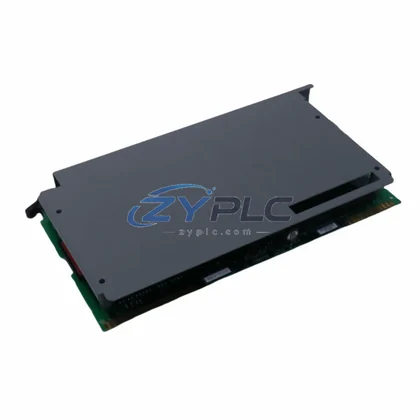
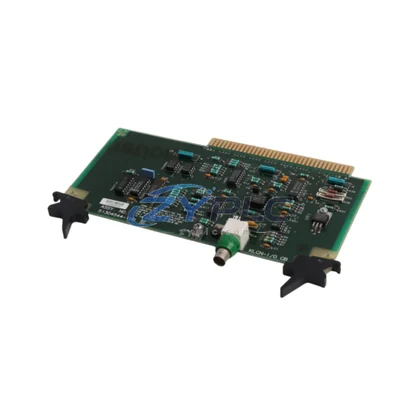
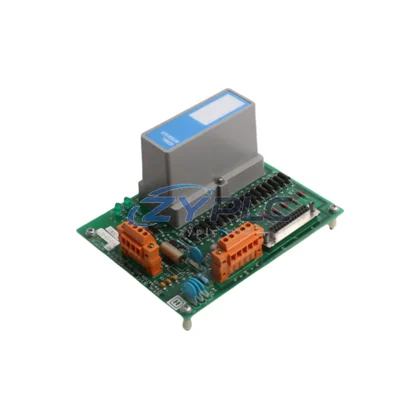
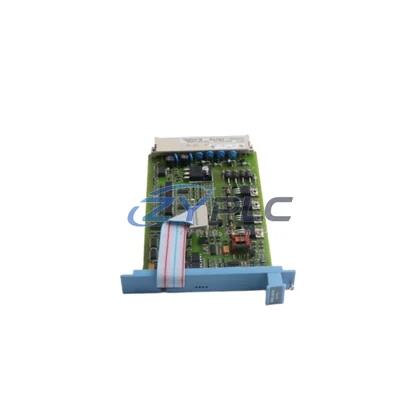
The Honeywell 2MLQ-RY1A (also referenced as 2MLQ-RY2A and 2MLQ-RY2B) is a high-reliability Digital Output Module engineered for the Honeywell TDC 3000 Distributed Control System. Designed to serve as a critical node in the industrial data chain, this module bridges field-level actuators and relay-driven devices with the supervisory control layer, enabling deterministic signal output, real-time process control, and seamless integration across SCADA, HMI, and DCS platforms. In smart factory environments where uptime and data integrity are non-negotiable, the 2MLQ-RY1A delivers the switching precision and network stability that modern industrial automation demands.
At its core, the 2MLQ-RY1A functions as a relay output interface within the TDC 3000 Local Control Network (LCN), converting digital commands from the process controller into discrete switching signals for field devices such as solenoid valves, motor starters, alarm annunciators, and safety interlock relays. Its role in the automation data flow begins at the controller level — where the Honeywell HPM (High-Performance Process Manager) or PM (Process Manager) issues output commands — and extends through the I/O link to the physical plant floor. This tight integration with the TDC 3000 architecture ensures sub-millisecond command execution and eliminates the latency risks associated with protocol mismatches or gateway bottlenecks.
In a typical smart factory deployment, the 2MLQ-RY1A operates alongside complementary modules within the same I/O cabinet. The Honeywell 2MLQ-AI1A Analog Input Module handles sensor signal acquisition from thermocouples, pressure transmitters, and flow meters, feeding real-time process values upstream to the HPM controller. Meanwhile, the 2MLQ-AO1A Analog Output Module manages continuous control signals to variable-speed drives and control valves. The 2MLQ-RY1A handles the discrete switching layer — activating shutdown relays, toggling pump contactors, and triggering alarm outputs based on logic executed in the TDC 3000 Application Module (AM). Together, these modules form a tightly coordinated I/O network that supports full process transparency from field device to SCADA dashboard.
For facilities running Honeywell’s Universal Control Network (UCN) alongside the LCN, the 2MLQ-RY1A integrates without protocol conversion overhead. The TDC 3000 Network Interface Module (NIM) manages data routing between the LCN and UCN segments, ensuring that output commands from the AM or HPM reach the 2MLQ-RY1A with full data integrity. In multi-node architectures where the Honeywell Data Hiway or Plant Hiway connects remote I/O panels, the module’s relay outputs can be coordinated with remote Digital Input Modules (such as the 2MLQ-DI1A) to create closed-loop feedback paths — enabling the SCADA system to confirm relay state changes and log actuation events in real time.
The 2MLQ-RY1A also plays a key role in alarm management and safety interlock chains. When integrated with the Honeywell Safety Manager or connected to a third-party Safety Instrumented System (SIS) via the TDC 3000 gateway interface, the module’s relay outputs can serve as final control elements in Safety Integrity Level (SIL)-rated loops. Its dry-contact relay design supports both normally open (NO) and normally closed (NC) configurations, making it adaptable to diverse field wiring schemes. For facilities transitioning to IIoT-enabled architectures, the module’s outputs can be monitored by edge gateway devices — such as the Honeywell Experion PKS Edge Node or compatible third-party OPC-UA gateways — allowing relay state data to be published to cloud-based SCADA platforms or MES systems without disrupting the existing TDC 3000 infrastructure.
Remote diagnostics capability is a standout feature of the TDC 3000 ecosystem in which the 2MLQ-RY1A operates. Through the Honeywell Experion PKS or legacy TDC 3000 Console, maintenance engineers can monitor relay output status, review actuation history, and perform loop diagnostics without physical access to the I/O cabinet. This remote visibility reduces mean time to repair (MTTR), supports predictive maintenance workflows, and enables plant-wide transparency across multi-unit or geographically distributed facilities. When paired with the Honeywell FDM (Field Device Manager) or a compatible HART-enabled I/O module, the diagnostic chain extends all the way to smart field instruments, creating an unbroken data link from sensor to supervisory system.
Every 2MLQ-RY1A unit supplied by ZYPLC undergoes pre-shipment functional testing, including relay coil continuity verification, contact resistance measurement, and output state cycling under simulated load conditions. This ensures that each module arrives prepared for installation after site verification and commissioning, minimizing project schedule risk. Warranty terms are confirmed during quotation.
Compatibility & Integration Notes
| Parameter |
Specification |
| SKU |
2MLQ-RY1A / 2MLQ-RY2A / 2MLQ-RY2B |
| Brand |
Honeywell |
| Series |
TDC 3000 DCS |
| Module Type |
Digital Output Module (Relay) |
| Communication Protocol |
TDC 3000 LCN (Local Control Network) / UCN |
| Interface Type |
Relay Contact Output (NO/NC) |
| Network Compatibility |
Honeywell LCN, UCN, Data Hiway, Plant Hiway |
| System Integration |
HPM, PM, AM, NIM, Experion PKS, SCADA, HMI |
| Output Configuration |
Discrete Relay Switching |
| Diagnostic Support |
Remote via TDC 3000 Console / Experion PKS |
| Pre-Shipment Testing |
Full functional test included |
| Warranty |
Warranty and support terms confirmed before quote from shipment date |
| Availability |
Confirmed via RFQ before quotation |
Connected Automation Data Flow
In a fully integrated TDC 3000 control architecture, the 2MLQ-RY1A sits at the intersection of supervisory logic and physical plant actuation. The data flow begins with field sensors — including HART-enabled pressure transmitters, thermocouple assemblies, and flow meters — whose signals are acquired by the Honeywell 2MLQ-AI1A Analog Input Module and digitized for processing by the HPM controller. The HPM executes control algorithms and issues discrete output commands, which are routed through the LCN to the 2MLQ-RY1A for relay actuation. Simultaneously, the Honeywell 2MLQ-DI1A Digital Input Module captures feedback signals from limit switches and position sensors, closing the control loop and confirming actuator response.
At the network layer, the Honeywell NIM (Network Interface Module) manages data routing between the LCN and UCN segments, ensuring that output commands and status data flow without collision or delay across multi-node architectures. For facilities with remote I/O panels connected via the Honeywell Data Hiway, the 2MLQ-RY1A’s relay outputs can be coordinated with remote I/O modules to extend discrete control to geographically distributed field devices. The Honeywell AM (Application Module) handles advanced sequencing logic — such as startup permissive chains and emergency shutdown sequences — and communicates directly with the 2MLQ-RY1A to execute relay switching at precisely defined process states.
At the supervisory level, the Honeywell Experion PKS or TDC 3000 Console provides real-time visualization of relay output states, alarm conditions, and actuation history. For IIoT-enabled plants, an OPC-UA edge gateway can subscribe to relay state data from the TDC 3000 historian and publish it to cloud-based MES or ERP platforms, enabling production transparency without modifying the existing control network. The Honeywell 2MLQ-AO1A Analog Output Module complements the 2MLQ-RY1A in mixed I/O cabinets, handling continuous control signals to variable-speed drives and modulating control valves while the relay module manages discrete switching loads.
Solving Data Isolation in Industrial Sites
One of the most persistent challenges in legacy DCS environments is data isolation — the inability to share process data across protocol boundaries, control domains, or supervisory systems. The Honeywell TDC 3000 ecosystem, and the 2MLQ-RY1A within it, addresses this challenge through a unified network architecture that eliminates proprietary protocol barriers between field devices, controllers, and SCADA systems.
In plants where multiple control systems coexist — such as a TDC 3000 DCS alongside a third-party PLC network or a modern Experion PKS cluster — the NIM and gateway modules enable protocol bridging without requiring full system replacement. The 2MLQ-RY1A’s relay outputs can be wired to hardwired interlock circuits that span control system boundaries, providing a reliable, protocol-agnostic interface for cross-system coordination. This is particularly valuable in safety interlock applications where the relay contact provides a physical, fail-safe signal path independent of network communication status.
For production line transparency, the 2MLQ-RY1A’s actuation data — captured by the TDC 3000 historian and accessible via the Experion PKS reporting tools — enables maintenance teams to track relay cycle counts, identify high-frequency switching events that may indicate process instability, and schedule preventive maintenance before relay contact wear causes unplanned downtime. Remote monitoring via the TDC 3000 Console or a connected SCADA workstation allows engineers to diagnose relay output faults, verify wiring integrity, and confirm actuator response from a central control room, reducing the need for field inspections in hazardous or hard-to-access areas.
System expansion is straightforward within the TDC 3000 I/O framework. Additional 2MLQ-RY1A modules can be added to existing I/O cabinets as process requirements grow, with the LCN automatically recognizing new nodes without requiring controller reconfiguration. This plug-and-expand capability supports phased plant upgrades and capacity expansions without production interruption, making the 2MLQ-RY1A a future-ready component in long-lifecycle industrial automation strategies.
Industrial Connectivity FAQ
Q: What communication protocol does the Honeywell 2MLQ-RY1A use, and is it compatible with modern SCADA systems?
A: The 2MLQ-RY1A communicates via the Honeywell TDC 3000 Local Control Network (LCN) protocol. It is natively compatible with the TDC 3000 DCS ecosystem, including the HPM, PM, AM, and NIM modules. For integration with modern SCADA platforms, the TDC 3000 NIM or an OPC-UA gateway can bridge LCN data to standard industrial protocols, enabling connectivity with Wonderware, iFIX, Ignition, and other SCADA systems without replacing the existing control infrastructure.
Q: How does the 2MLQ-RY1A ensure network stability and minimize communication latency in high-demand process environments?
A: The module operates within the deterministic LCN architecture of the TDC 3000 system, which uses a token-passing protocol to guarantee bounded communication latency across all network nodes. This eliminates the collision-based delays associated with Ethernet-based networks in high-traffic environments, ensuring that relay output commands are executed within defined cycle times regardless of network load. The LCN’s redundant coaxial cable topology further enhances network stability by providing automatic failover in the event of a cable fault.
Q: Can the 2MLQ-RY1A be expanded or integrated into a larger multi-system architecture without disrupting existing operations?
A: Yes. Additional 2MLQ-RY1A modules can be added to existing TDC 3000 I/O cabinets with automatic LCN node recognition, requiring no controller downtime or reconfiguration. For cross-system integration, the module’s relay contact outputs provide a hardwired interface that is independent of network protocol, enabling reliable coordination with PLCs, safety systems, and third-party control platforms. This makes the 2MLQ-RY1A suitable for phased plant expansions and multi-vendor automation architectures.
Q: What pre-shipment testing and warranty coverage does ZYPLC provide for the 2MLQ-RY1A?
A: Every 2MLQ-RY1A unit supplied by ZYPLC undergoes comprehensive pre-shipment functional testing, including relay coil energization, contact resistance measurement, and output state cycling under simulated load. Units are verified against original Honeywell specifications before dispatch. All modules are covered by a warranty and support terms confirmed before quote from the shipment date, with full technical support for installation, integration, and troubleshooting. In-Shipment timing is confirmed after RFQ review to minimize project lead times.