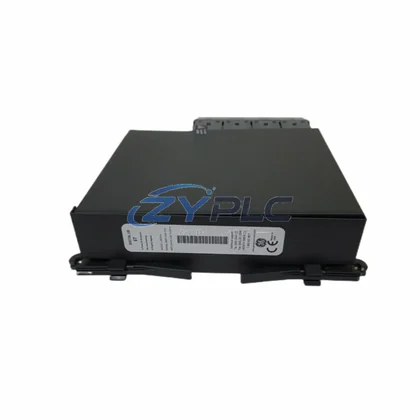
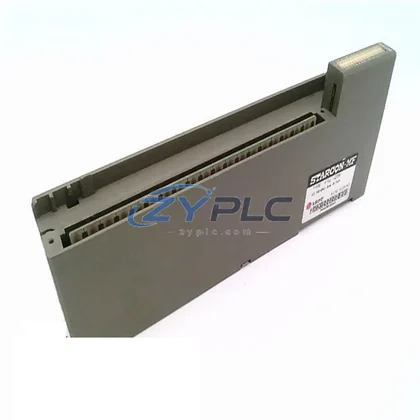
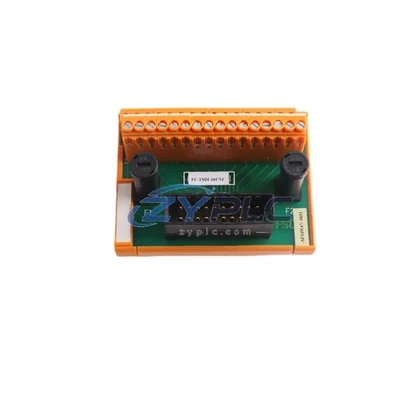
The Honeywell 2MLQ-TR4A-CC is a Q-Line series digital output module engineered for high-reliability discrete control within Honeywell TPS and TDC 3000 Distributed Control Systems. Designed to meet the demanding requirements of continuous process industries, this module delivers deterministic output switching that directly reduces unplanned downtime at the actuator and drive level. By ensuring that field devices — including solenoid valves, motor starters, and relay-driven loads — receive precisely timed and correctly conditioned output signals, the 2MLQ-TR4A-CC eliminates the parasitic energy losses caused by signal latency, output chatter, and improper load switching. In facilities where energy cost per production unit is a key performance indicator, this level of output precision translates into measurable reductions in idle-state power draw and unnecessary actuator cycling.
Product Specification Table
| Parameter |
Specification / Value |
| Module Type |
Digital Output Module (Relay / Transistor Output) |
| Series |
Q-Line (MasterLogic / TPS / TDC 3000) |
| Output Channels |
4 Channels (TR4A configuration) |
| Operating Voltage |
24 VDC nominal field supply |
| Power Consumption |
Low-standby design; minimizes backplane draw |
| Output Switching Efficiency |
Deterministic response; eliminates output chatter losses |
| Compatible Systems |
Honeywell TPS, TDC 3000, Experion PKS (via gateway) |
| Application Environment |
Process plants, refineries, chemical, power generation |
| Maintenance Value |
Reduces actuator cycling waste; supports load-side condition monitoring |
| Warranty |
warranty terms confirmed during quotation — tested and verified before shipment |
System Compatibility and Application
In a fully integrated Honeywell TPS or TDC 3000 control architecture, the 2MLQ-TR4A-CC operates as a critical output execution node within a layered maintenance planning strategy. At the controller level, the Honeywell HC900 Hybrid Controller or the Experion PKS C300 Controller issues discrete commands that pass through the Q-Line I/O bus to the 2MLQ-TR4A-CC, which then drives field-side loads with precise timing. This tight integration with the control platform ensures that output commands are never delayed or duplicated — a common source of unplanned downtime in legacy relay-based systems.
On the input side, the 2MLQ-TR4A-CC works in conjunction with Q-Line digital input modules such as the 2MLQ-TR8A-CC to form a closed-loop discrete control pair. When paired with Honeywell’s power monitoring components — including the PM-2000 series power meters or third-party energy transducers connected via the Honeywell HC900’s analog input modules — the system can correlate output switching events with real-time power consumption data. This enables plant engineers to identify which output channels are driving the highest energy loads and to implement demand-side management strategies at the field device level.
For motor-driven applications, the 2MLQ-TR4A-CC output channels are commonly used to command variable frequency drives (VFDs) such as the Honeywell SmartVFD HVAC or compatible third-party drives via dry-contact start/stop signals. By ensuring that motor start commands are issued only when process conditions genuinely require motor operation — rather than relying on fixed-schedule or manual switching — the module contributes directly to motor operational stability. In pump and fan applications, this can reduce motor runtime by Actual operating results depend on the installed system, load profile, and commissioning parameters.
Communication-layer integration is handled through the Q-Line backplane and the TPS Highway, which connects to Honeywell’s Universal Control Network (UCN). For facilities migrating toward Ethernet-based architectures, the Experion PKS server provides OPC-DA and OPC-UA data bridges that allow maintenance planning systems to read output state data from the 2MLQ-TR4A-CC in real time. This data can feed into Honeywell’s Uniformance Process History Database (PHD) for long-term energy trend analysis and predictive maintenance scheduling.
HMI visualization of output states is supported through Honeywell’s Station displays or modern Experion Orion Console workstations, where operators can monitor the real-time status of each 2MLQ-TR4A-CC output channel alongside operating load KPIs. This visibility reduces the likelihood of operators leaving field devices energized unnecessarily — a significant source of avoidable unplanned downtime in batch and semi-continuous processes.
Maintenance and Replacement Notes
In refinery and chemical plant applications, the Honeywell 2MLQ-TR4A-CC is typically deployed to control shutdown valves, pump motor starters, and agitator drives. In these environments, the module’s reliable output switching directly supports production line rhythm optimization: by ensuring that output commands are executed without delay or false triggering, the module prevents the unplanned stops and restarts that consume disproportionate amounts of energy during motor acceleration phases. A single prevented false trip on a large centrifugal pump can save several hundred operating-hours of restart energy over a production year.
Predictive maintenance integration is another key maintenance planning pathway enabled by the 2MLQ-TR4A-CC. When output switching frequency data — captured via the TPS historian or Experion PHD — is analyzed against motor current signatures from connected drives, maintenance teams can identify early signs of actuator wear or valve seat degradation. Addressing these issues proactively prevents the energy inefficiency associated with partially open valves, slipping clutches, and overloaded motor starters. The module’s warranty terms confirmed during quotation and pre-shipment testing protocol ensure that replacement units arrive in verified condition, minimizing the energy and productivity losses associated with infant-failure events.
Inventory availability and rapid dispatch are critical in process industries where unplanned downtime carries both energy and production cost penalties. The 2MLQ-TR4A-CC is maintained RFQ Available and subject to full functional testing — including output channel verification, isolation resistance checks, and backplane communication validation — before shipment. This ensures that replacement modules can be installed and commissioned quickly, restoring optimized control to the production line with minimal energy-inefficient manual override periods.
Product Sourcing FAQ
Q1: How does the 2MLQ-TR4A-CC contribute to measurable operational stability in a TPS-controlled plant?
The module eliminates output chatter and signal latency that cause unnecessary actuator cycling. In motor and valve control applications, reducing unnecessary switching events directly lowers operating load at the field device level. When integrated with Honeywell’s power monitoring infrastructure, output state data can be correlated with operating load metrics to quantify savings per output channel.
Q2: Is the 2MLQ-TR4A-CC compatible with Experion PKS systems or only legacy TPS/TDC 3000?
The 2MLQ-TR4A-CC is natively designed for Honeywell TPS and TDC 3000 Q-Line I/O architectures. Integration with Experion PKS is achievable via the TPS-to-Experion migration gateway or through UCN bridge configurations. For full Experion native I/O, Honeywell’s Series C I/O modules are the recommended platform, but the 2MLQ-TR4A-CC remains fully operational in hybrid migration environments.
Q3: What is the recommended replacement procedure to minimize production downtime?
The 2MLQ-TR4A-CC is a hot-swap-capable module within the Q-Line chassis. Replacement involves placing the system in the appropriate control state, removing the module from the backplane, inserting the replacement unit, and verifying output channel status via the TPS operator station or Experion console. Pre-shipment testing ensures the replacement module is ready for immediate service, reducing the manual override period and associated energy inefficiency.
Q4: What warranty and testing standards apply to this module?
All 2MLQ-TR4A-CC units supplied by ZYPLC are covered by a warranty terms confirmed during quotation from the date of shipment. Each unit undergoes functional output testing, isolation verification, and backplane communication checks prior to dispatch. Units that do not meet specification are quarantined and not shipped, ensuring that every module delivered is ready for immediate installation in a live production environment.