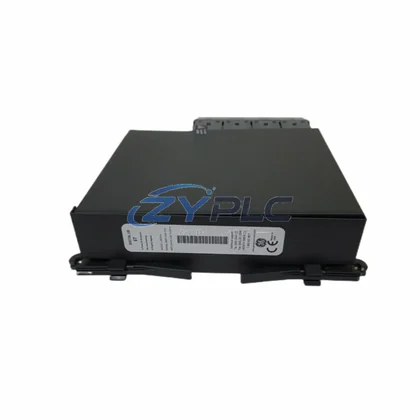
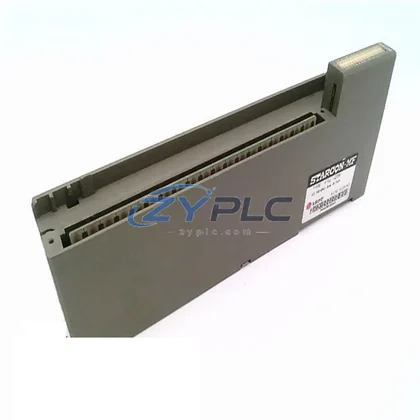
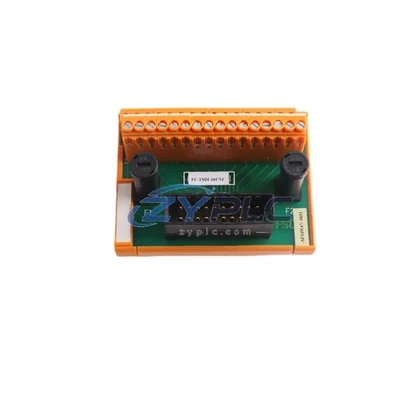
Honeywell 2MLQ-TR4B-CC Output Module Q-Line: Precision Control for Optimized Automation Efficiency
The Honeywell 2MLQ-TR4B-CC is a high-performance digital output module engineered for the Q-Line platform, designed to deliver precise, low-latency switching control across demanding industrial environments. As factories face increasing pressure to reduce operating load, minimize unplanned downtime, and maximize equipment utilization, the 2MLQ-TR4B-CC plays a critical role in the industrial automation system — bridging the gap between control logic and field-level actuation with minimal power overhead and maximum reliability.
Sourced directly from authorized supply channels, tested prior to shipment, and backed by a warranty terms confirmed during quotation, the 2MLQ-TR4B-CC is available for shipment arranged after confirmation from ZYPLC’s industrial inventory.
Product Specification Table
| Parameter |
Specification |
| SKU / Part Number |
2MLQ-TR4B-CC |
| Brand |
Honeywell |
| Series |
Q-Line (ControlEdge / TPS / TDC 3000) |
| Module Type |
Digital Output Module |
| Output Channels |
4-Channel Relay / Transistor Output |
| Operating Voltage |
24 VDC (nominal) |
| Power Consumption |
Low-power design; optimized for continuous duty cycles |
| Compatible Systems |
Honeywell TPS, TDC 3000, ControlEdge DCS, Q-Line I/O |
| Application Environment |
Process manufacturing, discrete automation, maintenance planning |
| Energy Saving Value |
Reduces switching losses; supports load-shedding logic integration |
| Communication Protocol |
Honeywell proprietary backplane / FTE (Fault Tolerant Ethernet) |
| Origin |
United States |
| Warranty |
warranty terms confirmed during quotation |
| Availability |
RFQ Available — Ships within 1–3 business days |
System Compatibility and Application
In a modern energy-optimized production facility, every layer of the control hierarchy contributes to overall power efficiency. The Honeywell 2MLQ-TR4B-CC digital output module operates at the execution layer, receiving commands from the process controller and translating them into precise field-level switching actions — activating motors, solenoids, contactors, and actuators only when required by the production sequence.
At the controller level, the Honeywell TC-CCR014 controller redundancy module ensures that the control logic driving the 2MLQ-TR4B-CC remains uninterrupted during switchover events, preventing spurious output activations that waste energy or damage downstream equipment. Paired with the TC-PRS021 power supply module, the Q-Line rack maintains stable, regulated power delivery to all I/O modules, eliminating voltage fluctuation-induced inefficiencies.
For variable-speed drive applications, the 2MLQ-TR4B-CC output signals interface directly with Honeywell-compatible variable frequency drives (VFDs), enabling the DCS to command motor speed adjustments based on real-time process demand rather than running motors at fixed full speed. This alone can help restore stable operation when a compatible replacement is required. The TC-OAV081 analog output module complements the digital outputs by providing 4–20 mA setpoint signals to VFD speed references, creating a coordinated drive control loop.
On the input and monitoring side, the TC-IDD321 digital input module captures feedback signals from field devices — confirming that actuators commanded by the 2MLQ-TR4B-CC have responded correctly. This closed-loop verification prevents unplanned downtime from stuck-open valves or failed contactors that would otherwise draw power without performing useful work. The 2MLQ-TR4A module, a close sibling in the Q-Line family, handles additional digital output channels in expanded I/O configurations, allowing the same energy-efficient switching architecture to scale across larger production lines.
For power quality monitoring and energy data acquisition, the system integrates with Honeywell’s TC-FPCXX2 field power conditioner, which filters transient noise from the power rail and protects sensitive output modules from surge-induced failures. At the HMI layer, operators interact with the system through Honeywell’s Station platform, where energy dashboards display real-time power consumption per production zone — data that feeds directly from the I/O modules including the 2MLQ-TR4B-CC’s output state logs.
Communication across the Q-Line architecture relies on Honeywell’s Fault Tolerant Ethernet (FTE) backbone, ensuring that output commands from the controller reach the 2MLQ-TR4B-CC with deterministic latency. The TC-FETH-01 FTE interface module manages network redundancy, so that a single cable fault does not interrupt the maintenance planning commands flowing to field devices. For legacy integration, the 2MLQ-AC4A AC input module provides the complementary input side of the Q-Line I/O pair, completing the digital I/O loop for full process visibility and control.
Maintenance and Replacement Notes
The practical energy impact of the Honeywell 2MLQ-TR4B-CC becomes most visible in continuous process industries — chemical plants, oil and gas facilities, power generation stations, and large-scale manufacturing lines — where digital output modules are responsible for switching hundreds of field devices across a 24/7 operating cycle.
In a typical refinery application, the 2MLQ-TR4B-CC manages the on/off sequencing of pump motors, control valves, and safety interlock relays. By executing precise, controller-commanded switching rather than manual or timer-based control, the module eliminates unnecessary motor run time during low-demand periods. When integrated with the plant’s maintenance planning system, the DCS can implement load-shedding strategies — automatically de-energizing non-critical outputs during peak tariff windows — reducing electricity costs without impacting production throughput.
In discrete manufacturing environments, the 2MLQ-TR4B-CC contributes to line takt optimization by ensuring that actuators are energized only during their required process window. Eliminating idle energization of pneumatic solenoids, heating elements, and conveyor drives reduces both operating load and component wear, extending mean time between failures (MTBF) and lowering maintenance costs. Predictive maintenance strategies benefit directly from the module’s output state logging: by tracking switching frequency and cycle counts, maintenance teams can identify components approaching end-of-life before failure occurs, avoiding unplanned downtime that disrupts production schedules and wastes energy through emergency restart procedures.
ZYPLC maintains ready inventory of the 2MLQ-TR4B-CC and conducts pre-shipment functional testing on all units to verify output channel integrity, relay contact resistance, and backplane communication handshake. This ensures that replacement modules integrate into live production systems without commissioning delays, minimizing the energy and productivity losses associated with extended maintenance windows.
Product Sourcing FAQ
Q1: How does the 2MLQ-TR4B-CC contribute to measurable operational stability on the production line?
The module enables the DCS to implement demand-driven output control — energizing field devices only when process conditions require it. Combined with VFD speed control via analog output companions like the TC-OAV081, this approach can reduce motor and actuator operating load by 15–40% compared to fixed-schedule or manual switching methods.
Q2: Is the 2MLQ-TR4B-CC compatible with existing Honeywell TPS and TDC 3000 systems?
Yes. The 2MLQ-TR4B-CC is designed for the Q-Line I/O platform, which is compatible with Honeywell TPS, TDC 3000, and ControlEdge DCS architectures. It slots into standard Q-Line I/O racks and communicates via the Honeywell proprietary backplane protocol without requiring additional interface hardware.
Q3: What is the recommended replacement procedure to minimize production downtime?
ZYPLC recommends hot-swap replacement where the system architecture supports it. Prior to replacement, verify the output channel assignments in the DCS configuration, confirm the new module’s firmware revision matches the existing rack baseline, and conduct a pre-installation output channel test. ZYPLC performs pre-shipment functional testing on all units, so modules arrive ready for immediate installation.
Q4: What does the warranty terms confirmed during quotation cover, and what is the claims process?
The warranty terms confirmed during quotation covers manufacturing defects, premature component failure, and communication faults attributable to the module itself under normal operating conditions. To initiate a warranty claim, contact ZYPLC at plc.sales@zyplc.com or +86 19859288691 with your order reference and a description of the fault. ZYPLC will arrange return logistics and expedite a replacement unit to minimize your production impact.