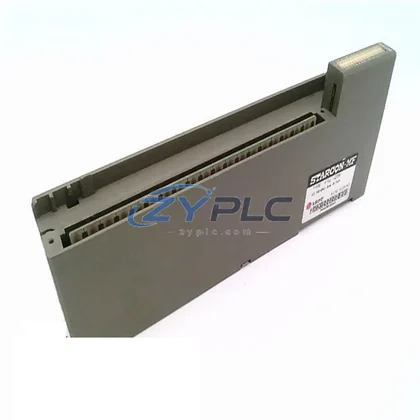
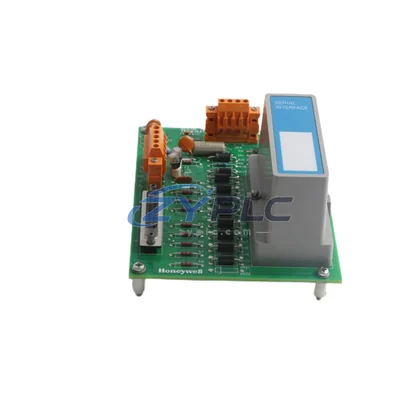
Honeywell 2MLR-DBSHS Safety I/O for FSC: Compatibility and Replacement Notes
In modern safety-critical automation environments, every component within a control system must be evaluated not in isolation, but as an integral node within a layered, interdependent architecture. The Honeywell 2MLR-DBSHS Safety I/O Module is engineered precisely for this purpose — serving as a high-integrity signal interface within Honeywell’s Fail-Safe Controller (FSC) platform, where system consistency, redundancy, and long-term maintainability are non-negotiable requirements.
The 2MLR-DBSHS is a dual-channel, redundant safety input/output module designed to operate within the FSC rack-based architecture. Its role spans the boundary between the field instrument layer and the safety logic solver layer, ensuring that process signals — whether from pressure transmitters, emergency shutdown valves, or flame and gas detectors — are acquired, validated, and processed with the integrity demanded by IEC 61508 and IEC 61511 functional safety standards. This module does not simply pass signals; it participates actively in the system’s safety function execution, contributing to SIL 2 and SIL 3 rated loops depending on the overall system configuration.
Product Specification Table
| Parameter |
Specification |
| System Role |
Redundant Safety I/O Module — FSC Platform |
| SKU / Part Number |
2MLR-DBSHS |
| Brand |
Honeywell |
| Series |
FSC (Fail-Safe Controller) |
| Module Type |
Digital Input / Safety-Rated Dual Channel |
| Safety Integrity Level |
SIL 2 / SIL 3 (system-dependent) |
| Redundancy Support |
Yes — 1oo2 / 2oo3 voting architectures |
| Communication Interface |
FSC backplane bus |
| Operating Voltage |
24 VDC nominal |
| Operating Temperature |
0°C to +60°C |
| Mounting |
FSC rack / chassis (DIN-rail compatible enclosure) |
| Certifications |
TUV, IEC 61508, IEC 61511 |
| system integration |
Full FSC platform system integration supported |
| Warranty |
warranty terms confirmed during quotation — tested and verified prior to shipment |
System Compatibility Notes
The 2MLR-DBSHS does not operate as a standalone device. Its value is realized only when understood within the full FSC system architecture, where it coordinates with a range of complementary modules and subsystems to deliver a coherent, fault-tolerant safety solution.
At the controller level, the 2MLR-DBSHS interfaces directly with the Honeywell FSC CPU module — such as the 10002/2/1 or 10002/2/2 central processing units — which execute the safety logic and manage the overall system scan cycle. The CPU’s ability to perform continuous self-diagnostics is complemented by the 2MLR-DBSHS’s own channel-level diagnostics, creating a layered fault detection capability that spans from field wiring to logic execution.
Power integrity is maintained through the Honeywell FSC Power Supply module (e.g., 10006/1/1), which provides regulated 24 VDC to the I/O rack. In redundant power configurations, dual power supply modules operate in parallel, ensuring that a single power supply failure does not interrupt the safety function — a critical requirement in continuous process industries such as oil and gas, petrochemical, and power generation.
The 2MLR-DBSHS shares the FSC backplane with other I/O modules, including analog input modules such as the 10205/2/1 for 4-20 mA process signals, and digital output modules such as the 10006/3/1 for driving solenoid valves and relay outputs in emergency shutdown (ESD) applications. This modular I/O architecture allows engineers to configure the system precisely to the process requirements without over-specifying hardware.
For applications requiring communication with the distributed control system (DCS) or SCADA layer, the FSC platform supports integration via Honeywell communication gateway modules compatible with Modbus RTU, Modbus TCP/IP, and PROFIBUS DP protocols. This enables the safety system to report diagnostic and process data to the Honeywell Experion PKS DCS platform or third-party supervisory systems, supporting unified alarm management and operator visibility without compromising the safety system’s independence.
At the human-machine interface layer, operators interact with the FSC system through Honeywell Safety Manager engineering workstations, where logic configuration, online diagnostics, and forced I/O operations are managed under strict access control. The 2MLR-DBSHS’s channel status — including open-circuit detection, short-circuit alarms, and discrepancy faults in dual-channel configurations — is fully visible within this environment, enabling rapid fault isolation during commissioning and maintenance.
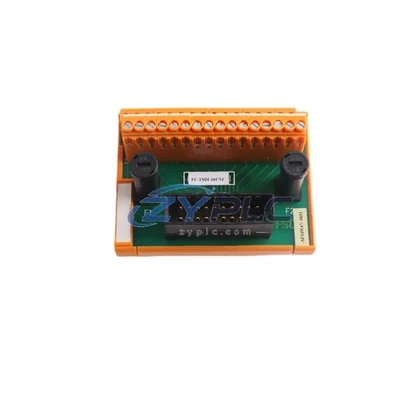
Terminal modules and marshalling components, such as Honeywell FSC field termination assemblies, provide the physical wiring interface between field instruments and the 2MLR-DBSHS, reducing installation time and minimizing wiring errors in large-scale safety system deployments. These termination assemblies support hot-swap capability in certain configurations, allowing field wiring to remain connected during module replacement — a significant advantage in facilities where process continuity is paramount.
Industrial Application Notes
The Honeywell 2MLR-DBSHS finds application across a broad spectrum of process industries where functional safety is mandated by regulation, insurance requirements, or operational risk assessment.
In oil and gas production and refining, the 2MLR-DBSHS is deployed within emergency shutdown systems (ESD) and fire and gas (F&G) systems, where it monitors critical process variables such as high-pressure switches, gas detector outputs, and flame scanner signals. Its dual-channel architecture supports 1oo2 voting logic, ensuring that a single channel failure does not result in a spurious trip or, more critically, a failure to trip on demand.
In power generation and utilities, the module is integrated into turbine protection systems and boiler management systems (BMS), where it interfaces with speed sensors, vibration monitors, and flame detectors. The FSC platform’s deterministic scan cycle and the 2MLR-DBSHS’s fast response time ensure that protective actions are executed within the required safety response time.
In chemical and petrochemical processing, the 2MLR-DBSHS supports safety instrumented functions (SIFs) within safety instrumented systems (SIS), as defined by IEC 61511. Its compatibility with the FSC platform’s SIL verification tools allows safety engineers to validate the achieved SIL for each safety function, supporting regulatory compliance and process hazard analysis (PHA) documentation.
In water and wastewater treatment, mining, and metals and minerals processing, the module’s robust operating temperature range and industrial-grade construction make it suitable for installation in control rooms and marshalling cabinets subject to environmental variation. Its long-term availability through established supply chains ensures that spare parts management programs can be maintained over the 20-30 year lifecycle typical of process plant safety systems.
Product Compatibility FAQ
Q1: Is the Honeywell 2MLR-DBSHS compatible with all FSC rack configurations, and can it be mixed with other FSC I/O modules in the same chassis?
Yes. The 2MLR-DBSHS is designed for the standard FSC rack architecture and is fully compatible with other FSC I/O modules within the same chassis. Mixed I/O configurations — combining digital input, digital output, and analog I/O modules — are standard practice in FSC system design. Slot assignment is managed through the FSC engineering tool, which validates module placement and I/O addressing during configuration. Always verify firmware compatibility between the 2MLR-DBSHS and the installed CPU module version before deployment.
Q2: How does the 2MLR-DBSHS support redundant and fault-tolerant architectures, and what happens during a single-channel fault?
The 2MLR-DBSHS implements dual-channel signal acquisition, supporting 1oo2 (one-out-of-two) voting logic at the module level. In the event of a single-channel fault — such as an open-circuit, short-circuit, or discrepancy between the two channels — the module generates a diagnostic alarm that is reported to the FSC CPU and visible in the engineering workstation. The system continues to execute the safety function using the healthy channel, maintaining process protection while the fault is investigated. This behavior supports the fail-safe design philosophy central to IEC 61508 compliance.
Q3: What does the warranty terms confirmed during quotation cover, and how is long-term spare parts availability managed for FSC systems?
Every Honeywell 2MLR-DBSHS supplied by ZYPLC is covered by a warranty terms confirmed during quotation from the date of shipment. Each unit undergoes functional testing and verification prior to dispatch, ensuring that it meets original manufacturer specifications. For long-term spare parts management, ZYPLC maintains inventory of FSC platform components to support customers through planned maintenance shutdowns, unplanned failures, and system lifecycle extension programs. Customers are encouraged to contact our technical team to discuss multi-unit procurement strategies that align with their plant maintenance schedules and safety system lifecycle plans.