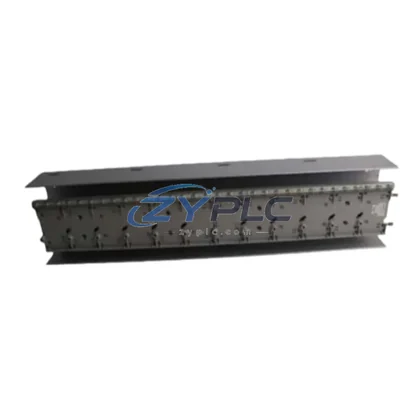
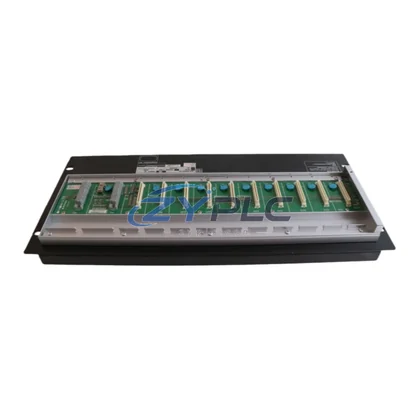
Honeywell 51303926-100 Network Interface for TDC 3000
The Honeywell 51303926-100 Process Network Interface (PNI) module is a critical communication backbone component within the TDC 3000 Distributed Control System architecture. Designed to bridge the Local Control Network (LCN) and the Universal Control Network (UCN), this module ensures deterministic, high-integrity data exchange across all layers of the control hierarchy — from field-level I/O to supervisory HMI stations. In large-scale process automation environments, the 51303926-100 is not simply a standalone device; it is the connective tissue that enables the entire TDC 3000 platform to function as a unified, coherent control system.
Within a fully deployed TDC 3000 architecture, the 51303926-100 operates in close coordination with the Application Module (AM), the History Module (HM), the Universal Station (US), and the Network Interface Module (NIM). These components collectively form the supervisory and data-management layer of the system, while the PNI ensures that real-time process data flows reliably between the UCN-connected controllers — such as the Process Manager (PM) and Advanced Process Manager (APM) — and the LCN-resident operator and engineering stations. Without a properly functioning 51303926-100, the system’s ability to maintain synchronized process visibility across all operator consoles is compromised.
At the I/O layer, the TDC 3000 architecture relies on field termination assemblies, I/O Link modules, and Smart Transmitter Interface Modules (STIM) to gather analog and digital signals from field instruments. The 51303926-100 ensures that this data, once processed by the PM or APM controllers, is accurately and promptly reflected across the LCN to all connected stations. This real-time data propagation is essential for process industries such as petroleum refining, chemical manufacturing, power generation, and water treatment, where millisecond-level response to process deviations can prevent equipment damage or safety incidents.
From a redundancy and system resilience perspective, the 51303926-100 supports Honeywell’s dual-redundant network architecture. In critical applications, two PNI modules are deployed in a primary/backup configuration, ensuring that a single module failure does not interrupt process visibility or control continuity. This redundancy design aligns with the broader TDC 3000 philosophy of fault-tolerant operation, which also extends to redundant power supplies, redundant UCN coaxial cable segments, and redundant controller modules such as the PM Redundancy Module.
For engineering and commissioning teams, the 51303926-100 simplifies system integration by adhering to Honeywell’s standardized module form factor and backplane interface. It installs directly into the LCN card cage, sharing the same physical infrastructure as the AM, HM, and NIM modules. This plug-and-play compatibility reduces installation time and minimizes the risk of wiring errors during system expansion or module replacement. Maintenance engineers benefit from Honeywell’s diagnostic tools, which can identify PNI communication faults, network load conditions, and module health status without requiring system shutdown.
In terms of long-term asset management, the 51303926-100 is a frequently sought-after spare part for TDC 3000 systems that remain in service across aging industrial facilities. Many plants operating in the petrochemical, pulp and paper, and metals processing sectors continue to rely on TDC 3000 infrastructure due to its proven reliability and the high cost of full DCS migration. Maintaining an adequate inventory of critical modules like the 51303926-100 is therefore a strategic priority for plant reliability engineers and procurement teams. All units supplied by ZYPLC are fully tested, functionally verified, and covered by a warranty terms confirmed during quotation, providing procurement teams with the confidence needed for long-term maintenance planning.
The module’s role in system integration — the ability to present process data in a meaningful, system-aware context to operators — is a defining characteristic of the TDC 3000 platform. The 51303926-100 enables this by ensuring that data from diverse UCN-connected controllers is aggregated and presented coherently at the LCN level, supporting advanced alarming, trending, and reporting functions within the Universal Station environment. This contextual data flow is what distinguishes the TDC 3000 from simpler SCADA or standalone PLC architectures, and the 51303926-100 is central to maintaining this capability.
Product Specification Table
| Parameter |
Specification |
| System Role |
Process Network Interface — LCN/UCN Bridge |
| Compatible Platform |
Honeywell TDC 3000 DCS |
| Network Compatibility |
Local Control Network (LCN), Universal Control Network (UCN) |
| Module Form Factor |
Standard TDC 3000 LCN Card Cage Module |
| Communication Protocol |
Honeywell LCN / UCN Proprietary Protocol |
| Redundancy Support |
Primary / Backup Dual-Module Redundancy |
| Installation Environment |
Industrial Control Room, DCS Cabinet, Climate-Controlled Enclosure |
| Operating Temperature |
0°C to 60°C (typical industrial DCS environment) |
| Power Supply |
Supplied via LCN Card Cage Backplane |
| Origin |
United States of America |
| Warranty |
warranty terms confirmed during quotation (ZYPLC) |
| Condition |
Tested, Functionally Verified, shipment arranged after confirmation |
System Compatibility Notes
The 51303926-100 achieves its full value only when considered within the complete TDC 3000 system architecture. At the controller layer, the Process Manager (PM) and Advanced Process Manager (APM) execute regulatory and advanced control strategies, generating real-time process data that must be communicated upward to the LCN. The 51303926-100 serves as the gateway for this data transfer, ensuring that the Application Module (AM) can execute supervisory logic and that the History Module (HM) can archive process trends for long-term analysis and regulatory compliance.
At the operator interface layer, the Universal Station (US) and the Global User Station (GUS) rely on the 51303926-100 to deliver current process values, alarm states, and control outputs to operators in real time. Any degradation in PNI performance directly impacts operator situational awareness, making the reliability of the 51303926-100 a safety-critical concern in high-hazard process environments. The Network Interface Module (NIM) further extends the system’s reach by connecting UCN-resident controllers to the LCN, and the 51303926-100 works in tandem with the NIM to maintain overall network coherence.
Power integrity across the system is maintained by Honeywell’s dedicated LCN Power Supply modules, which provide regulated DC power to all card cage residents including the 51303926-100. In redundant power configurations, dual power supplies ensure that a single power module failure does not interrupt network communication. Field termination panels and I/O Link modules at the process interface layer complete the signal chain, ensuring that field instrument data reaches the 51303926-100 via the UCN-connected PM or APM controllers without data loss or latency.
Industrial Application Notes
The Honeywell 51303926-100 finds application across a broad spectrum of process industries where the TDC 3000 platform has been deployed. In petroleum refining, the module supports continuous monitoring and control of distillation columns, heat exchangers, and compressor trains, where uninterrupted LCN/UCN communication is essential for safe operation. In chemical manufacturing, the 51303926-100 enables the coordinated control of batch reactors, blending systems, and utility networks, where precise data synchronization between multiple PM controllers and the supervisory AM is required.
In power generation facilities, the module supports boiler management systems, turbine control networks, and balance-of-plant automation, where the TDC 3000 platform provides the reliability and determinism required for grid-connected generation assets. Water and wastewater treatment plants operating TDC 3000 systems rely on the 51303926-100 to maintain communication between distributed pump stations, chemical dosing systems, and central SCADA interfaces. In metals processing and mining operations, the module supports furnace control, conveyor automation, and environmental monitoring systems integrated within the TDC 3000 architecture.
Product Compatibility FAQ
Q1: Is the Honeywell 51303926-100 compatible with both early and late-generation TDC 3000 systems?
The 51303926-100 is designed for the TDC 3000 LCN architecture and is compatible with systems utilizing the standard LCN card cage infrastructure. Compatibility with specific system generations should be verified against the installed firmware version and card cage revision. ZYPLC’s technical team can assist with compatibility assessment prior to procurement.
Q2: Can the 51303926-100 be installed in a redundant configuration, and what is required?
Yes. Honeywell’s TDC 3000 architecture supports dual-redundant PNI configurations. Two 51303926-100 modules are installed in designated primary and backup slots within the LCN card cage. The system automatically manages failover between the primary and backup modules, ensuring continuous LCN/UCN communication without operator intervention. Proper slot assignment and system configuration via the Engineering Station are required during commissioning.
Q3: What does the warranty terms confirmed during quotation cover, and how does ZYPLC support long-term maintenance?
All Honeywell 51303926-100 modules supplied by ZYPLC are covered by a warranty terms confirmed during quotation against functional defects identified under normal operating conditions. Each unit undergoes functional testing and verification prior to shipment. ZYPLC maintains ongoing inventory of TDC 3000 spare modules to support long-term maintenance programs, and our technical team is available to assist with module selection, system compatibility, and post-installation support.