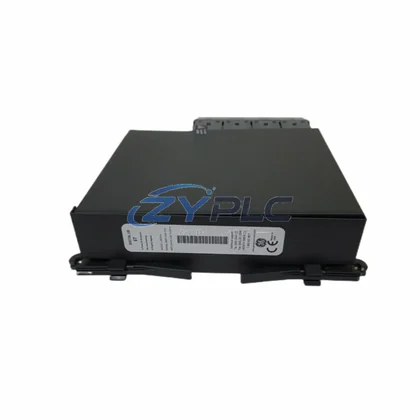
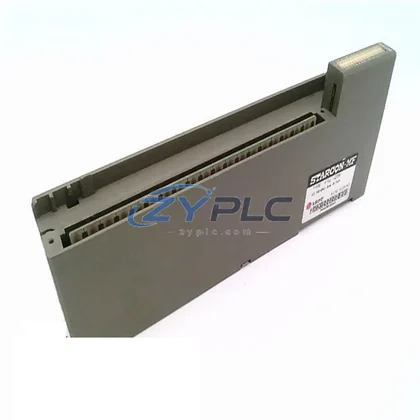
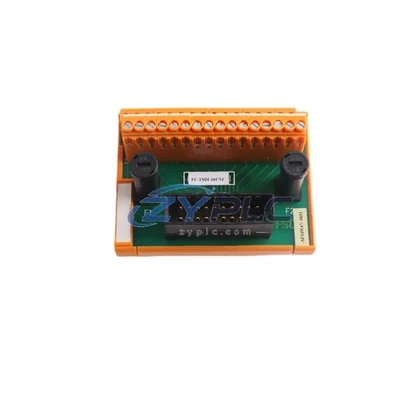
Honeywell 621-9940C Serial I/O Module: Precision Control for 620 Series Automation
The Honeywell 621-9940C is a high-efficiency Serial I/O Module engineered for the Honeywell 620 Series programmable logic controller platform. In modern industrial environments where energy accountability is no longer optional, this module plays a critical role in reducing unnecessary power draw, tightening control loop response times, and enabling smarter data exchange between field devices and the central control system. Whether deployed in continuous process manufacturing, discrete assembly lines, or hybrid automation architectures, the 621-9940C delivers the serial communication backbone that keeps maintenance-focused automation running at peak efficiency.
Every watt consumed by an idle or poorly coordinated I/O subsystem represents a measurable cost on the factory floor. The 621-9940C addresses this directly by providing deterministic, low-latency serial data transfer between the 620 Series CPU and downstream field instruments — eliminating polling delays that force drives and actuators to hold unnecessary load states. When paired with a Honeywell 620-0086 CPU module and a Honeywell 621-6550 power supply, the system achieves a tightly synchronized control cycle that minimizes idle operating load across the entire automation node.
Product Specification Table
| Parameter |
Specification / Value |
| SKU / Part Number |
621-9940C |
| Series |
Honeywell 620 Series |
| Module Type |
Serial I/O Communication Module |
| Communication Protocol |
RS-232 / RS-422 / RS-485 (Serial) |
| Power Consumption |
Low-draw design; optimized for 620 Series backplane |
| Operating Efficiency |
Deterministic cycle time; minimizes idle load on connected drives |
| Compatible Systems |
Honeywell 620 Series PLC, 620-0086 CPU, 621-6550 Power Supply |
| Application Environment |
Industrial automation, process control, discrete manufacturing |
| Maintenance Value |
Reduces drive hold states, shortens control loop latency, lowers idle consumption |
| Origin |
United States |
| Condition |
Tested, inspected, shipment arranged after confirmation |
| Warranty |
warranty terms confirmed during quotation |
System Compatibility and Application
The 621-9940C does not operate in isolation — its maintenance planning value is realized through its role within a coordinated automation architecture. In a typical 620 Series installation, the module interfaces directly with the Honeywell 620-0086 central processing unit, exchanging real-time process data with field-level instruments including flow transmitters, pressure sensors, and temperature controllers. This data fidelity allows the CPU to issue precise output commands rather than conservative, energy-wasteful approximations.
On the drive side, the serial data stream from the 621-9940C feeds setpoint and feedback signals to variable frequency drives — such as those in the Honeywell SmartVFD family — enabling speed modulation that matches actual process demand rather than running motors at fixed full-load. This alone can help restore stable operation when a compatible replacement is required. The Honeywell 621-9940C ensures the communication link between the PLC and the drive remains stable and low-latency, preventing the drive from defaulting to safe-mode speeds that waste energy.
For I/O expansion, the 621-9940C works alongside Honeywell 621-9937 and 621-9938 I/O modules within the same 620 Series rack, allowing engineers to distribute analog and digital signals across the production line without introducing communication bottlenecks. When the I/O subsystem is properly balanced, the CPU scan cycle shortens, control response improves, and energy-intensive actuators spend less time in transitional states.
Power quality monitoring is another dimension where the 621-9940C contributes indirectly. By enabling reliable serial communication with power metering instruments — such as Honeywell PM-series power monitors — the 620 Series controller can log real-time kWh consumption per production zone. This data feeds into energy dashboards and MES systems, giving plant engineers the visibility needed to identify high-consumption periods and schedule load-shifting strategies. The Honeywell 621-6550 power supply module, operating in the same rack, provides the stable DC bus that ensures the 621-9940C and its peer modules maintain consistent communication throughput even during line voltage fluctuations.
For facilities running mixed automation environments, the 621-9940C’s serial interface can also bridge legacy 620 Series nodes to newer SCADA platforms via protocol converters, extending the useful life of existing infrastructure and deferring capital expenditure on full system replacement — itself a significant energy and resource efficiency gain.
Maintenance and Replacement Notes
Consider a mid-scale discrete manufacturing line running three-shift operations. Without reliable serial I/O communication, the PLC must rely on slower polling cycles or hardwired interlocks that cannot adapt dynamically to changing production rates. Motors run at fixed speeds, conveyors operate continuously regardless of upstream buffer states, and compressed air systems maintain constant pressure even during low-demand periods. The cumulative unplanned downtime across a single shift can be substantial.
With the Honeywell 621-9940C installed and properly configured, the 620 Series controller receives real-time feedback from field sensors at deterministic intervals. The CPU can then issue speed reduction commands to variable frequency drives during low-throughput windows, trigger standby modes on auxiliary equipment during scheduled micro-stops, and coordinate conveyor indexing with upstream assembly station cycle times. The result is a production line that consumes energy proportional to actual output — not worst-case design assumptions.
Predictive maintenance also benefits from the 621-9940C’s communication reliability. Vibration sensors, thermal monitors, and current transducers connected through the serial I/O path provide continuous equipment health data to the 620 Series CPU. Trending algorithms — whether running in the PLC itself or in a connected Honeywell Experion PKS historian — can detect early signs of motor bearing wear, drive overheating, or coupling misalignment before they cause unplanned downtime. Preventing a single unplanned stoppage on a high-throughput line can save more energy than weeks of incremental efficiency tuning, because restart sequences, scrap purges, and reheating cycles all carry significant energy penalties.
Inventory availability is maintained to support rapid deployment. Each Honeywell 621-9940C unit undergoes functional testing prior to shipment, verifying serial communication integrity, backplane connector condition, and module identification response. Units are shipped with documentation and are backed by a warranty terms confirmed during quotation, ensuring that replacement installations proceed without extended commissioning delays that would otherwise keep production lines idle and energy systems running unproductively.
Product Sourcing FAQ
Q1: How does the Honeywell 621-9940C contribute to reducing operating load on the production line?
The 621-9940C enables deterministic, low-latency serial communication between the 620 Series PLC and field devices including drives, sensors, and power monitors. By shortening control loop response times, it allows the CPU to issue precise speed and load commands to variable frequency drives and actuators — reducing the time these devices spend in energy-wasteful hold or transitional states. The result is motor and drive operation that tracks actual process demand rather than conservative fixed setpoints.
Q2: Is the 621-9940C compatible with current Honeywell automation systems and third-party SCADA platforms?
The 621-9940C is designed for the Honeywell 620 Series PLC platform and is compatible with 620 Series CPU modules including the 620-0086. Its RS-232/RS-422/RS-485 serial interface can be bridged to modern SCADA and MES platforms via standard protocol converters, making it suitable for hybrid environments where legacy 620 Series nodes coexist with newer control infrastructure. Compatibility with specific third-party systems should be verified against the target communication protocol and baud rate requirements.
Q3: What is the recommended replacement or upgrade path if the 621-9940C is being used in a system modernization project?
For facilities planning a phased modernization, the 621-9940C can continue to serve as the serial communication backbone while higher-level systems are upgraded. If a full platform migration is planned, Honeywell’s current distributed control and PLC portfolios offer Ethernet-based I/O modules with equivalent functionality and improved condition monitoring integration. Our technical team can advise on compatible replacement modules based on your specific 620 Series rack configuration and application requirements.
Q4: What testing and warranty coverage is provided with the Honeywell 621-9940C?
Every 621-9940C unit is functionally tested prior to shipment. Testing covers serial communication integrity, backplane interface verification, and module self-identification response. Units are inspected for physical condition including connector integrity and board cleanliness. All units are covered by a warranty terms confirmed during quotation from the date of shipment, covering defects in materials and workmanship under normal operating conditions. Expedited shipping options are available to minimize production line downtime.