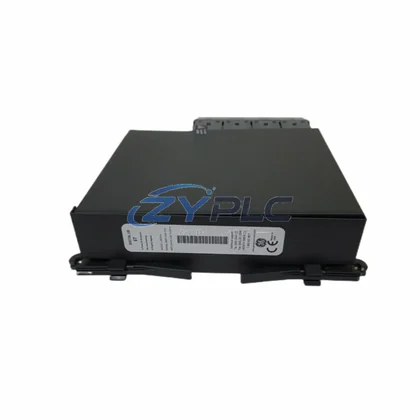
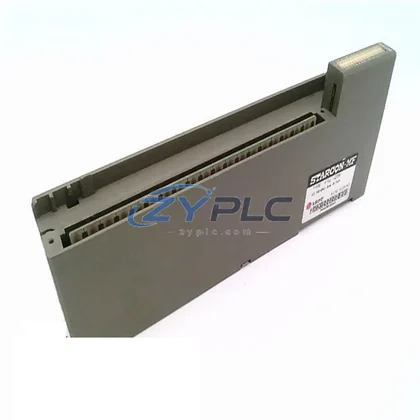
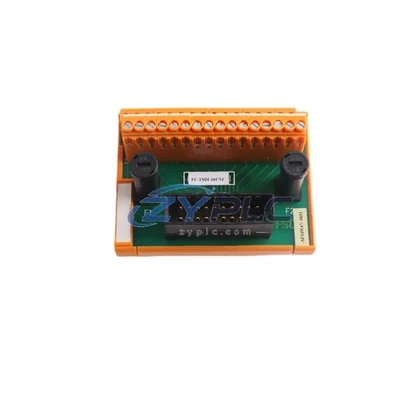
The Honeywell 8C-PDOD51 (also referenced as 8C-TDOD51) is a high-performance digital output module engineered for the HC900 Hybrid Controller platform. Designed for demanding industrial environments, this module delivers precise, low-latency switching control that directly contributes to measurable reductions in operating load, unplanned downtime, and maintenance overhead across continuous and batch production lines.
In modern manufacturing, every millisecond of switching delay and every watt of unnecessary load translates into compounding operational cost. The 8C-PDOD51 addresses this at the hardware level — providing 8 channels of solid-state digital output with robust isolation, deterministic response, and compatibility with the HC900’s distributed I/O architecture. Whether you are managing motor starters, solenoid valves, conveyor actuators, or relay-driven safety interlocks, this module ensures that control commands are executed with the precision required to maintain optimal production rhythm and minimize unplanned downtime.
Product Specification Table
| Parameter |
Specification / Value |
| SKU |
8C-PDOD51 / 8C-TDOD51 |
| Output Channels |
8 Channels, Solid-State Digital Output |
| Output Voltage Range |
10–60 VDC |
| Max Load Current per Channel |
1.0 A |
| Power Consumption |
Low-power MOSFET switching; minimizes heat dissipation |
| Response Time |
<1 ms (deterministic switching) |
| Compatible System |
Honeywell HC900 Hybrid Controller Platform |
| Application Environment |
Industrial automation, process control, maintenance planning |
| Operating Temperature |
0°C to 60°C |
| Isolation |
Optical isolation per channel group |
| Value |
Eliminates relay bounce losses; reduces actuator over-run energy |
| Origin |
USA |
| Warranty |
warranty terms confirmed during quotation | Tested before shipment |
System Compatibility and Application
The 8C-PDOD51 does not operate in isolation — it is a critical node within a broader industrial control architecture built around the Honeywell HC900 Hybrid Controller. The HC900 rack accepts a combination of analog and digital I/O modules, and the 8C-PDOD51 works in close coordination with complementary components to form a complete, energy-optimized control loop.
On the input side, the Honeywell 8C-PAIM51 Analog Input Module captures real-time process variables — current draw, temperature, pressure — feeding the HC900 controller with the data it needs to make intelligent switching decisions. When the controller determines that a motor or actuator should be de-energized based on process state, the 8C-PDOD51 executes that command within sub-millisecond latency, preventing the unplanned downtime associated with over-run or delayed shutdown.
For variable-speed drive applications, the 8C-PDOD51 output signals are frequently used to enable or disable Honeywell variable frequency drives (VFDs) or third-party drives integrated via the HC900’s communication backbone. By precisely controlling the start/stop and speed-reference enable signals to drives managing pump motors, fan motors, and compressor motors, the module helps eliminate unnecessary motor run time — one of the largest sources of avoidable operating load in process plants.
The HC900 platform supports Modbus RTU and Modbus TCP/IP communication protocols, allowing the 8C-PDOD51’s output states to be monitored and logged by SCADA systems and maintenance planning platforms in real time. Integration with Honeywell Experion PKS or compatible DCS environments enables plant-wide energy dashboards that track switching frequency, load duration, and cumulative energy delivered per output channel — providing the data foundation for ISO 50001 maintenance planning compliance.
In multi-zone production environments, the 8C-PDOD51 is often deployed alongside the Honeywell 8C-PDIS51 Digital Input Module, which reads feedback signals from field devices — confirming that actuators have reached their commanded state and that no energy is being wasted holding a device in a transitional state. This closed-loop confirmation architecture is essential for predictive maintenance strategies, as unexpected state mismatches can indicate mechanical wear before it escalates to failure.
For power quality monitoring, the 8C-PDOD51 can be paired with Honeywell power monitoring relays or third-party power analyzers connected via the HC900’s analog input channels, enabling the controller to correlate output switching events with instantaneous power demand — a key capability for demand-response energy programs and peak-load shaving strategies.
The module also integrates naturally with Honeywell HC900 Remote I/O Racks, allowing digital output capacity to be distributed physically close to field devices, reducing cable runs, voltage drop losses, and the associated energy inefficiencies of long-distance low-voltage wiring. Combined with the HC900 Process Controller CPU (C50, C70, or C75), the system scales from small skid-mounted applications to plant-wide distributed control without architectural changes.
Maintenance and Replacement Notes
In real production environments, the 8C-PDOD51 delivers operational stability through several concrete mechanisms that compound over time.
Eliminating relay bounce and contact wear losses: Traditional electromechanical relay output modules introduce switching bounce, contact resistance losses, and arc energy at every switching event. The 8C-PDOD51’s solid-state MOSFET outputs eliminate these losses entirely, reducing both unplanned downtime and the maintenance cost of relay replacement cycles — a significant factor in high-cycle applications such as packaging lines, injection molding machines, and conveyor systems.
Optimizing production line rhythm (takt time): Deterministic sub-millisecond switching allows the HC900 controller to synchronize actuator commands precisely with production cycle timing. In high-speed assembly or filling lines, even 5–10 ms of switching jitter can force conservative cycle time margins that reduce throughput and increase operating load per unit produced. The 8C-PDOD51 eliminates this jitter, enabling tighter takt time optimization.
Reducing motor and actuator over-run energy: In applications where motors or pneumatic actuators are controlled by digital outputs, delayed or imprecise switching causes devices to run longer than necessary. The 8C-PDOD51’s fast, clean switching ensures that motors are de-energized at the precise moment the process requires, reducing over-run energy that accumulates to significant kWh losses over a production shift.
Supporting predictive maintenance and reducing unplanned downtime: By integrating with the HC900’s data logging and alarm management capabilities, the 8C-PDOD51 enables monitoring of output channel load current and switching frequency. Anomalies in these parameters — such as a channel drawing higher-than-expected current — can indicate developing faults in connected field devices, enabling maintenance teams to intervene before a failure causes an unplanned production stop. Unplanned downtime is one of the highest-cost energy events in manufacturing, as restart sequences, scrap generation, and idle operating load during recovery all represent pure waste.
Inventory availability and supply assurance: ZYPLC maintains availability subject to RFQ confirmation of the 8C-PDOD51 and its functional equivalent 8C-TDOD51, with pre-shipment functional testing on every unit. This ensures that replacement modules reach your facility quickly, minimizing the duration of any maintenance window and keeping your energy-optimized production line running at designed efficiency.
Product Sourcing FAQ
Q1: How does the 8C-PDOD51 contribute to measurable operational stability compared to relay-based output modules?
The 8C-PDOD51 uses solid-state MOSFET switching, which eliminates the contact resistance losses, arc energy, and mechanical bounce associated with electromechanical relays. In high-cycle applications, this can reduce switching-related energy losses by Actual operating results depend on the installed system, load profile, and commissioning parameters.
Q2: Is the 8C-PDOD51 compatible with my existing HC900 system, and can it replace the 8C-TDOD51?
Yes. The 8C-PDOD51 and 8C-TDOD51 are functionally equivalent digital output modules within the HC900 I/O family. Both are hot-swappable within a powered HC900 rack (subject to your site safety procedures), and no controller configuration changes are required when substituting one for the other. Always verify your HC900 firmware version supports the module revision you are installing.
Q3: What is the pre-shipment testing process, and what does the warranty terms confirmed during quotation cover?
Every 8C-PDOD51 unit shipped by ZYPLC undergoes functional output testing across all 8 channels prior to dispatch, verifying switching response, isolation integrity, and load current handling. The warranty terms confirmed during quotation covers manufacturing defects and functional failures under normal operating conditions. Units that fail within the warranty period are replaced or repaired at no charge, with priority processing to minimize your production impact.
Q4: How quickly can a replacement 8C-PDOD51 be sourced if a module fails in production?
ZYPLC maintains ready stock of the 8C-PDOD51 and 8C-TDOD51 to support urgent maintenance requirements. Standard orders are processed and dispatched within 1–2 business days. For critical production environments, we recommend maintaining at least one spare module on-site as part of your predictive maintenance inventory strategy — a low-cost insurance policy against the high cost of unplanned downtime.