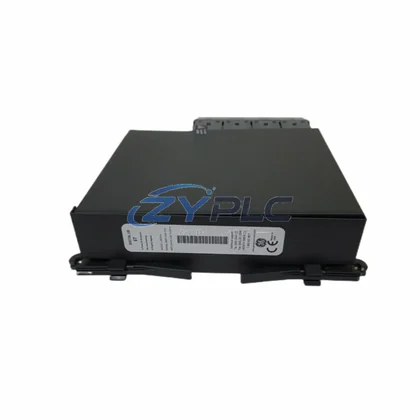
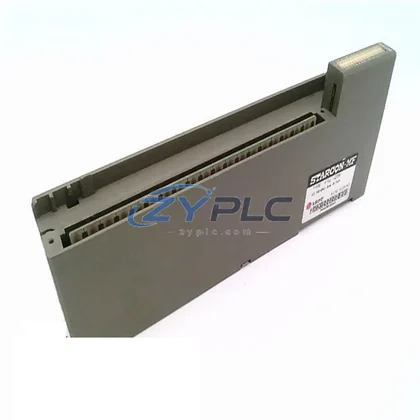
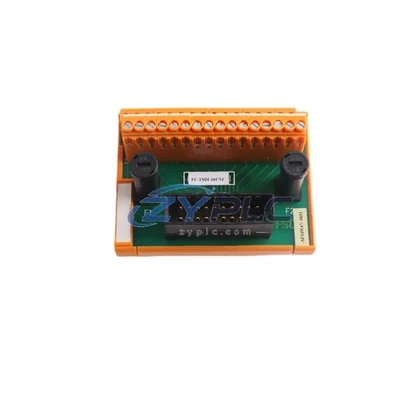
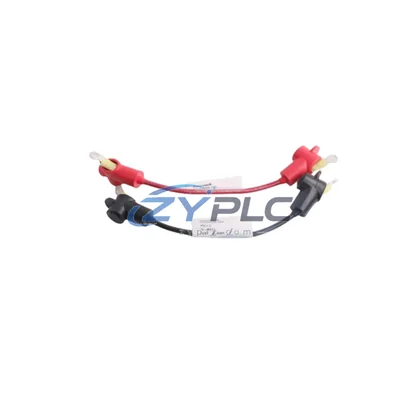
The Honeywell 8C-PDODA1 is a high-performance Digital Output Module engineered for the HC900 Hybrid Controller platform, purpose-built to deliver precise, low-latency digital switching across demanding industrial automation environments. In modern manufacturing facilities where every watt of consumed energy and every millisecond of cycle time directly impacts operational cost, the 8C-PDODA1 serves as a critical execution node — translating controller commands into reliable field-level actuation with minimal power overhead. Whether deployed in chemical processing, oil and gas, power generation, or discrete manufacturing, this module enables plant engineers to tighten control loops, reduce idle-state energy draw, and eliminate the inefficiencies that accumulate from imprecise output switching.
Designed as a direct drop-in replacement compatible with the HC900 rack architecture, the 8C-PDODA1 integrates seamlessly alongside companion modules such as the 8C-TDOBA1 and 8C-TDODB1 digital output variants, allowing facilities to standardize their output layer without costly rewiring or controller reconfiguration. This compatibility extends the useful life of existing HC900 infrastructure while enabling incremental maintenance planning upgrades.
Product Specification Table
| Parameter |
Specification / Value |
| Module Type |
Digital Output Module |
| Primary SKU |
8C-PDODA1 |
| Compatible SKUs |
8C-TDOBA1, 8C-TDODB1 |
| Platform / Series |
Honeywell HC900 Hybrid Controller |
| Output Channels |
8-Channel Digital Output |
| Operating Efficiency |
High-efficiency solid-state switching; minimized leakage current |
| Power Consumption |
Low standby draw; optimized for continuous 24/7 industrial operation |
| Compatible Systems |
HC900 DCS / Hybrid Control Platform, SCADA integration via Modbus & OPC |
| Application Environments |
Chemical, Oil & Gas, Power Generation, Discrete Manufacturing, Water Treatment |
| Energy Saving Value |
Reduces idle-state switching losses; supports demand-based output scheduling |
| Country of Origin |
United States |
| Warranty |
warranty terms confirmed during quotation |
| Shipping |
export shipping options available; pre-shipment functional testing included |
System Compatibility and Application
The 8C-PDODA1 does not operate in isolation — its maintenance planning value is fully realized when integrated within a well-structured HC900 automation architecture. At the controller level, the Honeywell HC900 Hybrid Controller CPU (such as the HC900-C30 or HC900-C50) orchestrates all process logic, issuing output commands to the 8C-PDODA1 based on real-time process variables. This tight coupling between the CPU and output module eliminates unnecessary switching cycles, directly reducing actuator wear and associated unplanned downtime.
On the input side, analog input modules such as the 8C-PAIMA1 feed live process data — temperature, pressure, flow — back to the controller, enabling the HC900 to make energy-informed decisions before issuing digital output commands. When paired with power monitoring components like the Honeywell PM-1000 Power Monitor or third-party energy meters communicating over Modbus RTU, the system gains full visibility into per-circuit operating load, allowing engineers to identify and eliminate phantom loads at the output layer.
For motor-driven applications, the 8C-PDODA1 works in concert with variable frequency drives (VFDs) — such as those in the Honeywell SmartVFD HVAC series — where digital output signals from the module control drive enable/disable states, direction commands, and speed-step selections. This eliminates the energy penalty of across-the-line motor starting and enables demand-responsive motor control strategies that can help restore stable operation when a compatible replacement is required.
Communication transparency is maintained through the HC900’s built-in Ethernet/IP and Modbus TCP interfaces, allowing SCADA systems and MES platforms to monitor output channel states in real time. When integrated with an HC900 Remote I/O Rack and distributed 8C-PDIDA1 Digital Input Modules, the architecture supports closed-loop feedback verification — confirming that actuators have responded correctly to output commands and flagging discrepancies that could indicate energy-wasting fault conditions such as stuck contactors or valve leakage.
For facilities running Honeywell Experion PKS or interfacing with third-party DCS platforms, the 8C-PDODA1’s standard rack form factor and HC900 protocol compatibility ensure smooth integration without gateway overhead, preserving system determinism and reducing the latency that can cause control overshoot and associated energy spikes.
Maintenance and Replacement Notes
In real-world production environments, the energy impact of a digital output module is measured not just in its own power draw, but in the quality and precision of the switching commands it delivers to field devices. A poorly timed or unreliable output signal forces actuators to cycle unnecessarily, drives motors to operate outside their efficiency curves, and creates process variability that demands compensatory energy input downstream.
The 8C-PDODA1 addresses this at the hardware level through solid-state output design that eliminates mechanical relay bounce, ensuring that contactors, solenoid valves, and motor starters receive clean, debounce-free switching signals. In a typical batch processing line, this translates to tighter batch cycle times, reduced inter-cycle idle periods, and lower aggregate operating load per unit of output — a direct improvement in Overall Equipment Effectiveness (OEE).
In pump and compressor control applications, the module’s reliable digital outputs enable precise start/stop sequencing that prevents simultaneous motor starts — a common cause of demand charge spikes on industrial electricity tariffs. By staggering motor energization through programmed HC900 logic, facilities can measurably reduce peak demand charges without any reduction in throughput.
Predictive maintenance integration is another key energy lever. When the HC900 controller monitors output channel cycle counts and compares them against actuator service intervals, maintenance teams can schedule interventions before efficiency-degrading wear occurs. A sticky solenoid valve or a contactor with elevated coil resistance draws abnormal load on every cycle — the 8C-PDODA1, as part of a monitored HC900 system, provides the output-state data needed to detect these anomalies early.
All units supplied by ZYPLC undergo pre-shipment functional testing to verify channel integrity, output voltage levels, and switching response times. This ensures that the module performs to specification from day one, eliminating the unplanned downtime and production disruption associated with infant-failure field replacements. Each 8C-PDODA1 is backed by a warranty terms confirmed during quotation, with inventory maintained for fast global dispatch to minimize plant downtime.
Product Sourcing FAQ
Q1: How does the 8C-PDODA1 contribute to operational stability in an HC900-controlled system?
The 8C-PDODA1 delivers precise, low-latency digital output switching that eliminates unnecessary actuator cycling and supports demand-based output scheduling within HC900 process logic. When combined with condition monitoring inputs and VFD control outputs, the module enables the controller to execute energy-optimized sequencing strategies that reduce both active consumption and peak demand charges.
Q2: Is the 8C-PDODA1 compatible with existing HC900 racks, and can it replace 8C-TDOBA1 or 8C-TDODB1 modules?
Yes. The 8C-PDODA1 is designed for direct installation into standard HC900 I/O racks and is compatible with the HC900-C30 and HC900-C50 controller platforms. It serves as a functional replacement for the 8C-TDOBA1 and 8C-TDODB1 digital output variants in most application configurations, allowing facilities to standardize their output module inventory without controller reconfiguration.
Q3: What testing is performed before shipment, and what does the warranty terms confirmed during quotation cover?
Every 8C-PDODA1 unit undergoes pre-shipment functional testing covering channel switching integrity, output voltage verification, and communication handshake with HC900 controller firmware. The warranty terms confirmed during quotation covers manufacturing defects and functional failures under normal operating conditions, with replacement or repair support coordinated through ZYPLC’s global logistics network for minimal plant downtime.
Q4: What is the recommended approach for integrating the 8C-PDODA1 into an condition monitoring architecture?
For maximum energy visibility, pair the 8C-PDODA1 with HC900 analog input modules (such as the 8C-PAIMA1) connected to current transformers or power transducers on key motor circuits. Use HC900 function blocks to correlate output switching events with operating load trends, and expose this data to your SCADA or MES via Modbus TCP or OPC-DA for plant-wide energy dashboarding and reporting.