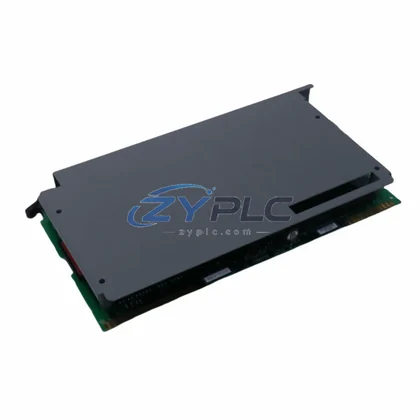
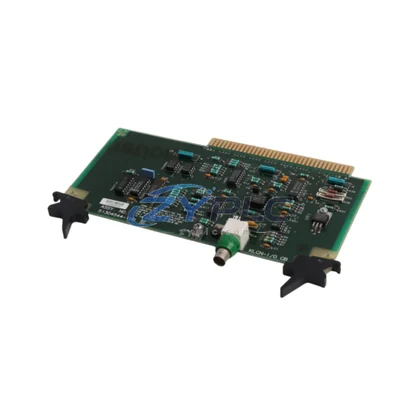
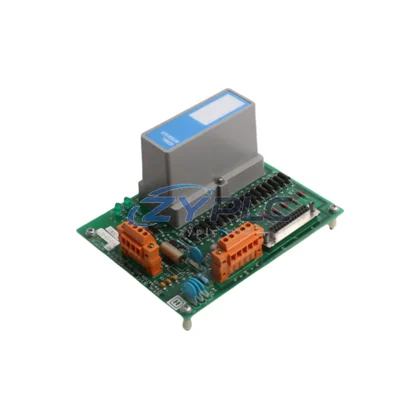
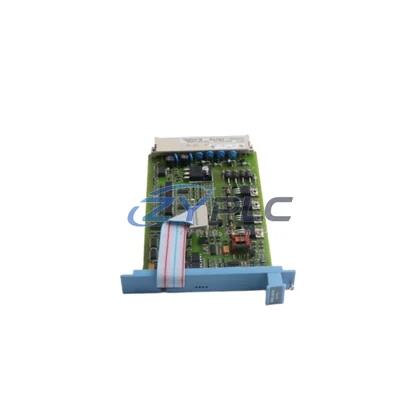
Honeywell 900B01-0101 Relay Output for HC900
The Honeywell 900B01-0101 Relay Output Module is a purpose-engineered discrete output component designed for seamless integration within the HC900 Hybrid Controller platform. Rather than functioning as a standalone device, this module occupies a critical position within a layered automation architecture — bridging the control layer decisions made by the HC900 CPU module and the physical execution layer where field devices such as solenoid valves, motor starters, contactors, and alarm annunciators receive switching commands. Understanding its role within the full system hierarchy is essential for engineers designing reliable, scalable, and maintainable industrial control solutions.
Product Specification Table
| Parameter |
Specification |
| System Role |
Discrete Relay Output Module — Execution Layer Interface |
| Compatible Platform |
Honeywell HC900 Hybrid Controller System |
| Output Type |
Relay (dry contact), Form C |
| Number of Output Points |
16 relay output channels |
| Contact Rating |
2A @ 120VAC / 24VDC per channel |
| Isolation |
Optical isolation between logic and field side |
| Backplane Communication |
HC900 proprietary rack bus |
| Installation |
HC900 I/O rack, DIN-rail compatible chassis |
| Operating Temperature |
0°C to 55°C |
| Relative Humidity |
5% to 95% non-condensing |
| Power Consumption |
Supplied via HC900 rack backplane |
| Certifications |
CE, UL listed (industrial automation) |
| Warranty |
warranty terms confirmed during quotation — covers manufacturing defects and functional failure under normal operating conditions |
System Compatibility Notes
The 900B01-0101 does not operate in isolation. Its value is fully realized when it is deployed as part of a coherent HC900 system architecture. At the core of this architecture sits the HC900 CPU module (C50, C70, or C75 variant), which executes the control strategy — whether PID loops, logic sequences, or hybrid batch programs — and communicates output commands to I/O modules via the rack backplane. The 900B01-0101 receives these discrete commands and converts them into physical relay switching actions.
On the input side, the system typically pairs this relay output module with Honeywell 900ADI-0001 Analog Input Modules and 900DI16-0001 Discrete Input Modules, which feed process variable data back to the CPU for closed-loop decision-making. This bidirectional signal flow — from field sensors through input modules, processed by the CPU, and executed through the 900B01-0101 — forms the fundamental I/O layer of the HC900 architecture.
Power integrity across the rack is maintained by the HC900 Power Supply Module (900P01-0001 or 900P02-0001), which provides regulated DC power to all modules via the backplane. In high-availability applications, a redundant power supply configuration is recommended, ensuring that a single power supply failure does not interrupt relay output operations. The 900B01-0101 benefits directly from this redundancy design, as its relay coils remain energized without interruption during power supply switchover events.
For distributed I/O architectures — common in large process plants where field devices are located far from the main control cabinet — the HC900 system supports remote I/O expansion via HC900 Remote I/O Scanner modules and Ethernet-based I/O links. The 900B01-0101 can be installed in remote racks connected to the main CPU over Ethernet, extending the system’s physical reach without sacrificing control consistency or scan cycle performance.
At the network layer, the HC900 platform communicates with supervisory systems via Modbus TCP/IP and OPC DA/UA protocols, enabling the relay output states controlled by the 900B01-0101 to be monitored and commanded from SCADA platforms, DCS integration layers, or MES systems. This system integration capability ensures that the relay output module participates fully in plant-wide data ecosystems, not just local control loops.
Human-machine interface visibility is provided through Honeywell HC900 Designer software and compatible HMI terminals such as the Honeywell Experion PKS station or third-party SCADA clients. Operators can monitor individual relay output channel states, force outputs during commissioning, and review historical switching logs — all of which reduce troubleshooting time and improve maintenance efficiency. Terminal block assemblies and HC900 I/O termination panels complete the wiring interface between the 900B01-0101 relay contacts and field device circuits, ensuring clean, labeled, and maintainable field connections.
Industrial Application Notes
The Honeywell 900B01-0101 Relay Output Module finds application across a wide range of industrial sectors where reliable discrete output switching is essential to process safety and operational continuity.
In chemical and petrochemical processing, the module controls solenoid-operated valves, pump motor starters, and emergency shutdown (ESD) actuators. Its relay contact isolation ensures that high-voltage field circuits do not interfere with the low-voltage logic circuits of the HC900 CPU, a critical safety requirement in hazardous area installations.
In power generation and electrical substation automation, the 900B01-0101 is used to switch protection relay trip circuits, alarm annunciator panels, and auxiliary equipment control circuits. The module’s contact rating and optical isolation make it suitable for interfacing with 110VAC control circuits commonly found in substation environments.
In water and wastewater treatment facilities, the module controls pump start/stop sequences, valve open/close commands, and chemical dosing system actuators. Its compatibility with the HC900’s batch control capabilities allows it to participate in sequenced treatment processes with precise timing and interlock logic.
In food and beverage and pharmaceutical manufacturing, where hygienic process control and audit trail requirements are stringent, the 900B01-0101 supports CIP (Clean-in-Place) sequence control, filling line actuator switching, and packaging machine interface — all within an HC900 architecture that supports 21 CFR Part 11 compliant data logging when integrated with appropriate supervisory software.
In mining and metals processing, the module’s robust operating temperature range and industrial-grade relay contacts make it suitable for conveyor control, crusher interlock systems, and ventilation fan switching in environments with high vibration and dust exposure.
Product Compatibility FAQ
Q1: Is the 900B01-0101 compatible with all HC900 CPU variants, including the C50, C70, and C75?
Yes. The 900B01-0101 Relay Output Module is designed for the HC900 I/O rack backplane and is compatible with all HC900 CPU variants — C50, C70, and C75 — regardless of firmware revision. The module is recognized automatically during system configuration in HC900 Designer software, where each relay output channel can be assigned to a specific control function block or logic output tag. No hardware jumper settings or manual address configuration are required; rack slot position determines the module’s I/O address within the system.
Q2: Can the 900B01-0101 be used in a redundant CPU architecture, and how does output state management work during CPU switchover?
The HC900 platform supports CPU redundancy configurations using paired C70R or C75 CPU modules. In a redundant architecture, the primary CPU maintains continuous synchronization of output states with the standby CPU. During a switchover event, the standby CPU assumes control and the 900B01-0101 relay outputs retain their last commanded state until the new primary CPU resumes scan execution — typically within one scan cycle. This bumpless transfer behavior is essential for applications where relay output state changes could trigger process upsets or safety system responses. Engineers should verify switchover timing against process requirements during system commissioning.
Q3: What does the warranty terms confirmed during quotation cover, and what is the process for warranty claims?
The warranty terms confirmed during quotation covers manufacturing defects, component failures, and functional non-conformance under normal operating conditions as specified in the HC900 I/O module documentation. It does not cover damage resulting from incorrect installation, overvoltage conditions beyond the module’s rated contact capacity, or physical damage during handling. To initiate a warranty claim, contact our technical support team with the module’s serial number, purchase documentation, and a description of the observed fault. Replacement units are dispatched from stock, and failed modules are returned for failure analysis. Our engineering team provides installation guidance and commissioning support to minimize system downtime during module replacement.