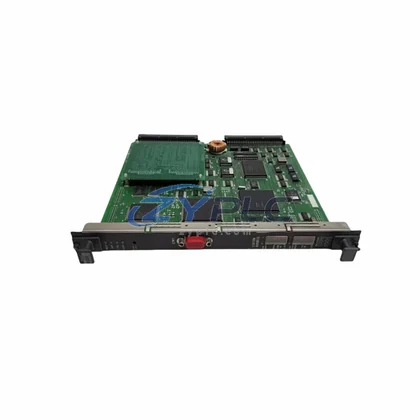
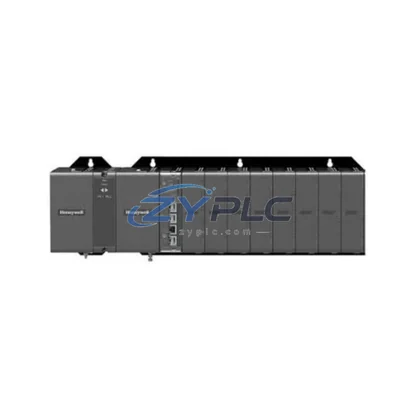
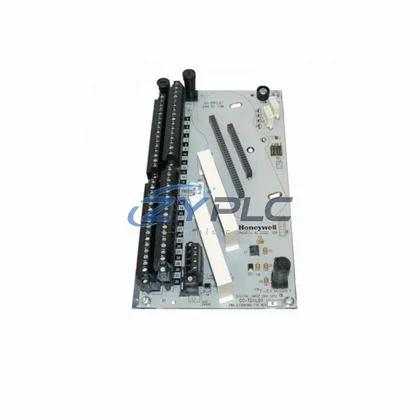
Honeywell DC-TAOX01 Analog Output for DC Series
The Honeywell DC-TAOX01 is a precision analog output module purpose-built for the Honeywell DC Series Distributed Control System (DCS) platform. In modern industrial automation, a control system is only as reliable as the coherence of its architecture — and the DC-TAOX01 is engineered to serve as a critical signal-conditioning and output-driving node within that architecture. Whether deployed in a greenfield process plant or integrated into an existing DC Series control cabinet, this module delivers consistent 4–20 mA or 0–10 V analog output signals that drive field devices with the accuracy and stability demanded by continuous process environments.
Understanding the DC-TAOX01 requires viewing it not as a standalone component, but as a functional layer within a multi-tier control hierarchy. At the control layer, the DC-TAOX01 receives setpoint commands from the DC Series controller CPU — such as the DC-SCPU01 or DC-SCPU02 — which execute the regulatory and advanced control strategies defined in the engineering workstation. These commands are transmitted via the system backplane bus, ensuring deterministic, low-latency signal delivery without the overhead of external fieldbus arbitration. The DC-TAOX01 then converts these digital control outputs into calibrated analog signals that interface directly with field actuators, control valves, variable frequency drives (VFDs), and positioners at the execution layer.
At the I/O layer, the DC-TAOX01 occupies a defined slot within the DC Series I/O chassis or expansion rack, alongside complementary modules such as the DC-TAIX01 analog input module and DC-TDIX01 digital input module. This co-location within a shared rack structure minimizes wiring complexity, reduces panel footprint, and allows the system integrator to configure mixed I/O assemblies that match the signal density requirements of each process unit. The module’s plug-and-play compatibility with the DC Series backplane eliminates the need for manual address configuration — module identity and channel mapping are resolved automatically by the controller during system initialization.
From a network and communications perspective, the DC-TAOX01 participates in the DC Series system’s internal communication fabric, which is coordinated by the controller and optionally extended through DC-SCMM01 communication modules supporting Modbus RTU, PROFIBUS DP, or OPC DA/UA interfaces. This system integration capability allows the analog output data — including channel status, output value, and fault diagnostics — to be surfaced to SCADA systems, historian platforms, and MES layers without requiring additional signal conditioning hardware. Engineers can monitor output channel health in real time from the DC-HWST01 engineering workstation or from a connected HMI panel such as the Honeywell Station series.
Redundancy is a core design consideration in high-availability process environments, and the DC-TAOX01 supports hot-standby redundancy configurations when paired with a redundant controller module and redundant power supply units such as the DC-PSSU01. In redundant architectures, the primary and secondary controllers maintain synchronized output states, and in the event of a primary controller fault, the secondary assumes control without interrupting the analog output signal to the field device. This bumpless transfer capability is essential in applications such as boiler control, compressor surge protection, and reactor temperature regulation, where even momentary output interruptions can trigger process upsets or safety system activations.
The power layer of the DC Series architecture is served by dedicated power distribution modules that supply regulated DC voltage to the I/O chassis. The DC-TAOX01 draws its operating power from the chassis backplane, eliminating the need for individual field power wiring to each output channel. This centralized power architecture simplifies cabinet design, reduces the number of terminal blocks and fusing components, and allows the system’s power budget to be managed holistically through the engineering workstation. Engineers can monitor per-chassis power consumption and receive early warning of power margin degradation before it affects system availability.
At the human-machine interface layer, operators interact with the DC-TAOX01’s output channels through faceplates and trend displays configured in the Honeywell control system’s HMI environment. Output channel values, engineering unit conversions, output limits, and manual override states are all accessible from the operator station, enabling rapid response to process deviations without requiring field intervention. The module’s diagnostic registers also expose channel-level fault codes — including open-loop detection, output saturation, and hardware failure flags — that can be mapped to alarm management systems for proactive maintenance scheduling.
Product Specification Table
| Parameter |
Specification |
| Model |
DC-TAOX01 |
| Brand |
Honeywell |
| Series |
DC Series DCS |
| System Role |
Analog Output Module — I/O Layer |
| Output Signal Type |
4–20 mA / 0–10 V DC (configurable per channel) |
| Number of Channels |
8 Channels (typical for DC Series AO modules) |
| Output Resolution |
12-bit DAC |
| Output Accuracy |
±0.1% of full scale |
| Load Drive Capability |
Up to 750 Ω (current output mode) |
| Operating Voltage |
24 V DC (supplied via backplane) |
| Operating Temperature |
0°C to 60°C |
| Relative Humidity |
5% to 95% non-condensing |
| Communication Interface |
DC Series backplane bus (internal) |
| Mounting |
DC Series I/O chassis slot (DIN rail compatible rack) |
| Redundancy Support |
Hot-standby redundancy via controller pairing |
| Diagnostics |
Open-loop detection, output saturation, hardware fault flags |
| Certifications |
CE, UL (subject to regional variant) |
| Warranty |
warranty terms confirmed during quotation |
| Origin |
United States |
System Compatibility Notes
The DC-TAOX01 achieves its full value when integrated within a coherent DC Series system architecture. A typical process control loop begins at the DC-SCPU01 controller CPU, which executes PID and advanced control algorithms at the control layer. The controller communicates with the DC-TAOX01 via the system backplane, issuing output commands that the module converts to field-level analog signals. On the input side, the DC-TAIX01 analog input module feeds process variable measurements — temperature, pressure, flow, or level — back to the controller, closing the regulatory loop.
For digital interlocking and discrete control, the DC-TDIX01 digital input module and DC-TDOX01 digital output module work in parallel with the DC-TAOX01, handling on/off signals for motor starters, solenoid valves, and alarm annunciators. The DC-SCMM01 communication module extends the system’s connectivity to SCADA and DCS supervisory layers via Modbus TCP or PROFIBUS DP, enabling the DC-TAOX01’s output channel data to be integrated into plant-wide historian and reporting systems. Power integrity across the I/O chassis is maintained by the DC-PSSU01 power supply unit, which provides regulated 24 V DC to all installed modules including the DC-TAOX01.
For applications requiring operator interaction at the field level, Honeywell Station HMI panels connect to the DC Series controller via Ethernet, providing real-time visualization of analog output values and enabling manual setpoint adjustments without requiring access to the engineering workstation. Terminal modules and marshalling panels — including Honeywell’s XLIM and ELIM series — provide the physical wiring interface between the DC-TAOX01’s output terminals and the field cable trays, ensuring organized, labeled, and maintainable wiring infrastructure throughout the control cabinet.
Industrial Application Notes
The DC-TAOX01 is deployed across a wide range of process industries where precise analog output control is essential to operational safety and product quality. In oil refinery and petrochemical applications, the module drives control valve positioners in distillation column reflux loops, crude preheat train bypass valves, and reactor feed flow controllers, where output accuracy directly impacts product yield and energy efficiency. In power generation facilities — including coal-fired, gas turbine, and combined-cycle plants — the DC-TAOX01 provides setpoint signals to boiler feedwater control valves, turbine governor actuators, and combustion air damper positioners, supporting the tight load-following performance required by grid dispatch requirements.
In water and wastewater treatment plants, the module controls chemical dosing pump speed references, aeration blower VFD setpoints, and filter backwash valve positions, enabling automated process sequences that reduce operator workload and chemical consumption. Mining and mineral processing operations use the DC-TAOX01 to regulate slurry pump discharge pressure, flotation cell air flow, and thickener rake torque, where robust analog output performance under electrically noisy conditions is critical. In pharmaceutical and food processing environments, the module’s high output accuracy supports precise temperature and flow control in clean-in-place (CIP) systems, fermentation vessels, and spray dryers, where batch-to-batch consistency is a regulatory requirement.
Packaging and material handling production lines use the DC-TAOX01 to provide speed references to servo drives and tension control systems, integrating seamlessly with the DC Series controller’s motion coordination capabilities. Across all these applications, the module’s compatibility with the DC Series architecture ensures that system expansion — adding new I/O points, extending to remote I/O racks, or upgrading the controller CPU — can be accomplished without disrupting existing output channel configurations or requiring recalibration of field devices.
Product Compatibility FAQ
Q1: Is the DC-TAOX01 compatible with both new DC Series installations and existing DC Series system expansions?
Yes. The DC-TAOX01 is fully compatible with all DC Series I/O chassis variants and controller generations. When added to an existing system, the module is automatically recognized by the DC-SCPU01 or DC-SCPU02 controller during the next system scan cycle. No manual address configuration or firmware update is required for standard expansion scenarios, though it is recommended to verify chassis power budget margins before adding modules to a fully populated rack.
Q2: Can the DC-TAOX01 operate in a redundant controller architecture, and how is output continuity maintained during controller switchover?
The DC-TAOX01 supports hot-standby redundancy when the DC Series system is configured with paired controller modules and a redundant power supply. During normal operation, both the primary and secondary controllers maintain synchronized output register values. Upon detection of a primary controller fault, the secondary controller assumes active control and the DC-TAOX01 continues driving its output channels without interruption. The bumpless transfer mechanism ensures that field devices — including control valves and VFDs — do not experience step changes in their input signals during the switchover event.
Q3: What does the warranty terms confirmed during quotation cover, and what support is available for long-term maintenance of the DC-TAOX01?
The DC-TAOX01 is supplied with a warranty terms confirmed during quotation covering manufacturing defects, component failures, and functional non-conformance under normal operating conditions. The warranty period begins from the date of shipment. For long-term maintenance, we recommend maintaining a spare module in the control room inventory to enable rapid hot-swap replacement in the event of a channel failure. Our technical support team provides pre-sales architecture consultation, installation guidance, and post-sales troubleshooting assistance. Replacement modules are stocked for shipment arranged after confirmation, minimizing system downtime in critical process environments.