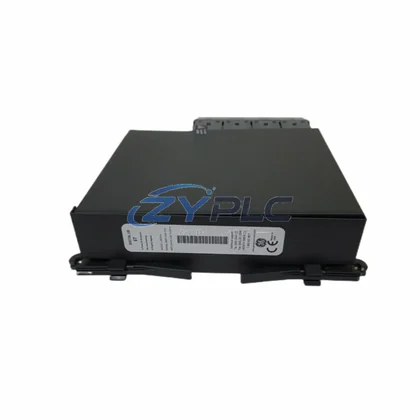
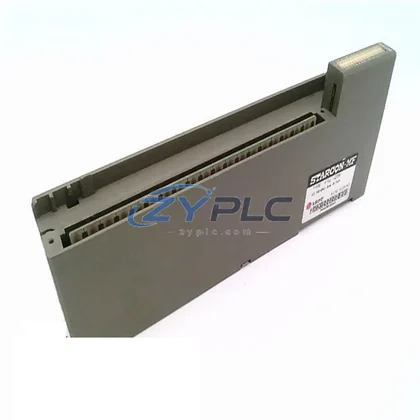
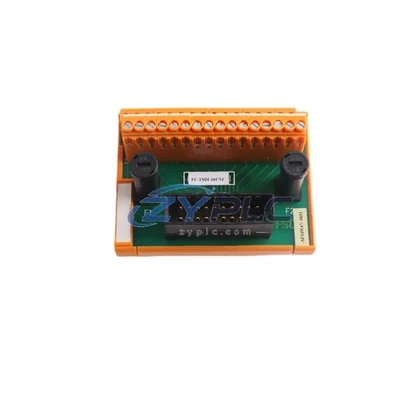
Honeywell MU-TDOR22 Digital Output Module: Precision Control for MU Series Automation
The Honeywell MU-TDOR22 (SKU: 51304427-100) is a high-efficiency digital output module engineered for demanding industrial automation environments. Designed as a core component of the Honeywell TDC 3000 and TPS Distributed Control System (DCS) architecture, this module delivers precise, low-latency digital signal output that directly contributes to reduced unplanned downtime, improved equipment utilization, and tighter production line cycle control. In facilities where every millisecond of control delay translates into measurable energy loss or throughput degradation, the MU-TDOR22 provides the deterministic output performance that modern maintenance-focused automation demands.
Unlike generic output modules, the MU-TDOR22 is purpose-built for the MU Series backplane ecosystem, ensuring seamless integration with Honeywell’s process control infrastructure without signal conditioning overhead or compatibility-driven power penalties. Its solid-state output design minimizes switching losses, while its compact form factor reduces thermal load within the control cabinet — both factors that contribute to measurable reductions in auxiliary cooling operating load over extended production runs.
Product Specification Table
| Parameter |
Specification / Value |
| SKU / Part Number |
51304427-100 / MU-TDOR22 |
| Module Type |
Digital Output Module |
| Series |
Honeywell MU Series |
| Compatible Systems |
Honeywell TDC 3000, TPS DCS, MU Series Backplane |
| Output Channels |
22-Channel Digital Output |
| Signal Type |
Discrete Digital Output (DO) |
| Operating Environment |
Industrial Process Control, Petrochemical, Power Generation, Refining |
| Energy Efficiency Value |
Solid-state switching minimizes switching losses; reduces auxiliary cooling load |
| Switching Efficiency |
Low-latency deterministic output; eliminates relay bounce unplanned downtime |
| Power Consumption |
Low-power design optimized for MU Series backplane power budget |
| Origin |
United States |
| Condition |
New / Refurbished (Tested & Verified) |
| Warranty |
warranty terms confirmed during quotation |
| Shipping |
RFQ Available — Fast Global Dispatch |
System Compatibility and Application
The MU-TDOR22 does not operate in isolation — its maintenance planning value is fully realized when deployed within a coherent Honeywell MU Series control architecture. In a typical TDC 3000 or TPS system, the MU-TDOR22 works in concert with the Honeywell MU-TAIH12 analog input module to close the energy feedback loop: analog process variables such as motor current draw, valve position feedback, and temperature are acquired by the input module, processed by the Honeywell HPM (High-Performance Process Manager), and actuation commands are dispatched through the MU-TDOR22’s digital output channels with sub-cycle precision.
On the drive side, the MU-TDOR22’s output signals interface directly with variable frequency drive (VFD) enable and run/stop command circuits. When paired with drives such as the Honeywell SmartVFD HVAC series or third-party drives integrated via the Honeywell ControlEdge PLC gateway, the module enables demand-responsive motor speed control — a critical lever for reducing operating load in pump, fan, and compressor applications where affinity laws dictate that a 20% speed reduction yields nearly 50% power savings.
For facilities running Honeywell’s Experion PKS (Process Knowledge System), the MU-TDOR22 feeds real-time actuator state data back into the historian and energy dashboards via the Honeywell Universal I/O (UIO) infrastructure, enabling operators to correlate output switching patterns with operating load trends. This closed-loop visibility is foundational to predictive maintenance strategies: abnormal switching frequencies detected at the MU-TDOR22 output level can indicate downstream actuator wear before catastrophic failure occurs, avoiding unplanned downtime that carries both production and energy restart costs.
Communication integrity is maintained through the Honeywell FTE (Fault Tolerant Ethernet) network backbone, which ensures that output commands from the HPM reach the MU-TDOR22 without packet loss or retransmission delays that could cause spurious actuator cycling — a hidden source of unplanned downtime in poorly configured DCS networks. Additionally, operator visibility is provided through Honeywell Experion HMI stations, where energy KPIs tied to MU-TDOR22-controlled actuators can be monitored in real time, enabling shift-level energy performance benchmarking.
For power quality monitoring upstream of the control system, integration with Honeywell’s power monitoring modules within the same MU Series rack allows engineers to correlate control output activity with instantaneous power demand — a capability increasingly required under ISO 50001 maintenance planning system audits.
Maintenance and Replacement Notes
In refinery and petrochemical applications, the MU-TDOR22 is commonly deployed to control solenoid valve banks, motor starter relays, and interlock circuits across multiple process units. The module’s 22-channel output capacity allows a single module to manage an entire valve group, eliminating the need for multiple smaller output cards and reducing the total backplane power draw per controlled actuator. This consolidation effect directly lowers the energy overhead of the control system itself — a factor often overlooked in plant energy audits that focus exclusively on process equipment.
In power generation facilities, the MU-TDOR22 manages turbine auxiliary system outputs including lube oil pump start commands, cooling fan enable signals, and generator breaker trip circuits. The deterministic output timing of the module ensures that sequenced start procedures execute within their designed energy ramp profiles, preventing the current inrush spikes that occur when multiple large motors start simultaneously outside their intended sequence windows.
On continuous process lines — such as paper mills, chemical reactors, and food processing facilities — the MU-TDOR22 contributes to production line cycle optimization by ensuring that actuator state transitions occur precisely at the commanded moment, without the timing jitter associated with aging relay-based output systems. Tighter cycle control reduces the idle operating load that accumulates when process equipment waits for delayed actuator responses, and it improves overall equipment effectiveness (OEE) by reducing the micro-stoppages caused by output timing inconsistencies.
From a maintenance cost perspective, the solid-state output design of the MU-TDOR22 eliminates the mechanical wear mechanisms that degrade relay-based output modules over time. This translates directly into lower mean time between replacements (MTBR), reduced spare parts inventory requirements, and fewer maintenance labor hours spent on output module diagnostics. All units supplied by ZYPLC undergo full functional testing prior to dispatch, with output channel verification performed under load conditions representative of typical industrial actuator circuits. Each module ships with a warranty terms confirmed during quotation, providing procurement teams with the cost certainty needed for multi-year maintenance budget planning.
Product Sourcing FAQ
Q1: How does the MU-TDOR22 contribute to measurable operational stability in a TDC 3000 system?
The MU-TDOR22 enables precise, low-latency digital output control that eliminates the actuator dwell time and spurious switching associated with degraded output modules. By ensuring actuators respond exactly when commanded, the module reduces the idle operating load of process equipment waiting for control signals, and supports demand-responsive VFD control strategies that can help restore stable operation when a compatible replacement is required.
Q2: Is the MU-TDOR22 (51304427-100) compatible with both TDC 3000 and TPS systems?
Yes. The MU-TDOR22 is designed for the Honeywell MU Series backplane, which is common to both the TDC 3000 and TPS DCS platforms. It is a direct replacement for existing MU-TDOR22 installations and does not require firmware reconfiguration when substituted into an existing MU Series rack. Compatibility with specific HPM or APM processor versions should be verified against your system’s I/O configuration database prior to installation.
Q3: What is the recommended replacement and testing procedure for the MU-TDOR22?
Replacement should be performed during a planned maintenance window with the affected output channels placed in a safe state via the DCS control strategy. Prior to installation, each ZYPLC-supplied MU-TDOR22 undergoes output channel load testing and isolation verification. Post-installation, a channel-by-channel output verification sequence should be executed from the Experion HMI or equivalent operator station to confirm correct actuator response before returning the module to automatic control.
Q4: What warranty and supply assurance does ZYPLC provide for the MU-TDOR22?
All MU-TDOR22 modules supplied by ZYPLC carry a warranty terms confirmed during quotation covering functional defects identified under normal operating conditions. Units are dispatched from verified inventory with full pre-shipment testing documentation. For critical applications requiring guaranteed lead times, ZYPLC maintains buffer stock of high-demand MU Series modules to support emergency procurement requirements with same-day or next-day dispatch capability.