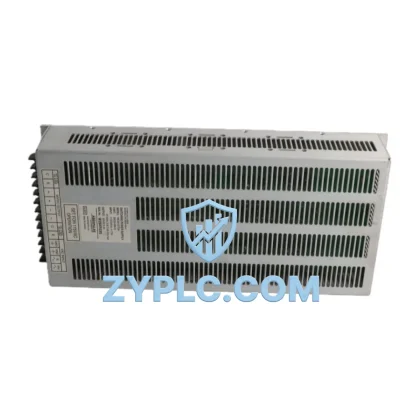
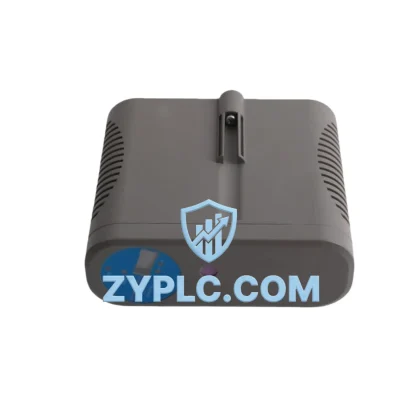
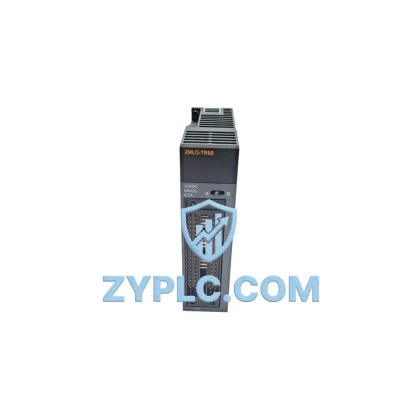
Honeywell TC810R1024 System-Ready Addressable Relay Module for TC800 Series Architecture
The Honeywell TC810R1024 Addressable Relay Module is a precision-engineered output control component designed to operate within the TC800 Series fire and building automation control architecture. Rather than functioning as a standalone device, the TC810R1024 is conceived as an integral node within a layered control system — one that bridges the intelligence of the central control panel with the physical actuation demands of field-level equipment. In modern industrial and commercial automation environments, the reliability of a control system is only as strong as the coherence of its component integration, and the TC810R1024 is built to uphold that standard across every layer of the architecture.
Within the TC800 Series ecosystem, the TC810R1024 connects directly to the addressable SLC (Signaling Line Circuit) loop, receiving discrete commands from the TC800 main control panel or its associated TC801 network controller. This addressable architecture eliminates the ambiguity of conventional relay wiring by assigning each module a unique address on the loop, enabling the panel to monitor module status, confirm relay activation, and detect wiring faults in real time. The result is a system that not only controls but also communicates — providing engineers and facility managers with full visibility into the operational state of every output point across the installation.
The TC810R1024 is rated for a single Form-C relay output, capable of switching both AC and DC loads within its specified electrical parameters. This makes it suitable for controlling a wide range of field devices including door holders, damper actuators, elevator recall circuits, fan shutdown relays, and auxiliary notification appliances. In multi-zone installations, multiple TC810R1024 modules can be distributed across the building — mounted in local control cabinets or junction enclosures — while remaining centrally supervised by the TC800 panel. This distributed architecture reduces home-run wiring costs, simplifies zone isolation during maintenance, and supports phased commissioning of large-scale projects.
From a system architecture perspective, the TC810R1024 occupies the output execution layer, sitting downstream of the control and logic layer (TC800 panel, TC801 network node) and upstream of the physical load devices. It receives its operating power from the SLC loop itself, eliminating the need for a dedicated local power supply in most standard installations. In applications where higher relay switching currents are required, the module can be paired with an external 24VDC auxiliary power supply — such as the TC902 power expander — to support heavier load switching without compromising loop integrity.
System redundancy is a critical design consideration in life-safety and process-critical environments. The TC810R1024 supports this requirement through its addressable supervision capability: the TC800 panel continuously polls each module on the SLC loop, and any loss of communication — whether due to a wiring fault, module failure, or power interruption — is immediately reported as a trouble condition. This real-time fault detection allows maintenance teams to respond proactively, minimizing system downtime and ensuring that the overall control architecture remains operational even when individual components require attention.
For engineers designing systems that must comply with NFPA 72, EN 54, or equivalent life-safety standards, the TC810R1024’s addressable supervision and Form-C output configuration provide the documentation and functional traceability required for code-compliant installations. Each relay activation and deactivation event is logged at the TC800 panel level, creating an auditable record of system behavior that supports both commissioning verification and post-incident analysis.
In layered automation architectures that integrate fire alarm, HVAC control, access control, and building management systems, the TC810R1024 serves as a reliable interface point between the fire control layer and ancillary building systems. Its dry-contact relay output can be wired to BMS input modules, HVAC damper controllers, or access control panels — enabling coordinated system responses such as automatic smoke damper closure, elevator recall, and door release upon alarm activation. This cross-system integration capability is what distinguishes a well-engineered building automation architecture from a collection of isolated subsystems.
Long-term maintainability is another area where the TC810R1024 delivers measurable value. Because each module is individually addressable, field technicians can use the TC800 panel’s diagnostic interface to test relay operation, verify wiring continuity, and confirm module health without physically accessing each device location. This remote diagnostic capability is particularly valuable in large installations — such as high-rise buildings, hospital campuses, or industrial facilities — where physical access to every relay module would be time-consuming and operationally disruptive.
ZYPLC maintains verified stock of the TC810R1024 and related TC800 Series components, including the TC800 main control panel, TC801 network node controller, TC820P addressable monitor module, TC830 addressable sounder base, TC902 auxiliary power supply, TC851 addressable pull station, TC856 addressable smoke detector base, TC880 annunciator module, and TC870 graphic annunciator interface. All units are sourced from authorized distribution channels, functionally tested prior to shipment, and covered by a 12-Month Warranty. Whether you are completing a new installation, replacing a failed module, or building out system redundancy, ZYPLC provides the inventory depth and technical support to keep your TC800 Series architecture operating at full capability.
Architecture Specification Table
| Parameter |
Specification |
| Model |
TC810R1024 |
| Brand |
Honeywell |
| Series |
TC800 Series |
| System Role |
Addressable Relay Output Module (Execution Layer) |
| Output Type |
Form-C Relay (SPDT) |
| Relay Contact Rating |
2A @ 30VDC / 0.5A @ 120VAC (resistive load) |
| Loop Compatibility |
TC800 Series SLC (Signaling Line Circuit) |
| Operating Voltage |
Loop-powered (SLC); optional 24VDC auxiliary |
| Communication Protocol |
Proprietary Addressable SLC Protocol |
| Address Capacity |
1 unique address per module on SLC loop |
| Supervision |
Continuous loop supervision; fault reporting to TC800 panel |
| Operating Temperature |
0°C to +49°C (32°F to 120°F) |
| Relative Humidity |
10% to 93% non-condensing |
| Mounting |
Standard 4″ square electrical box or surface mount enclosure |
| Compliance |
UL Listed; NFPA 72 compatible |
| Country of Origin |
United States |
| Warranty |
12-Month Warranty (ZYPLC) |
Coordinated Control System Design
The TC810R1024 achieves its full operational value when deployed as part of a coordinated TC800 Series control architecture. At the control layer, the TC800 main control panel serves as the system intelligence hub, processing input signals from addressable detectors and initiating output commands to relay modules across the SLC loop. The TC801 network node controller extends this intelligence across multiple panels in large campus or multi-building installations, enabling synchronized system-wide responses to alarm conditions.
At the input layer, TC820P addressable monitor modules supervise conventional detector zones and dry-contact input devices, feeding status information back to the TC800 panel. TC851 addressable pull stations and TC856 addressable smoke detector bases provide the primary life-safety input signals that trigger relay output activation at the TC810R1024. The seamless communication between these input devices and the TC810R1024 output module — all mediated by the TC800 panel — is what defines the system’s architectural coherence.
At the notification and annunciation layer, TC830 addressable sounder bases provide audible alarm output, while the TC880 annunciator module and TC870 graphic annunciator interface deliver visual system status information to building operators and emergency responders. The TC810R1024 complements these notification devices by controlling ancillary building systems — dampers, elevators, fans, and doors — that must respond in coordination with the alarm notification sequence.
Power integrity across the architecture is maintained by the TC902 auxiliary power supply, which provides supplemental 24VDC power to relay modules and other devices that require current beyond the SLC loop’s capacity. In redundant power configurations, the TC902 can be paired with a battery backup system to ensure continued relay operation during primary power interruptions — a critical requirement in life-safety applications where relay-controlled egress doors and smoke dampers must remain functional during emergencies.
Application in Layered Automation Systems
The TC810R1024 finds application across a broad spectrum of industries and facility types where coordinated control system responses are essential to operational safety and regulatory compliance.
In commercial and institutional buildings — including hospitals, universities, hotels, and office complexes — the TC810R1024 controls smoke damper actuators, stairwell pressurization fans, elevator recall circuits, and magnetic door holders. These coordinated responses are mandated by fire codes and must be reliably executed within seconds of alarm activation. The TC810R1024’s addressable supervision ensures that each relay point is continuously verified, providing the code-required documentation of system readiness.
In industrial manufacturing facilities, the TC810R1024 integrates with process shutdown systems, initiating emergency stops of conveyor systems, ventilation fans, and chemical feed pumps upon detection of fire or hazardous gas conditions. Its dry-contact output interfaces cleanly with PLC input modules and DCS safety interlock systems, enabling cross-platform integration without signal conditioning equipment.
In power generation and electrical utility facilities, the TC810R1024 supports fire suppression system activation, cable tray damper control, and transformer room ventilation shutdown. The module’s UL listing and NFPA 72 compliance make it suitable for use in facilities subject to NERC CIP and other utility-sector regulatory frameworks.
In data centers and telecommunications facilities, the TC810R1024 controls precision air conditioning unit shutdown, raised floor damper closure, and clean agent suppression system pre-discharge warnings. Its loop-powered operation minimizes the number of dedicated power circuits required in densely wired equipment rooms.
Architecture Engineering FAQ
Q1: How many TC810R1024 modules can be connected to a single TC800 SLC loop, and what are the loop capacity constraints?
The TC800 Series SLC loop supports up to 250 addressable devices per loop, with each TC810R1024 consuming one address. In practice, the total number of modules per loop is also constrained by the loop’s current capacity — typically 300mA for the SLC circuit. Since the TC810R1024 draws current from the loop for its supervisory electronics (relay coil activation may require auxiliary power for higher-current loads), engineers should perform a loop current budget calculation during system design. For installations requiring more than the single-loop capacity, the TC801 network node controller enables multi-panel, multi-loop architectures that can scale to thousands of addressable points while maintaining centralized supervision and control.
Q2: Is the TC810R1024 compatible with TC800 Series panels manufactured in different production years, and how should firmware compatibility be verified during system expansion or replacement?
Honeywell periodically releases firmware updates for the TC800 panel that may affect addressable device compatibility and feature availability. When adding TC810R1024 modules to an existing installation — particularly in systems that have been in service for several years — it is recommended to verify the panel firmware version against Honeywell’s current compatibility matrix before installation. ZYPLC’s technical team can assist with compatibility verification and, where necessary, coordinate firmware update procedures. All TC810R1024 units supplied by ZYPLC are current-production units covered by a 12-Month Warranty, ensuring compatibility with contemporary TC800 Series panel firmware versions.
Q3: What maintenance procedures are recommended for TC810R1024 modules in long-term installations, and how does the 12-Month Warranty support ongoing system reliability?
Annual functional testing of each TC810R1024 relay output is recommended in accordance with NFPA 72 inspection and testing requirements. This testing can be initiated from the TC800 panel’s diagnostic interface without requiring physical access to each module location — a significant advantage in large or complex installations. Relay contact resistance should be verified during testing, and any module exhibiting increased contact resistance or intermittent operation should be replaced proactively to maintain system reliability. ZYPLC’s 12-Month Warranty covers manufacturing defects and premature component failure, providing a cost-effective replacement pathway that supports long-term system maintenance budgets. ZYPLC also maintains ongoing inventory of TC810R1024 and related TC800 Series components, ensuring that replacement units are available without extended lead times that could compromise system availability.
© 2026 ZYPLC. All rights reserved.
Original Source: https://zyplc.com
Contact: +86 19859288691 | [email protected]