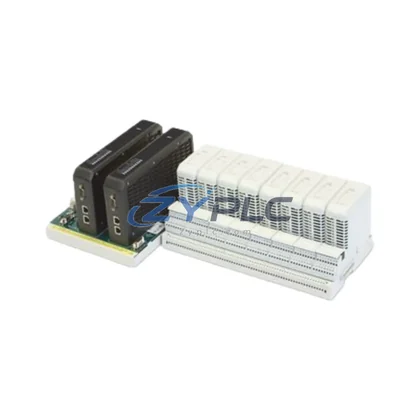
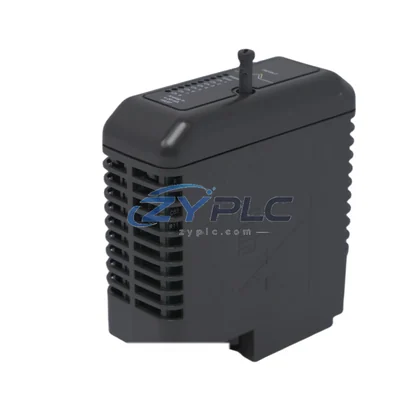
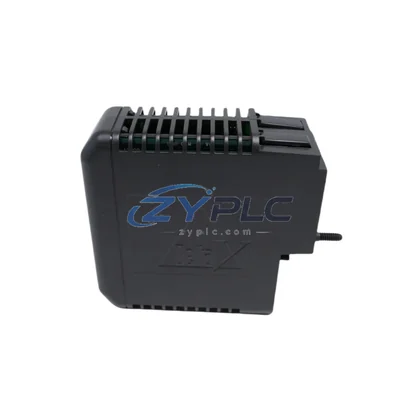
In high-integrity process automation environments, the reliability of a safety instrumented system depends not on any single component, but on the coherent integration of every layer within the control architecture. The ICS Triplex T8314C is a Triple Modular Redundant (TMR) digital input module engineered specifically for the Trusted T8000 Safety System platform. It occupies a critical position in the I/O layer of a layered automation architecture, serving as the primary interface between field-level discrete signals and the TMR logic solver at the control layer. Its design philosophy is rooted in system-level thinking: every electrical parameter, every communication pathway, and every mechanical specification has been optimized to ensure that the T8314C contributes to — rather than constrains — the overall system’s availability, fault tolerance, and long-term maintainability.
The T8314C is not a standalone device. It is a functional node within a broader ecosystem that includes the T8110B Trusted TMR Processor Module, which executes the safety logic and arbitrates the triple-redundant voting process. Alongside the processor, the T8150 Trusted Power Supply Module provides the regulated, redundant DC power rails that the T8314C and its companion I/O modules depend upon for uninterrupted operation. The module slots into the T8100 Trusted TMR Baseplate, which provides the backplane communication bus, mechanical retention, and inter-module signal routing that bind the entire chassis into a unified control node. This tight physical and electrical integration means that the T8314C benefits directly from the baseplate’s inherent redundancy architecture without requiring additional external wiring or signal conditioning.
At the network and communication layer, the Trusted T8000 platform interfaces with distributed control systems and supervisory networks through dedicated communication gateways. The T8830 Trusted Communication Interface Module enables the T8000 chassis to exchange data with DCS platforms, SCADA systems, and historian servers over standard industrial protocols, ensuring that the digital input states captured by the T8314C are available in real time to operators at the human–machine interface layer. HMI terminals running on platforms such as Wonderware InTouch or Rockwell FactoryTalk can display field signal status, alarm conditions, and diagnostic data sourced directly from the T8314C’s input channels, closing the loop between field instrumentation and operator decision-making.
In the field instrumentation layer, the T8314C receives discrete 24 VDC signals from a wide range of field devices: emergency shutdown pushbuttons, position limit switches, pressure switch contacts, vibration trip relays, and fire and gas detector output contacts. These signals are routed through T8490 Trusted Termination Assemblies, which provide the marshalling, fusing, and terminal block infrastructure that simplifies field wiring, reduces installation errors, and accelerates commissioning. The termination assemblies also support hot-swap maintenance procedures, allowing field wiring to remain connected while the T8314C module is removed for inspection or replacement — a critical capability in continuous-process industries where planned shutdowns are infrequent and costly.
The TMR architecture of the T8314C means that each input channel is processed by three independent input circuits simultaneously. The results are compared by the T8110B processor using a 2-out-of-3 voting algorithm, which ensures that a single-channel failure — whether caused by a stuck contact, a wiring fault, or an internal component degradation — does not result in either a spurious trip or an undetected dangerous failure. This dual-fault tolerance characteristic is fundamental to achieving the IEC 61511 Safety Integrity Level 3 (SIL 3) performance targets required in high-hazard applications such as burner management systems, compressor protection, and high-integrity pressure protection systems (HIPPS). When combined with the T8310 Trusted Analog Input Module for continuous process variable monitoring and the T8431 Trusted Digital Output Module for final element actuation, the T8314C forms part of a complete, validated safety loop that spans from sensor to actuator within a single, coherent platform.
From a system engineering perspective, the T8314C supports online diagnostics that continuously verify the health of each input channel without interrupting normal operation. Diagnostic coverage exceeds 99%, meaning that the vast majority of potential hardware failures are detected and annunciated before they can affect system availability. This diagnostic transparency reduces the frequency of proof tests required to maintain SIL certification, lowering the total cost of ownership over the system lifecycle. Maintenance engineers can interrogate channel-level diagnostic data through the Trusted System Engineer configuration and diagnostic software, which provides a graphical representation of module health, channel status, and fault history — enabling targeted, evidence-based maintenance rather than time-based replacement schedules.
In layered automation architectures deployed across oil and gas production facilities, petrochemical complexes, power generation plants, and water treatment infrastructure, the T8314C consistently demonstrates its value as a long-term platform investment. Its compatibility with the broader Trusted T8000 module family — including the T8320 Trusted Digital Input Module for alternative channel density configurations and the T8440 Trusted Relay Output Module for hardwired interlock outputs — means that system architects can scale, reconfigure, and extend their safety systems without platform migration. Spare parts management is simplified because a single module type serves multiple applications across the plant, reducing inventory carrying costs and eliminating the risk of obsolescence-driven system redesign.
Product Specification Table
| Parameter |
Specification |
| System Role |
TMR Digital Input Module — I/O Layer, Safety Instrumented System |
| Compatible Platform |
ICS Triplex Trusted T8000 TMR Safety System |
| Input Type |
Discrete Digital Input (24 VDC nominal) |
| Redundancy Architecture |
Triple Modular Redundant (TMR) — 2oo3 voting |
| Safety Integrity Level |
SIL 3 (IEC 61511 / IEC 61508) |
| Diagnostic Coverage |
>99% per channel |
| Communication Interface |
Trusted T8100 Backplane Bus |
| Installation Environment |
Control cabinet / DIN-rail chassis; IP20 enclosure rating |
| Operating Temperature |
0°C to +60°C |
| Power Supply |
Via T8150 Trusted Power Supply Module (backplane-fed) |
| Hot-Swap Support |
Yes — online module replacement without process interruption |
| Country of Origin |
United Kingdom |
| Warranty |
warranty terms confirmed during quotation — covers manufacturing defects and functional failures under normal operating conditions |
System Compatibility Notes
A fully realized Trusted T8000 safety system integrating the T8314C typically includes the following coordinated components operating across multiple architecture layers:
At the control layer, the T8110B Trusted TMR Processor Module executes IEC 61131-3 safety logic and performs the 2oo3 voting arbitration on all digital input data received from the T8314C. The processor communicates with redundant peer processors to maintain synchronization across the TMR architecture. At the power layer, the T8150 Trusted Power Supply Module delivers regulated, redundant power to all modules on the T8100 baseplate, with automatic switchover in the event of a supply failure. At the I/O layer, the T8314C operates alongside the T8310 Trusted Analog Input Module for 4–20 mA process variable inputs, the T8320 Trusted Digital Input Module for alternative channel configurations, the T8431 Trusted Digital Output Module for solenoid valve and relay actuation, and the T8440 Trusted Relay Output Module for hardwired interlock outputs. At the field termination layer, T8490 Trusted Termination Assemblies provide marshalled, fused terminal blocks that interface directly with field instrument cables. At the network layer, the T8830 Trusted Communication Interface Module bridges the T8000 safety system to DCS and SCADA networks, enabling real-time data exchange and remote diagnostics. Together, these components form a validated, fully integrated safety architecture in which the T8314C’s digital input data flows seamlessly from field sensor contact to logic solver to final element actuation.
Industrial Application Notes
The ICS Triplex T8314C is deployed across a broad spectrum of high-hazard industrial applications where SIL 3 digital input integrity is a regulatory and operational requirement. In oil and gas production and processing, the T8314C monitors emergency shutdown valve position feedback, wellhead pressure switch contacts, and gas detector alarm outputs within platform and onshore terminal safety systems. In petrochemical and refinery operations, it captures discrete signals from high-temperature trip switches, compressor surge protection contacts, and reactor interlock circuits, feeding the TMR logic solver with the high-integrity input data required for safe process shutdown. In power generation — including gas turbine, steam turbine, and combined-cycle plants — the T8314C interfaces with turbine protection systems, monitoring vibration trip relay contacts, lube oil pressure switches, and overspeed detection outputs. In water and wastewater treatment, it monitors pump run/fail status, valve position feedback, and level switch contacts within critical dosing and distribution systems. In mining and minerals processing, the T8314C supports conveyor protection systems, crusher interlock circuits, and ventilation safety systems where reliable discrete input monitoring is essential for personnel safety. Across all these applications, the T8314C’s TMR architecture, high diagnostic coverage, and hot-swap capability ensure that the safety system remains available and certifiable throughout the operational lifecycle of the plant.
Product Compatibility FAQ
Q1: Is the T8314C compatible with existing T8000 chassis and baseplate installations, and can it be added to an operational system without a planned shutdown?
Yes. The T8314C is fully compatible with the T8100 Trusted TMR Baseplate and all current T8000 platform components. Its hot-swap design allows the module to be inserted into or removed from an energized chassis without interrupting the safety logic execution or requiring a process shutdown. The TMR architecture ensures that the remaining two input channels continue to provide valid voting data during the brief period of module exchange, maintaining system availability throughout the maintenance operation.
Q2: What configuration and diagnostic tools are required to commission the T8314C within a T8000 safety system architecture?
Commissioning the T8314C requires the Trusted System Engineer software suite, which provides module configuration, channel assignment, diagnostic monitoring, and proof test support. The software communicates with the T8110B processor over the engineering workstation interface and provides channel-level visibility into input signal status, diagnostic fault codes, and module health indicators. No additional third-party configuration tools are required for standard commissioning activities.
Q3: What does the warranty terms confirmed during quotation cover, and how does it support long-term maintenance planning for safety-critical installations?
The warranty terms confirmed during quotation covers manufacturing defects and functional failures arising under normal operating conditions from the date of shipment. For safety-critical installations, this warranty period provides assurance during the initial commissioning and early operational phase — typically the period of highest risk for latent manufacturing defects. For long-term maintenance planning beyond the warranty period, we recommend maintaining a defined spare module inventory based on the installed population and the plant’s proof test interval, ensuring that replacement modules are available on-site to support rapid hot-swap maintenance without impacting system availability or SIL certification status.