Product identification and sourcing context
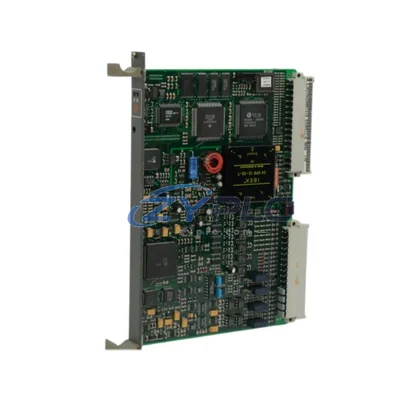
Mitsubishi A1SD75P2-S3 Positioning Module for MELSEC-A Systems is handled as a quote-based Mitsubishi Electric automation spare part for PLC, HMI, drive, and machine-control maintenance projects. ZYPLC checks the exact model, Mitsubishi platform, required condition, quantity, and destination country before quotation.
| Brand |
Mitsubishi Electric |
| Model / SKU |
A1SD75P2-S3 |
| Series context |
MELSEC-A |
| Part type |
Industrial Automation Spare Parts |
| RFQ basis |
Availability, condition, lead time, and export shipment options are confirmed before quote. |
Where this part is typically used
This item is requested for installed-base maintenance, replacement sourcing, and compatibility verification. Mitsubishi MELSEC, FX, Q Series, iQ-R, GOT, and related machine-control installations often require exact suffix, rack, power, and panel-context checks before a replacement can be sourced.
RFQ information for maintenance teams
- Exact model number, suffix, and Mitsubishi platform or machine context.
- Installed system such as MELSEC-F, MELSEC-Q, iQ-R, GOT, or related I/O rack where applicable.
- Quantity, urgency, required condition, and destination country.
- Photos of module labels, HMI back labels, terminal bases, power ratings, or existing spare packaging.
Browse related Mitsubishi Electric spare parts, review the MELSEC-A series, or compare similar Industrial Automation Spare Parts records. If the exact suffix is not shown, send the model and photos so the RFQ can be checked manually.
Request quote for this model
Mitsubishi A1SD75P2-S3 Industrial Network Interface for MELSEC-A Systems: Precision Data Links Across the Smart Factory Floor
The Mitsubishi A1SD75P2-S3 is a high-performance 2-axis positioning module engineered for the MELSEC-A Series PLC platform. Designed to serve as a critical node in industrial automation networks, this module bridges the gap between motion control hardware and the broader data infrastructure of modern smart factories. Whether coordinating servo drives, communicating with SCADA supervisory systems, or feeding real-time position data to HMI panels, the A1SD75P2-S3 delivers deterministic, low-latency pulse output control that keeps production lines synchronized and transparent.
In today’s connected manufacturing environment, positioning modules are no longer isolated motion controllers — they are active participants in the plant-wide data flow. The A1SD75P2-S3 integrates seamlessly into MELSEC-A backplane architectures, enabling the CPU module (such as the A2USCPU or A3UCPU) to exchange positioning commands and feedback data at high speed via the internal bus. This tight coupling ensures that motion events are immediately visible to upstream SCADA platforms and downstream field devices alike, eliminating the data silos that plague legacy automation systems.
Compatibility & Integration Notes
| Attribute |
Specification |
| SKU |
A1SD75P2-S3 |
| Brand |
Mitsubishi Electric |
| Series |
MELSEC-A |
| Module Type |
2-Axis Positioning / Motion Control Module |
| Communication Protocol |
MELSEC-A Internal Bus; compatible with CC-Link gateway integration |
| Interface Type |
Backplane-mounted special function module |
| Pulse Output Axes |
2 axes (independent) |
| Max Pulse Output |
200 kpps per axis |
| Network Compatibility |
MELSEC-A Series CPU; CC-Link via A1SJ61BT11 master module |
| System Application |
SCADA integration, HMI data display, servo drive coordination, remote I/O positioning |
| Origin |
Japan |
| Warranty |
12 Months |
Connected Automation Data Flow
The A1SD75P2-S3 sits at the heart of a layered industrial data architecture. At the field level, it issues high-speed pulse commands to servo amplifiers such as the Mitsubishi MR-J2S series or compatible stepper drivers, translating PLC ladder logic into precise mechanical motion. Position feedback and axis status are continuously written back to the MELSEC-A CPU’s shared memory, where they become available to the entire control network in real time.
At the network layer, the MELSEC-A CPU — typically an A2USCPU-S1 or A3UCPU — acts as the data aggregation point, collecting positioning status from the A1SD75P2-S3 alongside I/O states from remote I/O modules such as the A1SX40 digital input module and A1SY10 transistor output module. This consolidated dataset is then passed upstream via the A1SJ61BT11 CC-Link master module, which distributes real-time process data across the plant network to remote slave stations, variable frequency drives, and intelligent field devices.
HMI panels — such as Mitsubishi’s GOT2000 series terminals — connect directly to the MELSEC-A CPU via RS-232 or Ethernet adapters, rendering live axis position, speed, and alarm data for operators on the factory floor. Simultaneously, SCADA gateways such as the Mitsubishi Q series QJ71E71-100 Ethernet module (used in hybrid A/Q migration architectures) can poll the CPU for positioning data and forward it to plant-level MES or historian systems, enabling full production traceability.
For applications requiring edge intelligence, an industrial edge gateway — such as a Moxa MGate or equivalent protocol converter — can bridge the MELSEC-A network to modern OPC-UA or MQTT data pipelines, ensuring that positioning events from the A1SD75P2-S3 are visible in cloud-based analytics dashboards without requiring a full PLC platform migration. This makes the A1SD75P2-S3 a future-compatible investment even as factories evolve toward IIoT architectures.
Solving Data Isolation in Industrial Sites
One of the most persistent challenges in industrial automation is the fragmentation of control data across incompatible protocols and isolated subsystems. The A1SD75P2-S3 addresses this directly by operating as a native MELSEC-A special function module, meaning its data registers are directly accessible to the CPU without any additional protocol translation overhead. Positioning commands, current position values, error codes, and axis status flags are all mapped to fixed device addresses that any MELSEC-A compatible programming tool — including GX Developer or GX Works2 in legacy mode — can read and write in real time.
For sites running mixed automation environments, the A1SD75P2-S3 can be integrated into CC-Link networks via the A1SJ61BT11 master, allowing positioning data to be shared with remote slave PLCs, distributed I/O racks, and intelligent drives on the same network segment. This eliminates the need for point-to-point wiring between controllers and dramatically reduces the engineering effort required to achieve plant-wide data transparency.
Remote diagnostics are supported through the MELSEC-A CPU’s built-in communication ports, enabling maintenance engineers to monitor axis status, read error history, and adjust positioning parameters from a central control room or even a remote location via a SCADA terminal. Alarm conditions — such as positioning errors, pulse output overflows, or servo drive faults — are immediately flagged in the CPU’s error register and can be forwarded to HMI alarm systems or SCADA event logs without manual intervention.
System expansion is straightforward: additional A1SD75P2-S3 modules can be added to the MELSEC-A backplane (subject to slot and power budget constraints), and the CC-Link network can be extended to accommodate new remote stations as production capacity grows. This scalability makes the A1SD75P2-S3 an ideal foundation for phased smart factory rollouts, where connectivity requirements evolve over time.
Every A1SD75P2-S3 unit supplied by ZYPLC undergoes pre-shipment functional testing to verify pulse output integrity, axis parameter storage, and communication with the MELSEC-A CPU. Units are shipped with a warranty and support terms confirmed before quote covering manufacturing defects and functional failures, with global logistics via DHL or FedEx to ensure export shipping options after RFQ confirmation to industrial sites worldwide.
Industrial Connectivity FAQ
Q1: What is the communication latency between the A1SD75P2-S3 and the MELSEC-A CPU?
The A1SD75P2-S3 communicates with the MELSEC-A CPU via the internal backplane bus, which operates synchronously with the CPU scan cycle. Typical data exchange latency is within one scan cycle (commonly 1–10 ms depending on CPU configuration), making it suitable for real-time motion coordination and SCADA data acquisition.
Q2: Is the A1SD75P2-S3 compatible with CC-Link and other industrial network protocols?
The module itself uses the MELSEC-A internal bus for direct CPU communication. CC-Link integration is achieved by pairing the MELSEC-A CPU with an A1SJ61BT11 CC-Link master module, which then exposes positioning data to the broader CC-Link network. For OPC-UA or Ethernet/IP connectivity, an external protocol gateway is recommended.
Q3: How does the module handle network instability or communication errors?
The A1SD75P2-S3 stores error codes in dedicated device registers that the CPU monitors continuously. In the event of a communication fault or positioning error, the module sets an error flag that can trigger CPU-level alarm routines, HMI notifications, or SCADA alerts. The module retains its last valid positioning parameters in non-volatile memory, allowing safe restart after a power interruption.
Q4: What does the warranty and support terms confirmed before quote cover, and how is pre-shipment testing conducted?
All A1SD75P2-S3 units supplied by ZYPLC are tested for pulse output function, parameter read/write integrity, and backplane communication before dispatch. The warranty and support terms confirmed before quote covers manufacturing defects and functional failures under normal operating conditions. Warranty claims are processed directly through ZYPLC’s technical support team, with replacement or repair options available depending on fault diagnosis.