Product identification and sourcing context
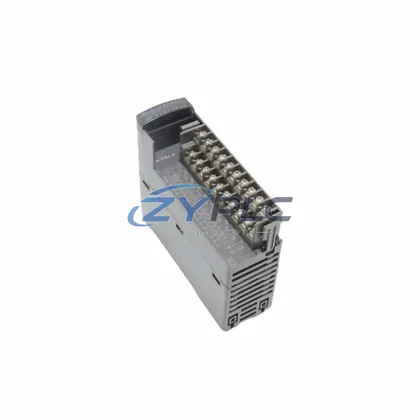
Mitsubishi A1SX41 DC Input Module for MELSEC-A Systems is handled as a quote-based MELSEC I/O or expansion module for PLC, HMI, drive, and machine-control maintenance projects. ZYPLC checks the exact model, Mitsubishi platform, required condition, quantity, and destination country before quotation.
| Brand |
Mitsubishi Electric |
| Model / SKU |
A1SX41 |
| Series context |
MELSEC-A |
| Part type |
Sensors & I/O |
| RFQ basis |
Availability, condition, lead time, and export shipment options are confirmed before quote. |
Where this part is typically used
This item is requested for field-signal wiring, module replacement, and PLC cabinet troubleshooting support. Mitsubishi MELSEC, FX, Q Series, iQ-R, GOT, and related machine-control installations often require exact suffix, rack, power, and panel-context checks before a replacement can be sourced.
RFQ information for maintenance teams
- Exact model number, suffix, and Mitsubishi platform or machine context.
- Installed system such as MELSEC-F, MELSEC-Q, iQ-R, GOT, or related I/O rack where applicable.
- Quantity, urgency, required condition, and destination country.
- Photos of module labels, HMI back labels, terminal bases, power ratings, or existing spare packaging.
Browse related Mitsubishi Electric spare parts, review the MELSEC-A series, or compare similar Sensors & I/O records. If the exact suffix is not shown, send the model and photos so the RFQ can be checked manually.
Request quote for this model
Mitsubishi A1SX41 Industrial Network Interface for MELSEC-A Systems: Bridging Field Devices and Smart Factory Data Links
The Mitsubishi A1SX41 is a 32-point DC input module engineered for the MELSEC-A Series programmable logic controller platform. In modern industrial environments where real-time data visibility, protocol interoperability, and network stability are non-negotiable, the A1SX41 serves as a foundational signal acquisition node — capturing discrete 24VDC inputs from field sensors, proximity switches, push-button stations, and safety interlocks, then delivering that data reliably into the MELSEC-A backplane for upstream processing, SCADA integration, and remote diagnostics.
As smart factory architectures evolve, the role of a DC input module extends far beyond simple on/off detection. The A1SX41 anchors the data acquisition layer of a connected automation system, feeding real-time field status into A-Series CPU modules such as the A2USCPU or A3UCPU, which in turn communicate with HMI terminals, engineering workstations running GX Developer or GX Works2, and supervisory SCADA platforms via dedicated communication modules. This unbroken data chain — from sensor to controller to network — is what transforms isolated field signals into actionable production intelligence.
Compatibility & Integration Notes
| Parameter |
Specification |
| SKU / Part Number |
A1SX41 |
| Brand |
Mitsubishi Electric |
| Series |
MELSEC-A (AnS Series) |
| Module Type |
DC Input Module |
| Input Points |
32 points |
| Input Voltage |
24 VDC |
| Protocol Support |
MELSEC-A Backplane Bus; compatible with MELSEC NET/B, MELSEC NET/10 via network modules |
| Interface Type |
40-pin connector (backplane-mounted) |
| Communication Gateway Compatibility |
A1SJ71UC24-R4 (RS-232C/RS-422), A1SJ71PT32-S3 (MELSEC NET/B), QJ71E71-100 (Ethernet) |
| Network Compatibility |
MELSEC NET/B, MELSEC NET/10, CC-Link (via gateway), Ethernet (via QJ71E71-100) |
| System Application |
PLC I/O expansion, remote monitoring, SCADA integration, HMI data acquisition |
| Isolation Method |
Photocoupler isolation |
| Operating Temperature |
0°C to 55°C |
| Country of Origin |
Japan |
| Warranty |
12 Months |
| Shipping |
DHL / FedEx global express; RFQ-confirmed sourcing options ship within 1–3 business days |
Connected Automation Data Flow
Understanding the A1SX41’s value requires tracing the full data path it enables across a typical smart factory installation. At the field level, discrete sensors — inductive proximity switches, photoelectric detectors, limit switches, and emergency stop relays — wire directly into the A1SX41’s 32 input terminals. Each signal state is scanned at high speed and written into the MELSEC-A CPU’s input image register, making it immediately available for ladder logic execution in the A2USCPU or A3UCPU.
From the CPU, data flows outward through communication modules mounted on the same AnS-series base unit. The A1SJ71UC24-R4 serial communication module enables RS-232C and RS-422 links to HMI panels and operator terminals, while the A1SJ71PT32-S3 connects the local station into a MELSEC NET/B peer-to-peer network, allowing multiple PLC stations to share I/O data across the production floor without a central polling master. For facilities requiring Ethernet connectivity to SCADA servers or MES platforms, the QJ71E71-100 Ethernet interface module bridges the MELSEC-A data into TCP/IP networks, enabling OPC-based data collection and real-time dashboard updates in supervisory systems.
On the output side, companion modules such as the A1SY41 transistor output module work in tandem with the A1SX41 to close control loops — receiving commands from the CPU based on the input states captured by the A1SX41 and driving actuators, solenoid valves, and motor starters accordingly. Variable frequency drives such as the Mitsubishi FR-A800 series receive run/stop and speed reference signals through this coordinated I/O architecture, enabling precise motor control tied directly to field sensor feedback.
For distributed installations, the A1SX41 can be deployed in remote I/O racks connected back to the master CPU via the QJ71BR11 CC-Link master module, extending the network reach across large plant floors while maintaining deterministic scan-cycle performance. GOT2000 series HMI terminals connect to the network to provide operators with real-time visualization of input states, alarm conditions, and production counters — all sourced from the discrete signals captured by the A1SX41 at the field edge.
Solving Data Isolation in Industrial Sites
One of the most persistent challenges in legacy and hybrid industrial environments is data isolation — the condition where field devices, PLCs, and supervisory systems operate in disconnected silos, making it impossible to achieve true production transparency or implement effective remote monitoring strategies. The A1SX41, as part of a properly architected MELSEC-A system, directly addresses this challenge across several dimensions.
Protocol Unification: Many older plant installations combine devices that speak different industrial protocols — serial RS-232C instruments, MELSEC NET/B networked PLCs, and newer Ethernet-based SCADA servers. By pairing the A1SX41 with appropriate communication gateway modules (A1SJ71UC24-R4 for serial, A1SJ71PT32-S3 for MELSEC NET/B, QJ71E71-100 for Ethernet), engineers can unify these protocol layers under a single MELSEC-A CPU, eliminating the need for standalone protocol converters and reducing network complexity.
Remote Monitoring and Diagnostics: With the A1SX41 feeding input data into a networked MELSEC-A CPU, remote diagnostic access becomes straightforward. Maintenance engineers can monitor individual input channel states, detect wiring faults, and review alarm histories from SCADA workstations or remote GX Works2 sessions without requiring physical access to the control panel. This capability is critical for reducing mean time to repair (MTTR) in facilities where downtime carries significant production cost.
Production Line Transparency: By aggregating discrete field signals through the A1SX41 and routing them into SCADA and MES platforms via Ethernet gateways, production managers gain real-time visibility into machine states, cycle counts, and fault conditions across the entire production line. This transparency is the foundation of OEE (Overall Equipment Effectiveness) measurement and continuous improvement programs in smart factory environments.
System Scalability: The modular architecture of the MELSEC-A platform means that additional A1SX41 modules can be added to existing base units as I/O requirements grow, without disrupting existing network configurations or requiring CPU replacement. This scalability protects capital investment and simplifies future expansion planning.
Industrial Connectivity FAQ
Q: What communication protocols does the A1SX41 support for SCADA integration?
A: The A1SX41 itself is a backplane-mounted DC input module and communicates via the MELSEC-A internal bus. SCADA integration is achieved by pairing it with dedicated communication modules: the A1SJ71UC24-R4 for RS-232C/RS-422 serial SCADA links, the QJ71E71-100 for Ethernet/TCP-IP-based SCADA and OPC connectivity, or the A1SJ71PT32-S3 for MELSEC NET/B peer-to-peer networking. This layered approach ensures compatibility with virtually all major SCADA platforms.
Q: How does the A1SX41 perform in terms of network stability and scan-cycle latency?
A: The A1SX41 uses photocoupler isolation on all 32 input channels, providing robust noise immunity in electrically harsh industrial environments. Input response time is typically 10ms (adjustable via CPU parameter settings), and the module’s backplane communication is synchronous with the CPU scan cycle, ensuring deterministic, low-latency data delivery to the control program and any connected network modules.
Q: Can the A1SX41 be used in a CC-Link remote I/O configuration?
A: Yes. When deployed in a remote I/O rack connected to a CC-Link master (such as the QJ71BR11), the A1SX41 functions as part of a distributed I/O station, transmitting its 32-point input data to the master CPU over the CC-Link network. This configuration is ideal for large facilities where field devices are located far from the main control panel, enabling network-based I/O expansion without long cable runs.
Q: What does the warranty and support terms confirmed before quote cover, and how is pre-shipment testing conducted?
A: Every A1SX41 unit supplied by ZYPLC carries a warranty and support terms confirmed before quote covering manufacturing defects and functional failures under normal operating conditions. Prior to shipment, each module undergoes functional verification testing to confirm input channel integrity, backplane connector condition, and LED indicator operation. Units are shipped via DHL or FedEx express with full tracking, and our technical team provides post-sale support for installation and commissioning queries.