Product identification and sourcing context
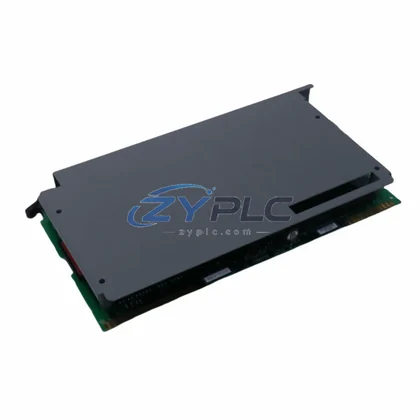
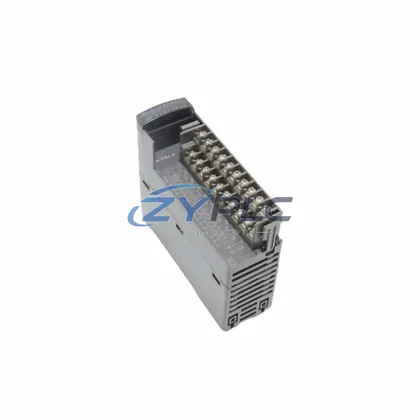
Mitsubishi AX81 DC Input Module for MELSEC-A Series Systems is handled as a quote-based MELSEC I/O or expansion module for PLC, HMI, drive, and machine-control maintenance projects. ZYPLC checks the exact model, Mitsubishi platform, required condition, quantity, and destination country before quotation.
| Brand |
Mitsubishi Electric |
| Model / SKU |
AX81 |
| Series context |
MELSEC-A |
| Part type |
Sensors & I/O |
| RFQ basis |
Availability, condition, lead time, and export shipment options are confirmed before quote. |
Where this part is typically used
This item is requested for field-signal wiring, module replacement, and PLC cabinet troubleshooting support. Mitsubishi MELSEC, FX, Q Series, iQ-R, GOT, and related machine-control installations often require exact suffix, rack, power, and panel-context checks before a replacement can be sourced.
RFQ information for maintenance teams
- Exact model number, suffix, and Mitsubishi platform or machine context.
- Installed system such as MELSEC-F, MELSEC-Q, iQ-R, GOT, or related I/O rack where applicable.
- Quantity, urgency, required condition, and destination country.
- Photos of module labels, HMI back labels, terminal bases, power ratings, or existing spare packaging.
Browse related Mitsubishi Electric spare parts, review the MELSEC-A series, or compare similar Sensors & I/O records. If the exact suffix is not shown, send the model and photos so the RFQ can be checked manually.
Request quote for this model
The Mitsubishi Electric AX81 is a 32-point, 24VDC DC Input Module engineered for the MELSEC-A Series programmable controller platform. Designed to serve as the foundational signal acquisition layer in industrial automation architectures, the AX81 captures discrete field-level signals from sensors, limit switches, proximity detectors, and push-button stations, converting them into structured digital data that flows upstream through the MELSEC-A backplane to the CPU for real-time processing, SCADA integration, and HMI visualization.
In modern smart factory deployments, the AX81 occupies a critical position in the data chain. Field devices — including inductive proximity sensors, photoelectric barriers, and safety interlock switches — feed their 24VDC ON/OFF states into the AX81’s 32 input channels. The module’s internal optocoupler isolation ensures signal integrity even in electrically noisy environments typical of motor drives, welding stations, and high-frequency inverter cabinets. Once digitized, the input states are mapped to the MELSEC-A CPU’s internal relay (X) device memory, where ladder logic programs execute scan-cycle decisions in milliseconds.
Compatibility & Integration Notes
| Attribute |
Specification |
| SKU / Part Number |
AX81 |
| Brand |
Mitsubishi Electric |
| Series |
MELSEC-A Series |
| Module Type |
DC Input Module |
| Input Points |
32 Points |
| Input Voltage |
24VDC |
| Communication / Protocol |
MELSEC-A Backplane Bus (parallel I/O bus) |
| Interface Type |
Backplane slot-mount (MELSEC-A base unit) |
| Network Compatibility |
MELSEC-A Series base units; compatible with MELSEC-AnS, AnN, AnA, AnU CPU families |
| System Application |
PLC I/O expansion, field signal acquisition, SCADA data sourcing, HMI status display |
| Isolation |
Optocoupler (photocoupler) isolation per channel group |
| Origin |
Japan |
| Warranty |
Warranty and support terms confirmed before quote |
Connected Automation Data Flow
The AX81’s role becomes most apparent when viewed within the full automation data flow of a MELSEC-A-based production line. At the field level, discrete sensors — such as Mitsubishi TL-series inductive proximity sensors or photoelectric detectors — deliver 24VDC signals directly into the AX81’s input terminals. These signals are scanned every CPU cycle and written to the X-device register space of the A2USCPU or A3UCPU, where the main control logic resides.
For lines requiring analog process data alongside discrete inputs, the AX81 is commonly installed in the same base unit as the AD61 analog input module, allowing the CPU to simultaneously process both digital field states and analog measurements — temperature, pressure, flow — within a single scan. The AJ65SBTB1-32D CC-Link remote I/O terminal block extends this architecture to distributed field panels, enabling the MELSEC-A CPU to reach input points located hundreds of meters away across the factory floor without running individual signal cables back to the control cabinet.
When the production data captured by the AX81 needs to reach supervisory systems, the AJ71QC24 serial communication module or the A1SJ71UC24-R4 RS-232C/RS-422 interface module bridges the MELSEC-A CPU to SCADA servers and HMI terminals running GENESIS64, Wonderware, or Mitsubishi’s own GT Designer3-based GOT2000 HMI panels. The AX81’s input states — conveyed as bit-level data in the CPU’s device memory — are polled by these communication modules and transmitted upstream via Modbus RTU or MELSEC protocol to the SCADA historian, where they are time-stamped, trended, and made available for remote monitoring dashboards.
In drive-integrated lines, the AX81 works alongside Mitsubishi FR-A800 series variable frequency drives. The drive’s digital output signals — run status, fault relay, speed-reached contact — are wired into AX81 input channels, giving the MELSEC-A CPU full visibility of drive operating states without requiring a separate fieldbus connection. For lines that have migrated to CC-Link IE Field network, the AX81 continues to serve local I/O duties within the A-Series base unit while the AJ71LP21-25 MELSECNET/10 module or a CC-Link master module handles inter-controller communication to newer MELSEC-Q or MELSEC-iQ-R systems upstream.
Edge gateway devices — such as Mitsubishi MELIPC MI5000 series industrial PCs — can access the AX81’s data indirectly through the CPU’s communication ports, enabling OPC-UA publishing of field input states to MES and ERP platforms. This positions the AX81 not merely as a legacy I/O module, but as a live data source within a layered IIoT architecture where field-level signals ultimately inform production scheduling, quality traceability, and predictive maintenance algorithms.
Solving Data Isolation in Industrial Sites
Many manufacturing facilities operating MELSEC-A Series systems face a common challenge: field signals are captured locally but never reach supervisory or enterprise systems in a structured, real-time format. The AX81 addresses this at the source. By providing 32 optically isolated input channels on a single backplane slot, it consolidates signal acquisition that would otherwise require multiple smaller modules or external relay panels, reducing wiring complexity and eliminating potential points of signal degradation.
Protocol fragmentation is another persistent issue on mixed-generation production floors. Older MELSEC-A systems using the AX81 for discrete input often coexist with newer MELSEC-Q or MELSEC-iQ-R controllers. The AJ71QC24 communication module resolves this by acting as a protocol gateway, translating MELSEC-A CPU data — including AX81 input states — into Modbus RTU or RS-422 formats readable by third-party SCADA systems, HMI panels, and data concentrators. This eliminates the data silo that would otherwise exist between the A-Series island and the plant-wide network.
Remote diagnostics are enabled by pairing the AX81 with serial or Ethernet communication modules that expose the CPU’s device memory to remote engineering workstations. Maintenance engineers can monitor individual input channel states, detect stuck contacts or wiring faults, and verify sensor operation without physically accessing the control cabinet — reducing mean time to repair and supporting predictive maintenance programs. For facilities pursuing production line transparency, the AX81’s 32-channel density means that a single module can represent an entire machine’s discrete I/O map, making it straightforward to build per-machine dashboards in SCADA or MES systems that reflect real-time operational status.
System expansion is equally well-supported. The MELSEC-A base unit architecture allows additional AX81 modules to be added to extension base units (A52B, A55B, A58B) connected via the A1SC12B or A1SC30B extension cables, scaling the discrete input count without replacing the CPU or restructuring the control program. This modularity protects the capital investment in existing MELSEC-A infrastructure while accommodating production line growth.
Industrial Connectivity FAQ
Q: What communication protocols does the AX81 support for SCADA integration?
A: The AX81 itself communicates via the MELSEC-A parallel backplane bus. For SCADA integration, the MELSEC-A CPU uses dedicated communication modules such as the AJ71QC24 (serial, Modbus RTU / MELSEC protocol) or A1SJ71UC24-R4 (RS-232C/RS-422) to expose input data to supervisory systems. This allows AX81 field states to be polled by GENESIS64, Wonderware, or any Modbus-compatible SCADA platform.
Q: Is the AX81 compatible with CC-Link or MELSECNET/10 network architectures?
A: The AX81 is a local I/O module and does not directly participate in CC-Link or MELSECNET/10 as a network node. However, it operates within the same MELSEC-A base unit as CC-Link master modules (AJ61BT11) or MELSECNET/10 modules (AJ71LP21-25), and its input data is accessible to those network modules through the shared CPU device memory, enabling transparent data sharing across the network.
Q: How does the AX81 perform in electrically noisy industrial environments?
A: The AX81 uses optocoupler (photocoupler) isolation between field input circuits and the internal logic bus, providing robust noise immunity against common-mode interference from motor drives, inverters, and welding equipment. Input filtering further suppresses contact bounce and high-frequency transients, ensuring stable signal acquisition in demanding factory environments.
Q: What warranty and pre-shipment testing does the AX81 carry?
A: Every AX81 unit supplied by ZYPLC carries a warranty and support terms confirmed before quote covering manufacturing defects and functional failures. Units undergo pre-shipment functional verification to confirm input channel integrity and backplane communication before dispatch. Stock is maintained for prompt fulfillment, with global shipping via DHL or FedEx. For volume orders or urgent requirements, contact our team directly for lead time confirmation.