Product identification and sourcing context
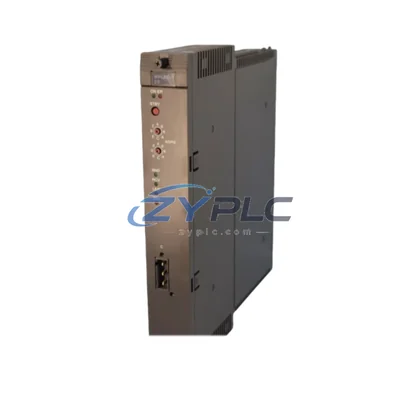
Mitsubishi DOCPU03 Communication Module for MELSEC Systems is handled as a quote-based MELSEC communication or interface module for PLC, HMI, drive, and machine-control maintenance projects. ZYPLC checks the exact model, Mitsubishi platform, required condition, quantity, and destination country before quotation.
| Brand |
Mitsubishi Electric |
| Model / SKU |
DOCPU03 |
| Series context |
MELSEC |
| Part type |
PLC Systems |
| RFQ basis |
Availability, condition, lead time, and export shipment options are confirmed before quote. |
Where this part is typically used
This item is requested for PLC network connectivity, machine data exchange, and controller interface support. Mitsubishi MELSEC, FX, Q Series, iQ-R, GOT, and related machine-control installations often require exact suffix, rack, power, and panel-context checks before a replacement can be sourced.
RFQ information for maintenance teams
- Exact model number, suffix, and Mitsubishi platform or machine context.
- Installed system such as MELSEC-F, MELSEC-Q, iQ-R, GOT, or related I/O rack where applicable.
- Quantity, urgency, required condition, and destination country.
- Photos of module labels, HMI back labels, terminal bases, power ratings, or existing spare packaging.
Browse related Mitsubishi Electric spare parts, review the MELSEC series, or compare similar PLC Systems records. If the exact suffix is not shown, send the model and photos so the RFQ can be checked manually.
Request quote for this model
Mitsubishi DOCPU03 Industrial Network Interface for MELSEC Systems: Bridging the Industrial Data Link
In modern smart factory environments, seamless data flow between field devices and upper-level control systems is no longer optional — it is the foundation of operational efficiency. The Mitsubishi DOCPU03 digital output CPU module, engineered for the MELSEC series platform, serves as a critical node in the industrial communication chain. From signal acquisition at the sensor level to real-time data delivery at the SCADA layer, the DOCPU03 enables deterministic, high-reliability communication across multi-protocol industrial networks.
Designed for demanding industrial environments, the DOCPU03 integrates tightly with Mitsubishi Electric’s broader automation ecosystem, supporting CC-Link and CC-Link IE Field network architectures that are widely deployed across automotive, semiconductor, food processing, and discrete manufacturing industries. Its digital output architecture ensures precise, low-latency command execution — a prerequisite for closed-loop control in high-speed production lines.
Compatibility & Integration Notes
| Parameter |
Specification |
| Communication Protocol |
CC-Link, CC-Link IE Field, MELSEC Communication Protocol (MC Protocol) |
| Interface Type |
Digital Output CPU Module |
| Network Compatibility |
MELSEC-Q Series, MELSEC iQ-R Series, CC-Link IE Field Network |
| Transmission Capability |
High-speed cyclic data exchange, transient communication support |
| System Application |
PLC Control, Remote I/O, SCADA Integration, HMI Gateway, Smart Factory Automation |
| Operating Environment |
Industrial Grade, DIN Rail Mountable |
| Origin |
Japan |
| Warranty |
Warranty and support terms confirmed before quote — Covered by ZYPLC Quality Assurance |
Connected Automation Data Flow
The DOCPU03 sits at the heart of a layered industrial communication architecture. At the field level, sensors and actuators — including proximity switches, photoelectric sensors, and servo drives — feed real-time signals into the network. These signals are aggregated through Mitsubishi QJ61BT11N CC-Link master modules, which manage cyclic data exchange across the CC-Link bus at speeds up to 10 Mbps. The DOCPU03 processes these inputs and issues deterministic digital output commands, ensuring that downstream devices respond within the required control cycle.
Within the MELSEC-Q series rack, the DOCPU03 operates alongside Q06HCPU and Q12HCPU high-performance CPU modules, sharing the system bus for synchronized multi-axis control. For applications requiring Ethernet connectivity to upper-level systems, the QJ71E71-100 Ethernet interface module provides TCP/IP and UDP communication paths to SCADA servers and MES platforms, enabling the DOCPU03’s output status data to be logged, visualized, and analyzed in real time.
Remote I/O expansion is handled through CC-Link IE Field remote I/O modules such as the NZ2GF2B1-16T, extending the DOCPU03’s digital output reach to distributed field cabinets without additional wiring infrastructure. For human-machine interaction, Mitsubishi GOT2000 series HMI terminals (e.g., GT2710-VTBA) connect directly to the MELSEC network via GT Designer3, providing operators with live output status, alarm visualization, and parameter adjustment capabilities at the machine level.
In drive integration scenarios, the DOCPU03 interfaces with Mitsubishi FR-A800 series variable frequency drives via CC-Link, enabling speed reference commands and feedback data to flow bidirectionally between the CPU module and the drive unit. This integration supports maintenance-focused motor control with real-time torque monitoring — a key requirement in conveyor, pump, and compressor applications.
For serial communication legacy devices, the QJ71C24N serial communication module bridges RS-232C and RS-422/485 protocols into the MELSEC backplane, allowing older field instruments and barcode readers to participate in the modern data network managed by the DOCPU03. Edge gateway devices such as the Mitsubishi MELIPC MI5122-VW further extend the data flow to cloud analytics platforms, enabling predictive maintenance and OEE monitoring based on the DOCPU03’s real-time output cycle data.
Solving Data Isolation in Industrial Sites
One of the most persistent challenges in industrial automation is the fragmentation of communication protocols across different generations of equipment. A production line may simultaneously operate devices using CC-Link, PROFIBUS, Modbus RTU, and proprietary serial protocols — creating data silos that prevent unified monitoring and control. The DOCPU03, as part of the MELSEC communication framework, addresses this through its native support for MC Protocol (MELSEC Communication Protocol), which allows third-party SCADA systems such as Wonderware, Ignition, and Citect to poll the CPU module’s output registers directly over Ethernet via the QJ71E71-100 interface.
Remote monitoring and diagnostics are enabled through GX Works3 engineering software, which provides online module status monitoring, output force ON/OFF testing, and error history retrieval without interrupting production. This capability is critical for maintenance teams managing multi-site installations, as it eliminates the need for on-site visits for routine diagnostics.
Production line transparency is achieved by mapping the DOCPU03’s output bit data to SCADA tag databases, enabling real-time KPI dashboards that display output utilization rates, cycle counts, and fault frequencies. When combined with the QJ71MT91 MELSEC-Q MODBUS/TCP module, the system can also expose output data to third-party MES platforms using standard industrial protocols, eliminating custom integration development costs.
System scalability is a core design principle of the MELSEC platform. Additional output modules, communication cards, and CPU units can be added to the base rack without reconfiguring the existing network topology, protecting the initial investment as production capacity grows. All units shipped by ZYPLC undergo pre-shipment functional testing, and each DOCPU03 is covered by a warranty and support terms confirmed before quote with RFQ-based availability for rapid deployment.
Industrial Connectivity FAQ
Q1: What communication protocols does the Mitsubishi DOCPU03 support for SCADA integration?
The DOCPU03 supports MC Protocol (MELSEC Communication Protocol) over serial and Ethernet interfaces when paired with appropriate communication modules such as the QJ71E71-100. This allows direct integration with major SCADA platforms including Ignition, Wonderware, and Citect without requiring custom drivers.
Q2: How does the DOCPU03 ensure network stability in high-noise industrial environments?
The DOCPU03 is designed to operate within the MELSEC-Q series rack, which provides hardware-level noise isolation and watchdog timer functions. CC-Link and CC-Link IE Field networks include built-in error detection and automatic retry mechanisms, ensuring communication stability even in environments with significant electromagnetic interference from drives and welding equipment.
Q3: Can the DOCPU03 be expanded to support additional I/O points or communication protocols?
Yes. The MELSEC-Q series platform supports multi-CPU configurations and allows additional communication modules (e.g., QJ61BT11N for CC-Link, QJ71C24N for serial, QJ71MT91 for Modbus/TCP) to be added to the same base rack. Remote I/O expansion via CC-Link IE Field further extends the system’s reach without architectural changes.
Q4: What quality assurance does ZYPLC provide for the DOCPU03?
Every DOCPU03 unit supplied by ZYPLC undergoes pre-shipment functional testing to verify digital output operation, communication interface integrity, and firmware version compatibility. Warranty terms are confirmed during quotation. Availability confirmed by RFQ inventory ensures fast dispatch, and our technical team is available to support installation, configuration, and network commissioning.
RFQ sourcing notes for Mitsubishi DOCPU03 Communication Module for MELSEC Systems
Product identification: Mitsubishi DOCPU03 Communication Module for MELSEC Systems is listed by ZYPLC as a Communication Module for RFQ-based industrial automation spare-part sourcing. The working identity should be confirmed against the complete model number, visible suffix, nameplate photo, and installed-system requirement before quotation.
System context: Mitsubishi Electric MELSEC, GOT, and drive-related parts are verified by model family, suffix, system generation, and cabinet application. The current catalog context links this item with MELSEC and PLC Systems, but final compatibility should always be checked against the buyer’s rack, panel, controller, drive, DCS, safety, or field-device configuration.
Application use: This product belongs to the PLC and controller layer, where CPU, communication, rack, and I/O compatibility can affect system startup and maintenance work. Maintenance teams usually request this type of part when a production line, process unit, drive cabinet, monitoring rack, robot cell, or control cabinet needs a direct replacement or a verified compatible sourcing option.
- Complete model number / SKU: DOCPU03
- Quantity, destination country, and required delivery urgency
- Condition requirement: new surplus, refurbished, tested used, or compatible replacement
- Photos of the front label, side label, terminal block, connector, or installed cabinet position
- Any firmware, revision, voltage, communication, coating, or suffix requirement visible on the existing part
Availability, condition, and shipment
Availability is confirmed via RFQ. ZYPLC does not use this page to guarantee immediate stock, a fixed price, or one default condition. Where applicable, condition, testing scope, packing method, lead time, and export shipment options are confirmed in the quotation before payment.
Internal sourcing paths
Related model pages
FAQ
Can ZYPLC quote this exact model?
Send the full model number, photos, quantity, destination, and urgency. ZYPLC will review availability, condition, lead time, and sourcing options before quotation.
Can a similar model replace it?
Not automatically. Similar-looking industrial modules may differ by suffix, firmware, voltage, communication option, revision, or safety approval. Compatibility must be confirmed before using an alternative.
Is this an online checkout item?
No. This product page supports RFQ-based sourcing rather than automated checkout. The confirmed quotation should define condition, price, shipment method, and any available test or inspection scope.