Mitsubishi FX-4AD Industrial Network Interface for FX Systems: Precision Analog Data Link for Smart Factory Connectivity
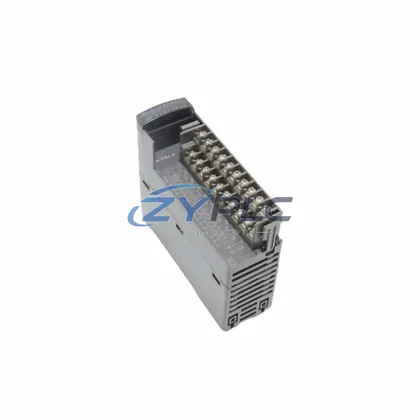
In modern industrial environments, the ability to capture, convert, and transmit analog signals with precision is the foundation of every reliable automation data chain. The Mitsubishi FX-4AD is a 4-channel analog input special function module engineered for seamless integration with the Mitsubishi FX Series PLC platform. Designed to bridge the gap between field-level sensors and upper-level control systems, the FX-4AD delivers high-resolution signal acquisition across voltage and current input modes, enabling real-time data flow from the plant floor to SCADA, HMI, and cloud-based monitoring platforms.
Whether deployed in process control, machine automation, energy monitoring, or environmental sensing applications, the FX-4AD serves as a critical node in the industrial data chain — converting raw analog signals into structured digital values that PLC logic, gateway modules, and supervisory systems can act upon instantly. Its compact form factor and direct bus connection to FX Series CPUs make it an ideal choice for space-constrained control panels and distributed I/O architectures alike.
Compatibility & Integration Notes
| Parameter |
Specification |
| SKU |
FX-4AD |
| Brand |
Mitsubishi Electric |
| Series |
FX Series |
| Module Type |
Analog Input Special Function Module |
| Input Channels |
4 Channels (Voltage / Current Selectable) |
| Input Signal Range |
0–10V DC / 4–20mA / -10V to +10V |
| Resolution |
12-bit (0–4000 digital output) |
| Protocol Support |
Mitsubishi FX Bus, CC-Link (via gateway), MODBUS RTU (via adapter) |
| Interface Type |
Direct FX PLC Bus Connection |
| Communication Compatibility |
FX3U, FX3G, FX3S, FX2N Series CPUs |
| SCADA / HMI Integration |
Compatible via FX3U-ENET-ADP, GOT2000 Series HMI |
| Network Architecture |
CC-Link IE, MODBUS RTU, RS-232C / RS-485 (via adapter) |
| System Application |
Process Control, Energy Monitoring, Machine Automation, Smart Factory |
| Origin |
Japan |
| Warranty |
warranty terms confirmed during quotation |
Connected Automation Data Flow
The FX-4AD operates at the signal acquisition layer of the industrial data chain, where physical process variables — temperature, pressure, flow rate, and position — are converted from analog electrical signals into precise digital values. Once digitized, these values are processed by the host FX Series CPU, such as the FX3U-32MR or FX3U-16MT, which executes ladder logic, PID control loops, and alarm threshold comparisons in real time.
To extend connectivity beyond the local control panel, the FX3U-ENET-ADP Ethernet adapter enables the FX3U CPU to communicate with upper-level SCADA systems and MES platforms over standard TCP/IP networks. This allows analog data captured by the FX-4AD — such as tank level readings from a 4–20mA pressure transmitter or temperature values from a thermocouple transmitter — to be visualized on a GOT2000 Series HMI in real time, with trend logging, alarm pop-ups, and operator intervention capabilities built in.
For applications requiring analog output alongside input, the FX-4DA 4-channel analog output module pairs naturally with the FX-4AD, enabling closed-loop control of actuators, control valves, and variable-speed drives such as the Mitsubishi FR-D720S inverter. The FR-D720S receives 0–10V or 4–20mA setpoint signals from the FX-4DA, while the FX-4AD monitors motor feedback signals — creating a complete analog control loop within a single FX Series panel.
For serial communication and protocol bridging, the FX2NC-232ADP RS-232C adapter and FX3U-485ADP-MB MODBUS RTU adapter extend the FX platform’s communication reach to third-party devices, barcode readers, weighing controllers, and remote sensors. When the application demands network-level integration across multiple control zones, the QJ71E71-100 Ethernet module on a Mitsubishi Q Series backbone can serve as the upper-level gateway, aggregating data from multiple FX-4AD-equipped stations via CC-Link or MODBUS RTU and forwarding structured datasets to the plant SCADA server.
In distributed I/O architectures, the FX-4AD can be combined with remote I/O expansion modules and CC-Link remote device stations, allowing analog signal collection from geographically dispersed field points — conveyor lines, pump stations, or environmental monitoring nodes — without running long analog signal cables that are susceptible to noise and signal degradation. This architecture reduces wiring costs, improves signal integrity, and simplifies system expansion as production capacity grows.
Solving Data Isolation in Industrial Sites
One of the most persistent challenges in legacy industrial environments is data isolation — where analog signals remain trapped at the field device level, invisible to supervisory systems, maintenance teams, and production managers. The FX-4AD directly addresses this problem by providing a structured, digital representation of analog process variables that can be shared across the entire automation hierarchy.
When integrated with the FX3U-ENET-ADP and a SCADA platform such as Wonderware, iFIX, or ICONICS, the FX-4AD enables continuous, real-time visibility into process parameters that were previously only readable by a technician standing at the panel. Remote diagnostic capabilities allow maintenance engineers to monitor signal quality, detect sensor drift, and identify wiring faults from a central control room or even a mobile device — reducing unplanned downtime and accelerating fault resolution.
For production lines requiring protocol unification, the FX-4AD’s compatibility with MODBUS RTU via the FX3U-485ADP-MB adapter allows it to serve as a data source for third-party SCADA gateways and edge computing nodes, eliminating the protocol barriers that create data silos between different vendor ecosystems. System expansion is straightforward: additional FX-4AD modules can be added to the FX bus without modifying the existing CPU program structure, supporting phased capacity growth without production interruption.
Every FX-4AD unit supplied by ZYPLC undergoes pre-shipment functional testing, including channel-by-channel signal verification across all input ranges, to ensure that the module performs to Mitsubishi Electric’s published specifications upon arrival. Stock availability is maintained to support urgent project timelines, and all units are covered by a warranty terms confirmed during quotation from the date of shipment.
Industrial Connectivity FAQ
Q1: What communication protocols does the FX-4AD support for SCADA integration?
The FX-4AD itself communicates via the Mitsubishi FX special function bus. For SCADA integration, the host FX3U CPU can be equipped with the FX3U-ENET-ADP for Ethernet/TCP-IP connectivity, or the FX3U-485ADP-MB for MODBUS RTU communication, enabling the FX-4AD’s analog data to be accessed by any SCADA platform that supports these standard protocols.
Q2: Can the FX-4AD be used with both FX3U and FX3G series CPUs?
Yes. The FX-4AD is compatible with FX3U, FX3G, FX3S, and FX2N series CPUs. The number of special function modules that can be connected depends on the specific CPU model and its expansion capacity. Consult the FX Series hardware manual for module count limits per CPU type.
Q3: How does the FX-4AD maintain signal stability in electrically noisy industrial environments?
The FX-4AD incorporates digital filtering and averaging functions configurable via the FROM/TO instruction set in the FX CPU program. These functions suppress high-frequency electrical noise from variable-speed drives, contactors, and switching power supplies, ensuring stable and accurate analog readings even in demanding industrial environments.
Q4: What warranty and testing standards apply to FX-4AD units supplied by ZYPLC?
All FX-4AD modules supplied by ZYPLC are covered by a warranty terms confirmed during quotation from the date of shipment. Each unit undergoes pre-shipment functional testing across all four analog input channels to verify signal accuracy and module communication integrity before dispatch. Replacement or technical support is provided promptly within the warranty period.