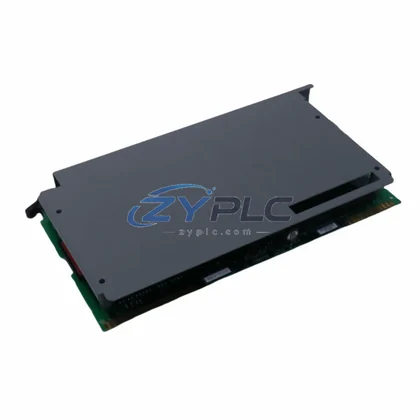
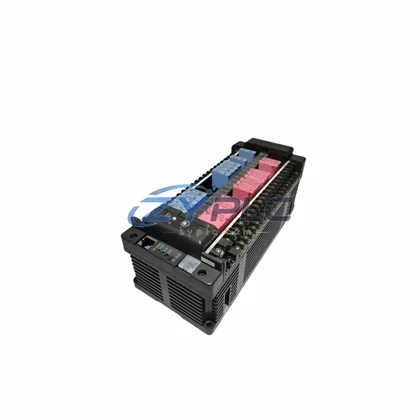
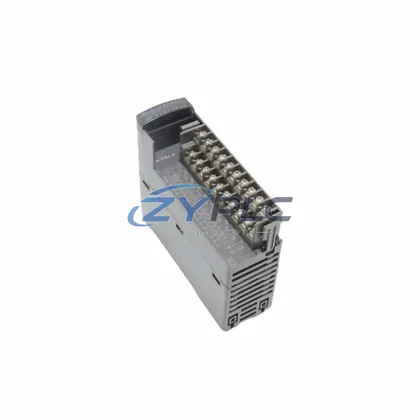
The Phoenix Contact IBS RT 24 DI/O 16/16-T is a high-performance INTERBUS remote terminal digital I/O module engineered for demanding industrial automation environments. With 16 digital inputs and 16 digital outputs operating at 24VDC, this module serves as a critical node in the INTERBUS fieldbus network, enabling seamless data exchange between field-level devices and upper-level control systems. Whether deployed in automotive assembly lines, process manufacturing, or discrete production cells, the IBS RT 24 DI/O 16/16-T delivers the signal integrity, protocol compliance, and network stability that modern smart factories demand.
Compatibility & Integration Notes
| Parameter |
Specification |
| Communication Protocol |
INTERBUS (IBS) Fieldbus |
| Interface Type |
Remote Terminal (RT) — INTERBUS Ring Topology |
| Digital Inputs |
16 x 24VDC Digital Inputs (DI) |
| Digital Outputs |
16 x 24VDC Digital Outputs (DO) |
| Supply Voltage |
24VDC (nominal) |
| Transmission Capability |
Real-time cyclic data exchange via INTERBUS protocol |
| Network Compatibility |
INTERBUS-S, INTERBUS Loop, Phoenix Contact IBS Master Controllers |
| System Application |
PLC Remote I/O, SCADA Integration, HMI Signal Acquisition, Smart Factory Automation |
| Mounting |
DIN Rail |
| Protection Class |
IP20 |
| Warranty |
Warranty and support terms confirmed before quote — All units ship-tested and verified |
Connected Automation Data Flow
In a typical smart factory deployment, the IBS RT 24 DI/O 16/16-T sits at the intersection of field-level sensing and upper-level control intelligence. Signal acquisition begins at the sensor layer — proximity switches, photoelectric sensors, and limit switches feed their 24VDC discrete signals directly into the module’s 16 digital inputs. These signals are then encapsulated into INTERBUS protocol frames and transmitted cyclically across the INTERBUS ring to the master controller.
The INTERBUS master — commonly a Phoenix Contact IBS SYS CBM or an integrated master card such as the IBS PC CB S5/32 — orchestrates the entire ring, polling each remote terminal in sequence and delivering process data to the host PLC. In Siemens S7-300 or S7-400 environments, the INTERBUS master card interfaces directly with the PLC backplane, making the IBS RT 24 DI/O 16/16-T’s I/O data transparently available to the PLC program without additional protocol conversion overhead.
On the output side, the module’s 16 digital outputs drive actuators, solenoid valves, relay coils, and indicator lamps — all controlled by the PLC’s output image table updated in real time through the INTERBUS cycle. For applications requiring higher-level visibility, a Phoenix Contact FL SWITCH industrial Ethernet switch can bridge the INTERBUS segment to an Ethernet backbone, enabling SCADA systems such as Wonderware InTouch or Siemens WinCC to access live I/O status via OPC-DA or OPC-UA gateways.
In multi-segment architectures, the IBS RT 24 DI/O 16/16-T integrates alongside other INTERBUS remote terminals such as the IBS RT 24 AI 4/SF analog input module and the IBS RT 24 AO 4/SF analog output module, forming a mixed I/O network that handles both discrete and analog process variables within a single INTERBUS ring. This eliminates the need for separate fieldbus segments and reduces wiring complexity significantly.
For drive integration, variable frequency drives equipped with INTERBUS communication cards — such as those in the Phoenix Contact DRIVE-INTERBUS series — can be daisy-chained on the same ring, allowing the PLC to read drive status, speed feedback, and fault codes alongside the digital I/O data from the IBS RT 24 DI/O 16/16-T. Edge gateways running IIoT middleware can further aggregate this data stream for cloud-based analytics, predictive maintenance dashboards, and remote diagnostics accessible from any location.
Solving Data Isolation in Industrial Sites
One of the most persistent challenges in legacy and hybrid industrial environments is data isolation — field devices that cannot communicate with upper-level systems due to protocol mismatches, proprietary interfaces, or aging infrastructure. The Phoenix Contact IBS RT 24 DI/O 16/16-T directly addresses this challenge by providing a standardized INTERBUS interface that integrates seamlessly into existing Phoenix Contact INTERBUS networks without requiring protocol converters or custom middleware.
For sites where multiple fieldbus protocols coexist — PROFIBUS, DeviceNet, and INTERBUS running in parallel — the IBS RT 24 DI/O 16/16-T can be deployed within its native INTERBUS segment while protocol gateways handle cross-network data bridging. This modular approach preserves existing infrastructure investments while enabling production line transparency: every digital input and output state is visible in real time to the SCADA layer, eliminating the blind spots that cause unplanned downtime.
Remote monitoring and diagnostics are equally critical. Because INTERBUS supports diagnostic data transmission alongside process data in the same ring cycle, the IBS RT 24 DI/O 16/16-T can report module health, communication errors, and output short-circuit faults back to the master controller without interrupting normal I/O operation. Maintenance engineers can identify faulty nodes remotely via the SCADA or HMI interface, reducing mean time to repair (MTTR) and minimizing production losses.
System expansion is straightforward: additional INTERBUS remote terminals can be added to the ring up to the maximum node count supported by the master, making the IBS RT 24 DI/O 16/16-T an ideal building block for phased factory automation upgrades. Each unit supplied by ZYPLC undergoes pre-shipment functional testing and ships with a warranty and support terms confirmed before quote, ensuring confidence in every deployment.
Industrial Connectivity FAQ
Q1: What is the communication cycle time of the IBS RT 24 DI/O 16/16-T on an INTERBUS network?
INTERBUS operates as a deterministic, time-slotted protocol with typical cycle times in the range of 1–10 ms depending on the number of nodes and total data volume in the ring. The IBS RT 24 DI/O 16/16-T contributes 16 bits of input data and 16 bits of output data per cycle, making its impact on overall cycle time minimal even in large networks.
Q2: Is the IBS RT 24 DI/O 16/16-T compatible with third-party INTERBUS masters from other vendors?
The module conforms to the INTERBUS standard (EN 50254 / IEC 61158), which ensures interoperability with compliant INTERBUS master controllers from other manufacturers. However, optimal performance, diagnostic depth, and configuration tooling are achieved when used with Phoenix Contact’s own INTERBUS master cards and the CLIP PROJECT or PC WORX engineering software.
Q3: How does the module handle network faults or ring breaks?
INTERBUS uses a ring topology with automatic loop-back capability. If a cable break occurs downstream of the IBS RT 24 DI/O 16/16-T, the master controller can detect the fault location and, depending on the master’s capabilities, isolate the affected segment while maintaining communication with upstream nodes. The module itself reports its status via the INTERBUS diagnostic channel.
Q4: What warranty and pre-shipment testing does ZYPLC provide for this module?
Every IBS RT 24 DI/O 16/16-T supplied by ZYPLC is covered by a warranty and support terms confirmed before quote from the date of shipment. Prior to dispatch, each unit undergoes functional verification testing to confirm INTERBUS communication integrity, I/O channel operation, and power supply compliance. RFQ-confirmed units are available for same-week shipment globally.
—