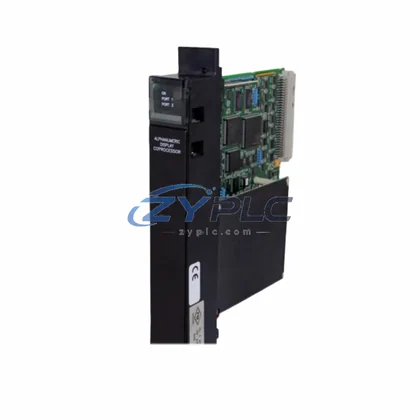
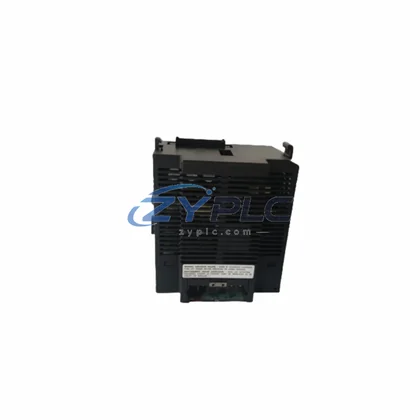
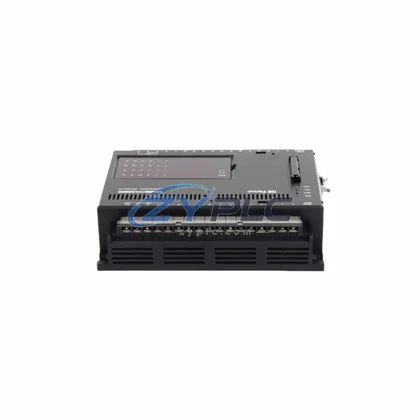
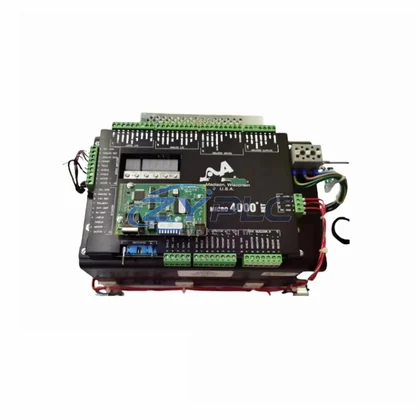
Reliance 770.90.10 Autobus Interface for 770 Series
The Reliance Electric 770.90.10 Autobus Interface Module is a purpose-engineered communication and integration component designed to operate within the layered architecture of the Reliance 770 Series programmable control platform. Rather than functioning as a standalone device, this module serves as a critical bridge between the control layer and the I/O subsystem, enabling deterministic data exchange across the Autobus backplane and ensuring that the entire control system operates with the coherence and reliability demanded by continuous industrial processes.
In modern industrial automation, system architects must account for signal integrity across every layer — from the CPU and power supply through the I/O racks, communication gateways, HMI terminals, and field-level actuators. The 770.90.10 is positioned at the intersection of the control layer and the I/O layer, where it manages the Autobus protocol that governs how the Reliance 770 Series CPU exchanges data with distributed I/O modules. Its role in maintaining scan-cycle consistency and minimizing latency makes it indispensable in applications where process uptime and data fidelity are non-negotiable.
This module is fully compatible with the Reliance 770 Series rack and backplane infrastructure, and it is designed to coexist with components such as the Reliance 770.10.00 CPU Module, the 770.20.00 Power Supply Module, and the 770.50.00 Analog Input Module. In multi-rack configurations, the 770.90.10 enables the primary rack to communicate with expansion racks housing additional discrete and analog I/O modules, effectively extending the system’s I/O capacity without requiring architectural redesign.
Product Specification Table
| Parameter |
Specification |
| System Role |
Autobus Interface / Backplane Communication Module |
| Compatible Platform |
Reliance Electric 770 Series PLC |
| Communication Protocol |
Reliance Autobus (proprietary backplane protocol) |
| Rack Compatibility |
770 Series standard and expansion racks |
| Electrical Interface |
Backplane edge connector, 5 VDC logic supply |
| Operating Temperature |
0°C to 60°C (32°F to 140°F) |
| Relative Humidity |
5% to 95% non-condensing |
| Mounting |
DIN rail / rack-mount via 770 Series backplane slot |
| Certifications |
UL Listed, CE (subject to configuration) |
| Warranty |
warranty terms confirmed during quotation — covers hardware defects and functional failure under normal operating conditions |
| system integration |
Supports system integration with upstream CPU and downstream I/O modules for unified system diagnostics |
System Compatibility Notes
The 770.90.10 does not operate in isolation — its value is realized through coordination with the full suite of 770 Series components. In a typical system architecture, the Reliance 770.10.00 CPU Module executes the control program and relies on the Autobus interface to deliver real-time I/O data within each scan cycle. The 770.20.00 Power Supply Module provides regulated 5 VDC and 24 VDC rails to the backplane, ensuring that the interface module and all co-resident I/O cards receive stable power throughout operation.
On the I/O side, the Reliance 770.40.00 Discrete Input Module and 770.41.00 Discrete Output Module feed field-level signals — limit switches, proximity sensors, solenoid valves, and motor contactors — through the backplane to the CPU via the 770.90.10. For process control applications, the 770.50.00 Analog Input Module and 770.51.00 Analog Output Module handle 4–20 mA and 0–10 VDC signals from transmitters and control valves, with the interface module ensuring that these values are accurately represented in the CPU data table.
In networked architectures, the Reliance AutoMax Network Adapter may be used alongside the 770.90.10 to connect the 770 Series rack to a plant-wide AutoMax supervisory network, enabling data sharing with SCADA systems and historian platforms. For human-machine interface requirements, the Reliance 6MD100 Series Operator Interface Terminal communicates with the CPU through the network layer, while the 770.90.10 continues to manage real-time I/O exchange at the backplane level. In redundant configurations, a secondary 770.90.10 module may be installed in a standby rack, with automatic switchover logic implemented at the CPU level to maintain process continuity during primary module servicing.
Industrial Application Notes
The Reliance 770.90.10 has been deployed across a wide range of industrial sectors where the 770 Series platform established its reputation for reliability. In manufacturing and assembly lines, the module supports high-speed discrete I/O scanning for conveyor control, robotic cell integration, and quality inspection systems. Its deterministic Autobus communication ensures that the CPU receives accurate input states within each scan cycle, preventing false triggers and missed events in high-throughput production environments.
In power generation and electrical utilities, the 770 Series architecture — anchored by the 770.90.10 interface — has been used to control switchgear sequencing, transformer protection relay coordination, and auxiliary system monitoring. The module’s robust backplane design tolerates the electrical noise environments common in substations and generator rooms. For petrochemical and refinery applications, the interface module supports the analog-heavy I/O configurations required for flow control, pressure regulation, and temperature monitoring loops, where signal accuracy and scan-cycle consistency directly affect process safety.
Water and wastewater treatment facilities have relied on the 770 Series for pump station control, chemical dosing automation, and SCADA integration, with the 770.90.10 providing the backplane communication backbone that ties together discrete and analog I/O across multiple racks. In mining and mineral processing, the module’s tolerance for vibration and wide operating temperature range makes it suitable for crusher control, conveyor drive coordination, and ore processing automation. Metals and metallurgy applications leverage the 770 Series for furnace temperature control, rolling mill drive coordination, and cooling system management, where the Autobus interface ensures that the CPU maintains synchronization with high-speed analog feedback loops.
Product Compatibility FAQ
Q1: Is the Reliance 770.90.10 compatible with both primary and expansion racks in a multi-rack 770 Series configuration?
Yes. The 770.90.10 is designed to function in both the primary rack and expansion racks within a 770 Series system. In the primary rack, it interfaces directly with the CPU module via the Autobus backplane. In expansion racks, it serves as the remote I/O interface, communicating with the primary rack CPU through the Autobus cable. Engineers should verify rack slot assignments and Autobus node addressing during system commissioning to avoid address conflicts in multi-rack deployments.
Q2: How does the 770.90.10 support long-term maintenance and spare parts management in aging 770 Series installations?
The 770.90.10 is a hot-swap-compatible module within the 770 Series rack, allowing field replacement without full system shutdown in most configurations. Its standardized backplane connector and fixed form factor mean that replacement units can be sourced and installed without firmware reconfiguration in most cases. All units supplied by ZYPLC include a warranty terms confirmed during quotation covering hardware defects and functional failure, and our inventory management ensures consistent availability for facilities maintaining legacy 770 Series systems over multi-year operational horizons.
Q3: What does system integration mean for the 770.90.10 in a modern hybrid automation architecture?
system integration refers to the module’s ability to participate in a unified diagnostic and data-sharing framework alongside newer control components. When the 770 Series rack is connected to a supervisory network via an AutoMax Network Adapter or a third-party gateway, the 770.90.10 backplane data becomes accessible to SCADA historians, MES platforms, and remote monitoring systems. This allows plant engineers to contextualize real-time I/O data within broader production KPIs, enabling predictive maintenance scheduling and system performance benchmarking without requiring a full platform migration.