Schneider ATV12H037M2 Industrial Network Interface for Altivar 12 Systems: Bridging Field Devices and Smart Factory Data Networks
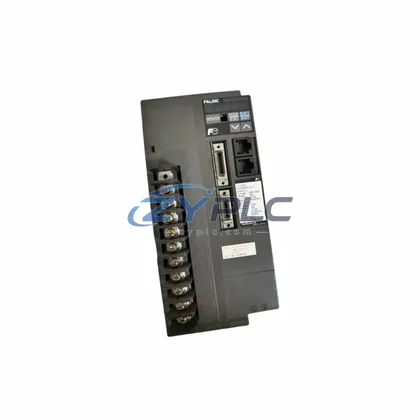
The Schneider Electric ATV12H037M2 is a 0.37 kW, 240 V single-phase variable frequency drive from the Altivar 12 series, engineered to deliver precise motor speed control while serving as a critical industrial network interface node in modern smart factory environments. With native Modbus RTU communication capability, the ATV12H037M2 enables seamless integration between field-level motor drives and upper-level control systems — including PLCs, SCADA platforms, HMI panels, and edge computing gateways — forming a continuous, real-time industrial data chain from the motor shaft to the enterprise dashboard.
In today’s connected manufacturing landscape, a variable frequency drive is no longer just a power conversion device. It is a data source, a protocol endpoint, and a network participant. The ATV12H037M2 fulfills this role by exposing drive parameters — speed reference, output frequency, motor current, fault codes, run/stop status, and thermal state — over the Modbus RTU serial bus, allowing upstream controllers and monitoring systems to read, write, and act on drive data without manual intervention.
Compatibility & Integration Notes
| Parameter |
Specification |
| SKU / Model |
ATV12H037M2 |
| Brand / Series |
Schneider Electric / Altivar 12 |
| Communication Protocol |
Modbus RTU (RS-485) |
| Interface Type |
RJ45 / Terminal Block (RS-485 2-wire) |
| Baud Rate Support |
4800 / 9600 / 19200 / 38400 bps |
| Network Topology |
Multi-drop RS-485 bus (up to 31 nodes) |
| Power Rating |
0.37 kW (0.5 HP) |
| Supply Voltage |
200–240 V AC, Single-Phase |
| Output Frequency Range |
0.1 – 400 Hz |
| System Compatibility |
Modicon M221, M241, M251 PLCs; Vijeo Designer HMI; EcoStruxure Machine Expert; SCADA via Modbus gateway |
| Product Category |
Industrial Variable Frequency Drive / Network-Enabled Motor Controller |
| Origin |
France |
| Warranty |
Warranty and support terms confirmed before quote |
Connected Automation Data Flow
Understanding the ATV12H037M2’s role in a connected automation architecture requires tracing the full data path from signal acquisition to system response. At the field level, sensors — including temperature transmitters, pressure transducers, and flow meters — feed process variables into a Modicon M221 or M241 PLC via digital and analog I/O modules. The PLC processes these signals and issues speed reference commands to the ATV12H037M2 over the Modbus RTU network, adjusting motor output in real time to match process demand.
The ATV12H037M2 responds by modulating its output frequency and reporting back actual motor speed, output current, DC bus voltage, and drive fault status — all accessible as Modbus holding registers. A Magelis GTU HMI panel connected to the same RS-485 bus can display this data to operators on the plant floor, providing immediate visibility into drive performance without requiring a separate communication path.
For facilities running EcoStruxure Machine Expert or EcoStruxure Plant, the ATV12H037M2 integrates natively into the Schneider Electric automation ecosystem. A Modbus TCP/RTU gateway — such as the AnyBus X-Gateway or a Schneider BMXNOE0110 Ethernet module — bridges the RS-485 Modbus RTU segment to the plant’s Ethernet backbone, enabling SCADA systems like Wonderware, Ignition, or EcoStruxure Operator Terminal Expert to poll drive data at configurable scan rates.
In multi-drive installations, the ATV12H037M2 operates alongside other Altivar series drives — including the ATV320, ATV340, and ATV630 — on a shared Modbus RTU segment. Each drive is assigned a unique node address (1–247), and the master PLC or gateway polls each node sequentially. This architecture supports conveyor systems, pump stations, HVAC air handling units, and packaging lines where multiple motors must be coordinated and monitored from a single control point.
Remote I/O modules such as the Schneider TM3 expansion series extend the digital and analog signal reach of the control system, feeding additional process data into the PLC that in turn adjusts ATV12H037M2 speed references dynamically. For edge analytics, an industrial edge gateway running EcoStruxure Machine Advisor can aggregate drive data from multiple ATV12H037M2 units, apply machine learning models for predictive maintenance, and push alerts to maintenance teams via email or SMS — all without interrupting the real-time control loop.
Solving Data Isolation in Industrial Sites
One of the most persistent challenges in industrial automation is data isolation — the condition where field devices operate in silos, unable to share status, alarms, or performance data with the broader control and monitoring infrastructure. The ATV12H037M2 directly addresses this problem through its Modbus RTU interface, which transforms a standalone motor drive into a fully networked automation component.
In legacy installations, variable frequency drives were often configured locally via keypad and operated without any network connection. Fault conditions went undetected until a motor stopped, production lines halted unexpectedly, and maintenance teams had no historical data to diagnose root causes. By deploying the ATV12H037M2 with Modbus RTU enabled, plant engineers gain continuous visibility into drive health — monitoring parameters such as output frequency, motor thermal state, input voltage, and cumulative run hours from any Modbus master on the network.
Protocol unification is another critical benefit. In facilities where legacy serial devices coexist with modern Ethernet-based systems, the ATV12H037M2’s Modbus RTU port allows it to participate in a unified communication architecture. A protocol gateway translates Modbus RTU register data into OPC-UA, MQTT, or EtherNet/IP formats, enabling the drive’s data to flow into cloud-based MES platforms, digital twin environments, and enterprise ERP systems without custom middleware development.
Production line transparency is achieved when every drive, sensor, and controller reports its status to a central SCADA or historian. With the ATV12H037M2 networked via Modbus RTU, production managers can track motor utilization rates, identify underperforming drives before they fail, and schedule predictive maintenance during planned downtime windows — reducing unplanned stoppages and extending equipment service life. System expansion is equally straightforward: additional ATV12H037M2 units can be added to the Modbus RS-485 bus by assigning new node addresses, with no changes required to the existing network wiring or PLC program structure.
Industrial Connectivity FAQ
Q1: What is the communication latency of the ATV12H037M2 over Modbus RTU?
At 19200 bps with a standard Modbus RTU frame, a single register read/write cycle completes in under 5 milliseconds. In a multi-drop network with 10 drives polled sequentially, total scan cycle time is typically under 100 milliseconds — well within the response requirements of most industrial control applications. For time-critical applications, reducing the number of polled registers per node and increasing baud rate to 38400 bps further minimizes latency.
Q2: Is the ATV12H037M2 compatible with third-party PLCs and SCADA systems?
Yes. Modbus RTU is an open, vendor-neutral protocol supported by virtually all industrial PLC brands — including Siemens S7-1200, Allen-Bradley Micro820, Mitsubishi FX5U, and Omron CP2E — as well as all major SCADA platforms including Ignition, Wonderware, and iFIX. The ATV12H037M2 functions as a standard Modbus RTU slave device, and its register map is fully documented in the Schneider Electric ATV12 Programming Manual, enabling straightforward integration without proprietary software.
Q3: How does the ATV12H037M2 maintain network stability in electrically noisy industrial environments?
The RS-485 physical layer used by Modbus RTU provides inherent noise immunity through differential signaling, supporting cable runs of up to 1200 meters. For installations near high-power equipment such as servo drives, welding machines, or large contactors, Schneider Electric recommends using shielded twisted-pair cable (STP), installing 120-ohm termination resistors at both ends of the RS-485 bus, and routing communication cables in separate cable trays away from power conductors. The ATV12H037M2’s communication port also includes built-in isolation to protect against ground potential differences between nodes.
Q4: What does the warranty and support terms confirmed before quote cover, and how is pre-shipment testing conducted?
Every ATV12H037M2 unit supplied by ZYPLC undergoes pre-shipment functional testing that includes power-on verification, Modbus RTU communication handshake confirmation, output frequency sweep, and fault code register validation. The warranty and support terms confirmed before quote covers manufacturing defects, communication port failures, and drive hardware faults under normal operating conditions. Units are shipped in original or equivalent protective packaging via DHL or FedEx with full tracking. For RFQ, lead time confirmation, or technical pre-sales support, contact ZYPLC directly.