Schneider TSXDSZ32R5 Industrial Network Interface for Modicon TSX Systems: Bridging Field Devices and Smart Factory Data Links
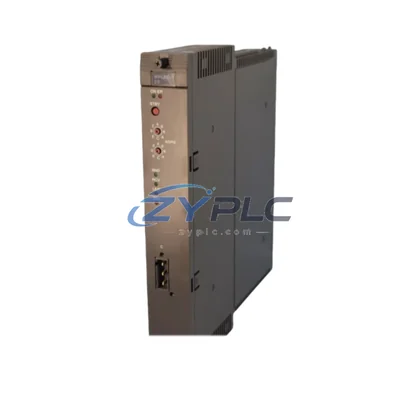
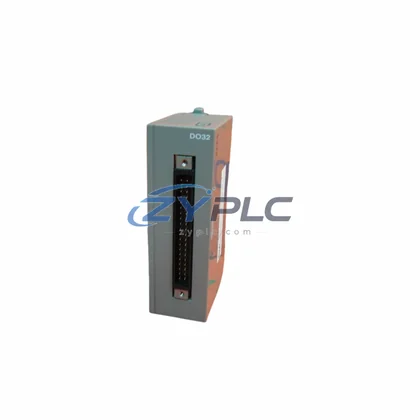
The Schneider Electric TSXDSZ32R5 is a 32-channel relay discrete output module engineered for seamless integration within the Modicon TSX Micro PLC platform. Designed to operate at the intersection of field-level actuation and upper-layer supervisory control, this module plays a pivotal role in the industrial data chain — from signal acquisition at the sensor layer all the way through protocol conversion, network transmission, real-time monitoring, alarm feedback, and remote diagnostics. In modern smart factory environments where data transparency and system interoperability are non-negotiable, the TSXDSZ32R5 delivers the reliable, deterministic output switching that underpins every connected automation architecture.
At the heart of any industrial network lies the need to translate physical process states into digital data streams that SCADA systems, HMI panels, and MES platforms can consume in real time. The TSXDSZ32R5 fulfills this role by providing 32 relay contact outputs — each capable of switching inductive and resistive loads — that interface directly with actuators, solenoid valves, motor starters, and signal lamps on the plant floor. When paired with the Modicon TSX Micro CPU modules such as the TSXMICRO37 series, the module’s output states are continuously scanned and mapped into the PLC’s I/O image table, making every output channel instantly visible to connected Modbus RTU or Modbus TCP/IP networks.
Compatibility & Integration Notes
| Parameter |
Specification |
| Compatible PLC Platform |
Modicon TSX Micro (TSX 37-05, TSX 37-10, TSX 37-21, TSX 37-22) |
| Communication Protocol |
Modbus RTU, Modbus TCP/IP (via CPU or NOE module) |
| Interface Type |
Backplane bus (TSX rack-mounted) |
| Output Channels |
32 relay contact outputs |
| Output Type |
Relay (NO contact), 2A / 250VAC per channel |
| Network Compatibility |
Ethernet (via TSXETY110, TSXETY410), RS-485 Modbus |
| SCADA/HMI Integration |
Compatible with Vijeo Citect, Wonderware, Magelis HMI (XBTGT series) |
| System Application |
Discrete output control, motor starter switching, valve actuation, alarm output |
| Mounting |
TSX rack (TSX RKY series) |
| Power Supply |
Supplied via TSX PSY power supply modules |
| Warranty |
Warranty and support terms confirmed before quote |
Connected Automation Data Flow
Understanding the TSXDSZ32R5’s role requires tracing the full data flow of a connected automation system. At the field level, sensors and proximity switches feed digital input signals into companion modules such as the TSXDEZ32D2 32-channel 24VDC discrete input module, which resides in the same TSX rack. The Modicon TSX Micro CPU — for example, a TSXP372823M or TSXP376823M processor — executes the control logic and writes output commands to the TSXDSZ32R5’s relay channels at every scan cycle.
These output states are simultaneously reflected in the CPU’s Modbus register map, enabling a TSXETY410 Ethernet TCP/IP module installed in the same rack to expose the entire I/O image to the plant’s Ethernet backbone. From there, a SCADA server running Vijeo Citect or Wonderware InTouch polls the Modbus TCP/IP registers at configurable intervals — typically 100ms to 500ms — providing operators with real-time visibility of every relay output state on the Magelis XBTGT series HMI terminals deployed at operator workstations.
For sites requiring RS-485 Modbus RTU connectivity, the TSXSCP114 PCMCIA communication card or a dedicated TSXSCA62 RS-485 adapter extends the TSX Micro’s serial port to support multi-drop networks of up to 31 slave devices. Variable speed drives such as the Altivar ATV312 or ATV61 series can be integrated as Modbus RTU slaves on the same network segment, with the TSXDSZ32R5 providing the hardwired relay interlocks that enforce safe drive enable/disable sequences independently of the communication layer.
Remote I/O expansion is achieved through the Advantys STB or TM7 distributed I/O islands, which connect back to the TSX Micro via Modbus RTU or CANopen, extending the system’s reach to remote machine sections without additional PLC hardware. Edge gateway devices — such as the Ewon Flexy 205 or Moxa MGate MB3180 — can bridge the Modbus RTU network to MQTT or OPC-UA, enabling cloud-based remote monitoring and predictive maintenance analytics without disrupting the existing control architecture.
Power integrity across the entire system is maintained by TSX PSY2600M or TSX PSY5000M rack power supply modules, which provide regulated 24VDC to the backplane and ensure that relay output switching transients do not propagate into the CPU or communication modules. This layered architecture — from field relay contact to Ethernet backbone to SCADA dashboard — represents the complete industrial data link that the TSXDSZ32R5 anchors at the actuation layer.
Solving Data Isolation in Industrial Sites
One of the most persistent challenges in legacy industrial environments is protocol fragmentation: PLCs from different generations speaking incompatible dialects, I/O modules with no network visibility, and SCADA systems that can only see a fraction of the plant floor. The TSXDSZ32R5, as part of the Modicon TSX Micro ecosystem, directly addresses these pain points by providing a standardized, Modbus-native output layer that any modern gateway, HMI, or SCADA platform can interrogate without custom middleware.
Data isolation — where a machine cell operates as an island with no upward data visibility — is eliminated when the TSXDSZ32R5’s output states are continuously mapped into the CPU’s Modbus holding registers. Plant managers gain production line transparency: every relay actuation event is timestamped and logged by the SCADA historian, enabling post-event analysis, OEE calculation, and predictive maintenance scheduling. Remote monitoring becomes straightforward when an Ewon or Moxa edge gateway bridges the Modbus network to a VPN-secured cloud endpoint, allowing engineering teams to diagnose relay output faults, review I/O state histories, and push firmware updates without dispatching field technicians.
System expansion is equally frictionless. Additional TSXDSZ32R5 modules can be added to spare rack slots within the TSX RKY series racks, and the CPU automatically recognizes new I/O modules during the next power cycle — no re-engineering of the communication layer required. For sites migrating toward IIoT architectures, the existing Modbus TCP/IP infrastructure provides a natural on-ramp to OPC-UA servers and MQTT brokers, preserving the capital investment in TSX Micro hardware while enabling the data transparency demanded by Industry 4.0 initiatives.
Industrial Connectivity FAQ
Q1: What communication protocols does the TSXDSZ32R5 support for SCADA integration?
The TSXDSZ32R5 itself is a relay output module that communicates via the TSX rack backplane bus. SCADA integration is achieved through the Modicon TSX Micro CPU’s built-in Modbus RTU serial port or via an optional TSXETY410 Ethernet TCP/IP module, which exposes all I/O states — including TSXDSZ32R5 relay outputs — as Modbus TCP/IP registers readable by any compliant SCADA or HMI system.
Q2: How is network stability maintained when relay switching causes electrical noise?
The TSXDSZ32R5 uses optically isolated relay drivers and the TSX rack’s shielded backplane to prevent switching transients from coupling into the CPU or communication modules. Additionally, TSX PSY series power supplies provide regulated, filtered 24VDC to the backplane, and proper cable segregation between relay output wiring and communication cables further ensures network stability in electrically noisy environments.
Q3: Can the TSXDSZ32R5 be integrated into an existing Modbus RTU network alongside third-party devices?
Yes. When the TSX Micro CPU acts as a Modbus RTU master, it can poll third-party slave devices — including Altivar drives, Magelis HMIs, and Moxa serial device servers — on the same RS-485 network segment while simultaneously managing the TSXDSZ32R5’s relay outputs via the backplane. The Modbus register map is fully configurable, allowing seamless co-existence with devices from multiple vendors.
Q4: What does the warranty and support terms confirmed before quote cover, and how is pre-shipment testing conducted?
Every TSXDSZ32R5 unit supplied by ZYPLC undergoes functional verification testing prior to shipment, including relay contact continuity checks, backplane communication handshake validation, and output channel isolation testing. The warranty and support terms confirmed before quote covers manufacturing defects and functional failures under normal operating conditions. Availability and shipment timing are confirmed by RFQ, and our technical team provides full pre-sales and post-sales support to ensure seamless integration into your automation system.