Siemens 39VIMCCN Industrial Network Interface for Apogee Systems: Precision Voltage Acquisition Across the Industrial Data Link
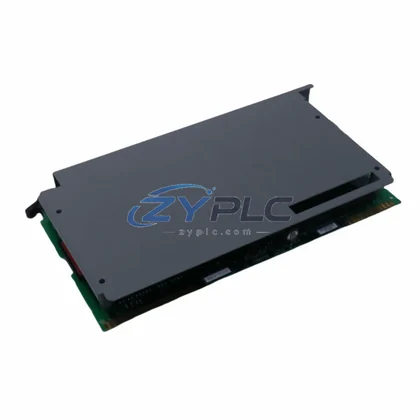
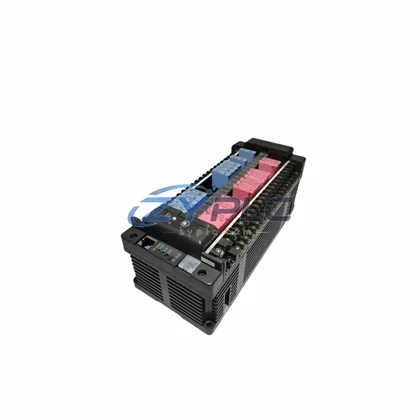
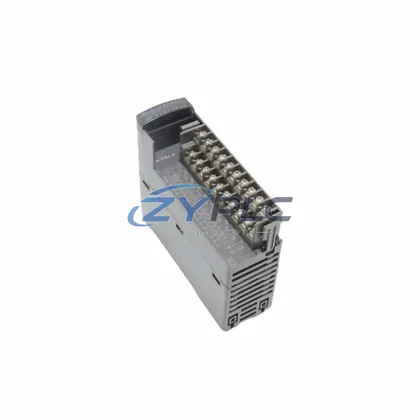
The Siemens 39VIMCCN is a high-accuracy Voltage Input Module (VIM) purpose-built for the Siemens Apogee building automation and industrial control platform. As a critical node in the industrial data link, the 39VIMCCN captures analog voltage signals from field-level sensors, transmitters, and process instruments, converting them into structured digital data that flows seamlessly across BACnet/IP, BACnet MS/TP, Modbus RTU, and Modbus TCP communication networks. In smart factory and intelligent facility environments where real-time data visibility drives operational efficiency, the 39VIMCCN delivers the signal acquisition reliability and protocol compatibility that modern automation architectures demand.
Deployed across HVAC control loops, energy monitoring systems, process automation lines, and multi-zone building management networks, the 39VIMCCN ensures that every voltage signal — from differential pressure transmitters, duct temperature sensors, CO₂ concentration probes, flow meters, and variable frequency drive feedback outputs — is accurately digitized and made available to upstream SCADA platforms, HMI terminals, and building management systems without data loss or protocol barriers. Its native integration with the Siemens Apogee P1 Bus and compatibility with third-party communication gateways make it a versatile, future-proof choice for both greenfield installations and legacy system upgrades.
Compatibility & Integration Notes
| Parameter |
Specification |
| SKU / Part Number |
39VIMCCN |
| Brand / Manufacturer |
Siemens |
| Series / Platform |
Apogee Field Panel / MBC |
| Module Type |
Voltage Input Module (VIM) |
| Communication Protocols |
BACnet/IP, BACnet MS/TP, Modbus RTU, Modbus TCP |
| Interface Type |
Analog Voltage Input (0–10 VDC / 0–5 VDC) |
| Network Compatibility |
Apogee MBC, P1 Bus, BACnet Network, Modbus Network |
| System Application |
HVAC, Building Automation, Process Monitoring, Energy Management, Smart Factory |
| SCADA / HMI Integration |
Siemens Desigo CC, third-party SCADA/HMI via BACnet/IP or Modbus TCP Gateway |
| Protocol Gateway Support |
Compatible with BACnet-to-Modbus and OPC-UA gateways |
| Origin |
Germany |
| Warranty |
Warranty and support terms confirmed before quote — Functional Verification Included |
| Logistics |
Global DHL / FedEx, B2B Procurement Ready, Full Tracking |
Connected Automation Data Flow
The Siemens 39VIMCCN operates at the signal acquisition layer of a fully connected industrial automation architecture. In a typical smart factory or intelligent building deployment, field-level sensors — differential pressure transmitters, duct temperature probes, CO₂ sensors, and flow measurement devices — output analog voltage signals (0–10 VDC or 0–5 VDC) that are wired directly into the 39VIMCCN’s input channels. The module digitizes these signals with high accuracy and passes structured process data upstream via the Siemens Apogee P1 Bus to the Apogee Modular Building Controller (MBC), which executes local control logic and manages zone-level automation sequences.
From the MBC, real-time process data is transmitted over a BACnet/IP Ethernet backbone to the facility’s central Siemens Desigo CC building management and SCADA platform, where operators gain unified visibility into all monitored parameters — temperature, pressure, flow, and operating load — from a single HMI dashboard. In parallel, the same data stream can be bridged to third-party SCADA systems and HMI terminals via Modbus TCP protocol gateways, eliminating protocol barriers in multi-vendor automation environments.
Within the Apogee ecosystem, the 39VIMCCN frequently operates alongside the Siemens 549-206 Universal Input/Output Module for mixed signal acquisition, and Apogee Unitary Equipment Controllers (UEC) that manage terminal unit control at the zone level. Siemens TEC Terminal Equipment Controllers handle VAV box and fan coil unit regulation, feeding status data back through the same BACnet communication fabric. Variable frequency drives from the Siemens SINAMICS G120 series provide analog voltage feedback — motor speed reference, torque output, and current draw — that the 39VIMCCN captures and relays to the control layer for closed-loop regulation and maintenance planning.
For facilities requiring edge intelligence and cloud connectivity, the Siemens SIMATIC IOT2040 industrial edge gateway can aggregate data from multiple 39VIMCCN modules and push pre-processed datasets to cloud analytics platforms, enabling predictive maintenance workflows and remote diagnostics without on-site intervention. Siemens PAC3200 Power Meters integrated into the same network segment provide electrical parameter monitoring — voltage, current, power factor, and harmonic distortion — creating a unified view of both mechanical and electrical system performance. Siemens LOGO! 8 compact controllers extend the network to smaller sub-systems and utility monitoring points, while Apogee Remote I/O Modules expand the field panel’s physical reach across large facilities without additional network infrastructure investment.
Solving Data Isolation in Industrial Sites
Data isolation remains one of the most persistent and costly challenges in industrial automation and commercial building management. When field devices operate in silos — outputting raw analog signals that no supervisory system can directly interpret — production line transparency collapses, remote monitoring becomes impossible, and maintenance teams are forced into reactive, on-site troubleshooting cycles. The Siemens 39VIMCCN directly resolves this problem by providing a standardized, protocol-compliant interface between analog field signals and digital communication networks.
In facilities where legacy equipment outputs only raw voltage signals, the 39VIMCCN acts as the critical translation layer, converting analog process values into BACnet objects or Modbus registers that any compliant controller, gateway, or SCADA system can read and act upon. This eliminates the need for proprietary signal converters, reduces integration complexity across multi-vendor environments, and accelerates commissioning timelines for both new installations and system upgrades.
For production line transparency, the 39VIMCCN enables operations teams to monitor real-time process variables — flow rates, pressures, temperatures, and electrical parameters — from a centralized HMI or SCADA dashboard, without requiring physical presence on the plant floor. Remote diagnostic capabilities allow maintenance engineers to identify signal drift, sensor faults, input channel anomalies, or communication interruptions before they escalate into downtime events. Alarm thresholds configured at the field panel level trigger immediate notifications to supervisory systems, enabling rapid response and minimizing mean time to repair (MTTR).
System expansion is equally straightforward: additional 39VIMCCN modules can be added to the Apogee P1 Bus without disrupting existing network traffic or requiring controller reconfiguration, allowing facilities to scale their monitoring infrastructure incrementally as operational requirements grow. Every unit supplied by ZYPLC ships pre-tested and functionally verified, Warranty terms are confirmed during quotation.
Industrial Connectivity FAQ
Q1: What communication protocols does the Siemens 39VIMCCN support, and is it compatible with third-party SCADA and HMI systems?
The 39VIMCCN supports BACnet/IP, BACnet MS/TP, Modbus RTU, and Modbus TCP protocols natively within the Siemens Apogee platform. Third-party SCADA and HMI systems that support BACnet or Modbus can integrate with the module via compatible protocol gateways or Apogee field panels, making it suitable for multi-vendor industrial automation environments without proprietary middleware.
Q2: What is the typical communication latency for real-time data acquisition with the 39VIMCCN?
Within the Apogee P1 Bus architecture, scan cycles are typically configured between 1 and 10 seconds depending on the field panel’s polling interval and network load. For time-critical monitoring applications, BACnet COV (Change of Value) subscriptions can be configured to push data updates immediately upon signal change, reducing effective latency to sub-second response times and ensuring that SCADA alarm systems receive prompt notification of process deviations.
Q3: How does the 39VIMCCN maintain network stability in electrically noisy industrial environments?
The module is engineered to operate within the Siemens Apogee shielded P1 Bus topology, which provides inherent noise immunity for installations in electrically demanding environments — including motor control centers, VFD panels, high-current distribution boards, and industrial switchgear rooms. Proper cable shielding, grounding practices, and segment length management are recommended to maintain signal integrity across extended network runs. The module’s robust input circuitry also provides protection against common-mode voltage interference from adjacent power conductors.
Q4: What pre-shipment testing and warranty coverage does the 39VIMCCN include?
Every Siemens 39VIMCCN supplied by ZYPLC undergoes pre-shipment functional verification to confirm input channel accuracy, communication interface integrity, P1 Bus identification, and module configuration. Units are Warranty terms are confirmed during quotation. Global logistics via DHL and FedEx ensure reliable, fully tracked delivery for B2B procurement orders worldwide, with RFQ-based availability supporting urgent project timelines.