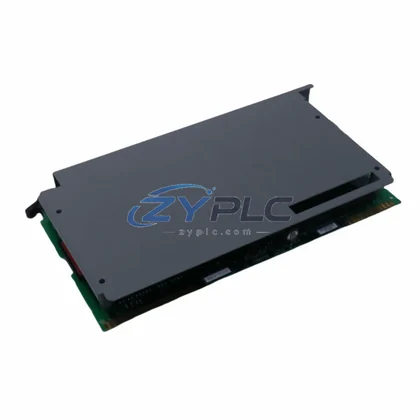
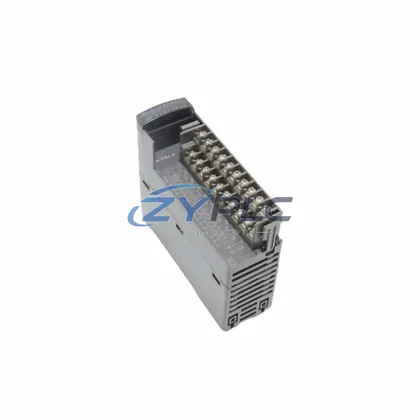
The Siemens 6DP1120-8BA, designated APF120, is a precision analog input module engineered for seamless integration within the Teleperm M distributed control system (DCS) architecture. Rather than functioning as a standalone component, this module is designed to operate as a critical node within a layered automation hierarchy — connecting field-level instrumentation to the central processing and supervisory layers with high signal fidelity and deterministic response. Its role in the control architecture spans the I/O layer, signal conditioning layer, and communication backbone, making it an indispensable element for engineers designing or maintaining Teleperm M-based process control systems.
In a complete Teleperm M control architecture, the 6DP1120-8BA occupies the analog input tier, receiving 4–20 mA or voltage signals from field transmitters — including pressure, temperature, flow, and level sensors — and converting them into digital values that the central processing units can act upon. This signal path is foundational to closed-loop control, alarm management, and process optimization across all automation layers. The module’s high-resolution analog-to-digital conversion ensures that even subtle process variations are captured accurately, supporting the tight control tolerances demanded in industries such as petrochemical refining, power generation, and water treatment.
Product Specification Table
| Parameter |
Specification |
| Model / SKU |
6DP1120-8BA (APF120) |
| System Role |
Analog Input Module — I/O Layer |
| Compatible Platform |
Siemens Teleperm M DCS |
| Input Channels |
8 analog input channels |
| Signal Type |
4–20 mA / 0–10 V (configurable) |
| Resolution |
12-bit analog-to-digital conversion |
| Isolation |
Galvanic isolation per channel group |
| Communication |
Teleperm M internal bus (SINEC H1 compatible architecture) |
| Power Supply |
24 V DC via backplane bus |
| Operating Temperature |
0°C to +60°C |
| Mounting |
Teleperm M standard rack / subrack |
| Dimensions |
Standard Teleperm M module form factor |
| Origin |
Germany (DE) |
| Warranty |
Warranty and support terms confirmed before quote (ZYPLC) |
System Compatibility Notes
The 6DP1120-8BA achieves its full potential when deployed within a coordinated Teleperm M system architecture. At the processing layer, the Siemens 6DP1210-8BA (APU120) central processing unit receives digitized analog values from the APF120 and executes the configured control algorithms — PID loops, ratio control, cascade strategies — in real time. The CPU’s deterministic scan cycle ensures that analog inputs are processed within defined time windows, a requirement for tight process control in continuous manufacturing environments.
Power integrity across the rack is maintained by the Siemens 6DP1614-8BA power supply module, which provides regulated 24 V DC to all modules on the subrack, including the 6DP1120-8BA. Redundant power configurations using dual 6DP1614-8BA units are common in high-availability installations, ensuring that a single power supply failure does not interrupt analog signal acquisition. This redundancy design is particularly critical in power plant and petrochemical applications where process uptime is non-negotiable.
On the output side, the Siemens 6DP1230-8BA (APF230) analog output module works in tandem with the APF120 to close control loops — translating CPU-generated setpoints into 4–20 mA signals that drive control valves, variable frequency drives, and other final control elements. The pairing of APF120 (input) and APF230 (output) within the same subrack minimizes signal latency and simplifies loop commissioning.
For digital I/O integration, the Siemens 6DP1310-8BA (APF310) digital input module and 6DP1320-8BA (APF320) digital output module complement the analog layer, handling discrete signals from limit switches, solenoid valves, and motor starters. In a mixed-signal process environment, the coexistence of APF120, APF310, and APF320 modules on the same Teleperm M rack provides a unified I/O platform that simplifies wiring, reduces cabinet footprint, and streamlines maintenance.
Communication between the Teleperm M system and supervisory SCADA or DCS operator stations is facilitated by the Siemens 6DS1703-8BA communication gateway, which bridges the Teleperm M internal bus to SINEC H1 Ethernet or PROFIBUS networks. This gateway enables the analog values acquired by the 6DP1120-8BA to be transmitted to historian servers, operator workstations, and advanced process control (APC) platforms without protocol conversion overhead. For installations requiring time-stamped data logging, the 6DS1731-8BA data acquisition module provides high-resolution timestamping of analog events, supporting regulatory compliance and post-incident analysis.
At the human-machine interface layer, Siemens Teleperm M OS (Operator Station) software displays real-time analog trends, alarm states, and historical data sourced directly from the APF120 module’s acquisition cycle. Engineers can configure display ranges, alarm thresholds, and engineering unit conversions at the OS level, with changes propagating back through the communication layer to the CPU and I/O modules without requiring hardware reconfiguration.
Backplane connectivity is provided by the Siemens 6DP1660-8BA subrack assembly, which accommodates up to 16 Teleperm M modules in a standard 19-inch rack format. The subrack’s passive backplane distributes power and internal bus signals to all installed modules, including the 6DP1120-8BA, ensuring consistent electrical performance across the full module complement. For large-scale systems requiring more than 16 I/O modules, multiple subracks can be interconnected using Teleperm M bus extension cables, scaling the architecture to hundreds of analog and digital channels without architectural redesign.
Industrial Application Notes
The 6DP1120-8BA is deployed across a broad spectrum of industrial automation environments where reliable analog signal acquisition is foundational to process safety and efficiency. In power generation facilities — including coal-fired, gas turbine, and hydroelectric plants — the module monitors critical parameters such as steam pressure, turbine bearing temperature, generator output voltage, and cooling water flow. Its galvanic isolation protects the control system from ground loops and electrical noise inherent in high-voltage generation environments.
In petrochemical and refinery applications, the APF120 acquires signals from pressure transmitters on distillation columns, temperature sensors in heat exchangers, and flow meters on feed and product lines. The module’s multi-channel architecture allows a single subrack to monitor an entire process unit, reducing the number of marshalling cabinets and field junction boxes required. This consolidation directly reduces installation costs and simplifies long-term maintenance.
For water and wastewater treatment plants, the 6DP1120-8BA monitors influent flow, pH, dissolved oxygen, turbidity, and chemical dosing rates. Its compatibility with standard 4–20 mA transmitters means it can interface with virtually any field instrument brand, preserving the plant operator’s freedom to select best-in-class sensors without being constrained by proprietary signal formats.
In mining and metallurgical operations, the module is used to monitor conveyor belt load cells, crusher motor currents, flotation cell levels, and smelter temperature profiles. The harsh electrical environment of mining facilities — characterized by high-power motor drives, variable frequency drives, and long cable runs — demands the robust isolation and noise immunity that the APF120 provides. Its proven reliability in these environments has made it a preferred choice for Teleperm M system expansions and retrofits in legacy mining control infrastructure.
Packaging and discrete manufacturing lines use the 6DP1120-8BA to monitor servo drive feedback signals, tension control inputs, and web tension measurements in continuous process lines. Its fast scan rate ensures that transient process events are captured within the CPU’s control cycle, enabling rapid corrective action before product quality is affected.
Product Compatibility FAQ
Q1: Is the 6DP1120-8BA compatible with all Teleperm M subrack configurations, and can it be mixed with digital I/O modules on the same rack?
Yes. The 6DP1120-8BA is fully compatible with the standard Teleperm M subrack (6DP1660-8BA) and can be installed in any module slot alongside digital input modules (6DP1310-8BA), digital output modules (6DP1320-8BA), analog output modules (6DP1230-8BA), and CPU modules (6DP1210-8BA). The Teleperm M backplane architecture uses a passive bus that does not impose slot-specific restrictions on module type, giving system engineers full flexibility in rack layout and I/O channel allocation. Mixed-module racks are the standard configuration in most Teleperm M installations.
Q2: How does the 6DP1120-8BA support system redundancy, and what happens if the module fails during operation?
In high-availability Teleperm M architectures, analog input redundancy is typically implemented at the subrack level by installing duplicate subracks with mirrored I/O configurations. If the primary 6DP1120-8BA fails, the redundant subrack’s APF120 continues to supply analog values to the standby CPU (6DP1210-8BA), which assumes control without process interruption. The Teleperm M OS generates a fault alarm identifying the failed module’s slot address, enabling maintenance personnel to perform a hot-swap replacement during the next scheduled maintenance window. ZYPLC’s Warranty and support terms confirmed before quote covers the replacement module, ensuring that spare inventory costs are minimized during the warranty period.
Q3: What commissioning steps are required when installing a replacement 6DP1120-8BA, and how long does the process typically take?
Replacing a 6DP1120-8BA in an existing Teleperm M system is a straightforward process that typically requires 30–60 minutes per module. After powering down the affected subrack (or performing a hot-swap if the architecture supports it), the replacement module is inserted into the correct slot and the subrack power is restored. The Teleperm M CPU automatically recognizes the new module via the backplane bus and loads the pre-configured channel parameters — including input range, engineering units, alarm limits, and filter time constants — from the CPU’s non-volatile memory. No manual re-parameterization is required if the replacement module is the same hardware revision. ZYPLC supplies all 6DP1120-8BA units with a Warranty and support terms confirmed before quote and provides pre-shipment functional testing to confirm that the module meets Siemens factory specifications before dispatch.