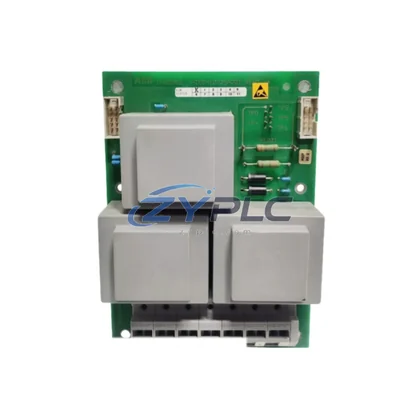
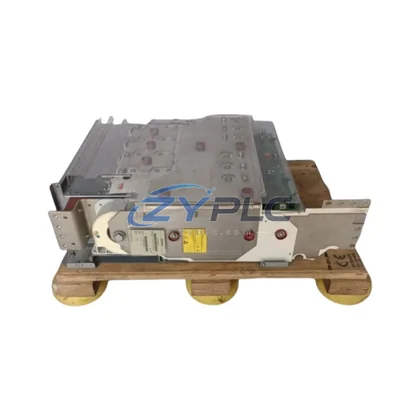
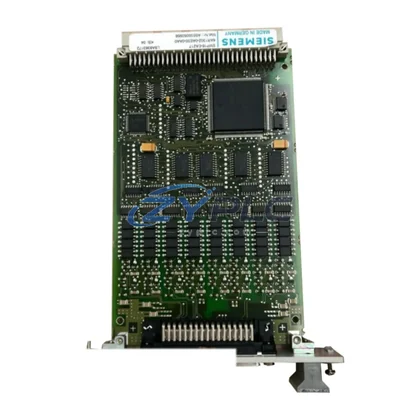
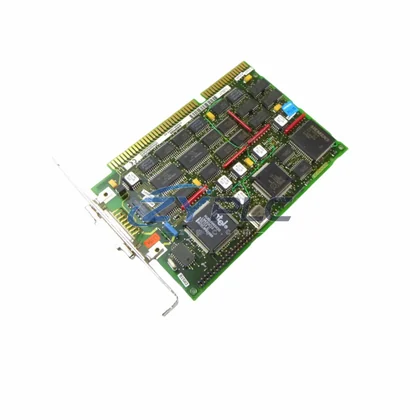
Siemens 6DS1212-8AB Industrial Network Interface for Teleperm M Systems: Bridging the Industrial Data Link
In modern smart factory environments, seamless data flow between field devices, distributed control systems, and supervisory platforms is not optional — it is the backbone of operational efficiency. The Siemens 6DS1212-8AB SINEC H1 Bus Interface Module is engineered precisely for this mission: connecting Teleperm M DCS architectures to industrial Ethernet networks with deterministic, low-latency communication that supports real-time monitoring, remote diagnostics, and full SCADA integration.
The 6DS1212-8AB serves as the critical gateway between the Teleperm M process control environment and the plant-wide SINEC H1 industrial Ethernet backbone. By translating proprietary Teleperm M bus signals into standardized SINEC H1 Ethernet frames, this module eliminates data silos that have historically isolated legacy DCS islands from modern MES and SCADA layers. Whether you are integrating analog signal chains from field transmitters, coordinating with remote I/O racks, or feeding live process values into a WinCC supervisory system, the 6DS1212-8AB provides the reliable communication bridge that keeps your production data moving.
Compatibility & Integration Notes
| Parameter |
Specification |
| SKU / Part Number |
6DS1212-8AB |
| Brand |
Siemens |
| Series |
Teleperm M |
| Communication Protocol |
SINEC H1 Industrial Ethernet |
| Interface Type |
Bus Interface Module (BIM) |
| Network Compatibility |
SINEC H1, Teleperm M DCS Bus |
| Transmission Capability |
Real-time process data, alarm signals, diagnostic frames |
| System Application |
DCS, SCADA, HMI, Remote Monitoring, Process Automation |
| Origin |
Germany |
| Product Type |
Bus Interface Module / Communication Gateway |
| Warranty |
warranty terms confirmed during quotation |
| Availability |
RFQ Available — shipment arranged after confirmation |
Connected Automation Data Flow
Understanding how the 6DS1212-8AB fits into a complete industrial automation architecture reveals its true value. At the field level, process sensors and transmitters feed analog and digital signals into Teleperm M I/O modules. These signals are aggregated by the Teleperm M central controller — often paired with companion modules such as the 6DS1211-8AB communication processor or the 6DS1210-8AB interface adapter — before being handed off to the 6DS1212-8AB for Ethernet encapsulation.
Once on the SINEC H1 network, the data stream becomes accessible to a much broader ecosystem. The Siemens CP 1613 communication processor, installed in engineering workstations or SCADA servers, receives these frames and makes process values available to WinCC SCADA and HMI applications in real time. Operators at HMI panels — including Siemens TP series touch panels — can monitor live process variables, acknowledge alarms, and issue setpoint changes without any perceptible delay.
For plants that have expanded beyond the original Teleperm M footprint, the 6DS1212-8AB also supports integration with SIMATIC S7-400 PLCs via gateway configurations, allowing modern S7 logic to read and write Teleperm M process data over the shared SINEC H1 backbone. Remote I/O expansions using ET 200M distributed I/O stations can be coordinated through this same network, extending the reach of the DCS without requiring additional dedicated cabling runs.
At the drive and actuator layer, variable frequency drives and smart valve positioners that support serial or Ethernet communication can be polled through the SINEC H1 network, with the 6DS1212-8AB acting as the upstream aggregation point. Edge gateways and industrial PCs running data historian software — such as the Siemens SIMATIC IPC427E — connect to the same SINEC H1 segment, capturing time-stamped process records for long-term trend analysis and regulatory compliance reporting.
This end-to-end data chain — from field sensor through Teleperm M bus, across the 6DS1212-8AB gateway, onto the SINEC H1 Ethernet backbone, and up to WinCC SCADA and MES platforms — represents the complete industrial connectivity solution that modern smart factories demand.
Solving Data Isolation in Industrial Sites
Many industrial facilities operating Teleperm M DCS installations face a common challenge: the process data locked inside the legacy DCS cannot easily reach modern supervisory systems, cloud analytics platforms, or enterprise ERP layers. The result is data isolation — operators must manually transcribe readings, alarm histories are incomplete, and production managers lack the real-time visibility needed for informed decision-making.
The Siemens 6DS1212-8AB directly addresses this problem. By providing a standards-based SINEC H1 Ethernet interface on the Teleperm M bus, it allows existing DCS infrastructure to participate in plant-wide network architectures without requiring a full system replacement. Protocol unification is achieved at the module level: the 6DS1212-8AB handles all necessary signal conversion and frame formatting, so upstream systems see clean, consistent Ethernet data regardless of the underlying Teleperm M bus characteristics.
Remote monitoring becomes straightforward once the 6DS1212-8AB is in place. Maintenance engineers can access live diagnostics from any networked workstation, reducing the need for on-site inspections and enabling faster fault isolation. Production line transparency improves as SCADA dashboards receive continuous updates from all connected Teleperm M nodes. System expansion is equally simplified: adding new Teleperm M stations to an existing SINEC H1 network requires only standard Ethernet infrastructure, with the 6DS1212-8AB managing the bus-to-network translation at each node.
Every unit shipped undergoes pre-delivery functional testing to verify communication integrity, protocol compliance, and interface stability. Combined with a warranty terms confirmed during quotation and availability confirmed by RFQ availability for rapid dispatch, the 6DS1212-8AB offers procurement teams both technical confidence and supply chain reliability.
Industrial Connectivity FAQ
Q1: What communication protocols does the Siemens 6DS1212-8AB support?
The 6DS1212-8AB is designed for the SINEC H1 industrial Ethernet protocol, providing the interface between the Teleperm M DCS internal bus and the SINEC H1 network. It enables deterministic data exchange compatible with Siemens SCADA, HMI, and engineering workstation platforms.
Q2: How does the 6DS1212-8AB ensure network stability in continuous process environments?
The module is built to industrial-grade specifications for 24/7 operation in process plant environments. Its hardware design prioritizes deterministic frame transmission and fault-tolerant bus arbitration, minimizing communication latency and reducing the risk of data loss during high-load network conditions.
Q3: Can the 6DS1212-8AB be integrated with modern SIMATIC S7 PLCs or WinCC SCADA systems?
Yes. Via the shared SINEC H1 Ethernet backbone, the 6DS1212-8AB enables data exchange between Teleperm M DCS nodes and SIMATIC S7-series PLCs or WinCC SCADA servers. Gateway configuration allows modern automation platforms to read and write Teleperm M process data without replacing existing DCS hardware.
Q4: What warranty and testing standards apply to the 6DS1212-8AB?
All units are covered by a warranty terms confirmed during quotation from the date of shipment. Each module undergoes pre-shipment functional testing covering communication protocol verification, interface signal integrity, and network compatibility checks, ensuring that the unit arrives ready for immediate installation and commissioning.