Siemens 6ES7 221-1BF22-0XA0 Industrial Network Interface for S7-200 Systems: Bridging Field Devices and Smart Factory Data Flows
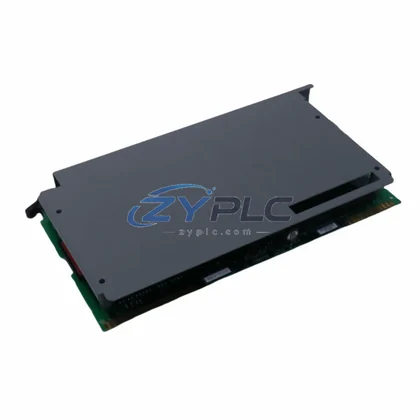
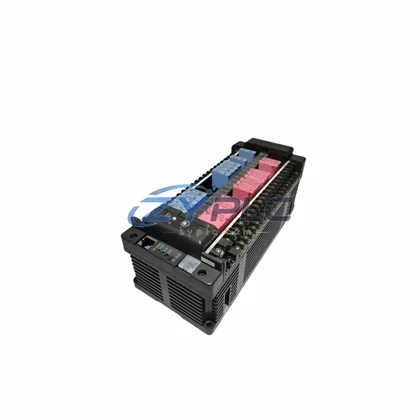
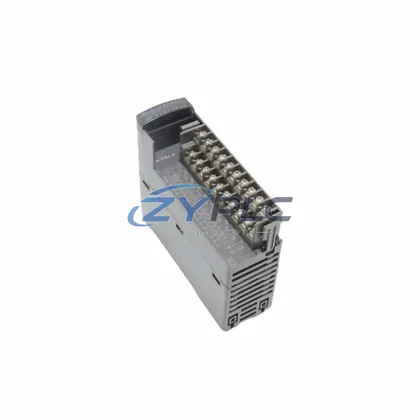
The Siemens 6ES7 221-1BF22-0XA0 is an 8-channel digital input expansion module (EM 221) designed for the SIMATIC S7-200 series of compact PLCs. Operating at 24 VDC, this module extends the I/O capacity of the S7-200 CPU — including the CPU 224, CPU 226, and CPU 222 — enabling seamless signal acquisition from field-level sensors, proximity switches, push buttons, and discrete output devices across industrial production lines. In smart factory environments where real-time data integrity is non-negotiable, the 6ES7 221-1BF22-0XA0 serves as a critical node in the digital signal chain, converting physical process states into structured data that flows upward through the automation hierarchy.
At the heart of modern industrial connectivity lies the ability to reliably capture discrete signals at the field level and transmit them without latency to the control layer. The 6ES7 221-1BF22-0XA0 achieves this through its direct integration with the S7-200 CPU backplane, where it communicates via the internal S7-200 expansion bus. This tight coupling ensures deterministic scan-cycle performance, allowing the host CPU to process all 8 digital inputs within each PLC scan cycle — a fundamental requirement for time-sensitive control logic in packaging machinery, conveyor systems, and process automation cells.
Compatibility & Integration Notes
| Parameter |
Specification |
| SKU / Part Number |
6ES7 221-1BF22-0XA0 |
| Module Type |
Digital Input Expansion Module (EM 221) |
| Compatible Series |
SIMATIC S7-200 (CPU 221, 222, 224, 226) |
| Number of Inputs |
8 × Digital Input (DI) |
| Input Voltage |
24 VDC |
| Communication Interface |
S7-200 Internal Expansion Bus |
| Protocol Support |
PPI (Point-to-Point Interface), MPI (Multi-Point Interface) via CPU |
| Network Compatibility |
PROFIBUS-DP (via CP 243-5), Industrial Ethernet (via CP 243-1), AS-Interface |
| SCADA / HMI Integration |
Compatible with WinCC, WinCC flexible, SIMATIC HMI TP/OP panels |
| System Application |
Discrete signal acquisition, machine I/O expansion, remote monitoring |
| Isolation |
Optically isolated inputs |
| Dimensions (W×H×D) |
46 × 80 × 62 mm |
| Operating Temperature |
0 °C to +55 °C |
| Country of Origin |
Germany |
| Warranty |
Warranty and support terms confirmed before quote |
Connected Automation Data Flow
Understanding the role of the 6ES7 221-1BF22-0XA0 requires tracing the full data path from field device to enterprise system. At the lowest layer, discrete sensors — including inductive proximity sensors, photoelectric barriers, and limit switches — generate binary signals that are wired directly into the module’s 8 input channels. These signals are optically isolated, protecting the S7-200 CPU from electrical noise common in high-power industrial environments such as motor drive cabinets housing Siemens SINAMICS G120 or MM440 variable frequency drives.
Once captured, the digital states are transferred to the host CPU — typically a Siemens S7-200 CPU 224 XP or CPU 226 — via the internal expansion bus. The CPU executes the user program, processes the input data, and generates output commands that may be distributed to companion expansion modules such as the 6ES7 222-1BF22-0XA0 (EM 222 digital output module) or the 6ES7 235-0KD22-0XA0 (EM 235 analog I/O module). This modular architecture allows engineers to build scalable I/O configurations tailored to the exact requirements of each machine or process cell.
For network-level communication, the S7-200 CPU connects to higher-level systems through dedicated communication processors. The CP 243-1 Industrial Ethernet module enables the S7-200 to participate in TCP/IP-based networks, supporting S7 communication with SIMATIC S7-300 or S7-400 controllers and enabling data exchange with SCADA platforms such as Siemens WinCC or third-party systems via OPC DA/UA. Alternatively, the CP 243-5 PROFIBUS-DP module allows the S7-200 to operate as a PROFIBUS slave, integrating into larger distributed control architectures where a Siemens S7-300 CPU 315-2 DP acts as the PROFIBUS master.
At the HMI layer, operators interact with the process through Siemens SIMATIC TP177B or KTP600 touch panels connected to the S7-200 via PPI or MPI protocol. The digital input states captured by the 6ES7 221-1BF22-0XA0 — such as machine running status, door interlock signals, or emergency stop conditions — are visualized in real time on these HMI screens, enabling operators to monitor production status without accessing the physical control panel. Alarm conditions triggered by specific input combinations are logged and forwarded to the SCADA layer, where historians record event timestamps for traceability and compliance reporting.
In remote monitoring scenarios, edge gateways such as the Siemens SCALANCE XC206-2 managed industrial switch aggregate data from multiple S7-200 nodes across a factory floor and route it over Industrial Ethernet to the plant network. This architecture supports remote diagnostics, allowing maintenance engineers to interrogate PLC data, review input status, and diagnose field device faults without physical presence at the machine — a capability that significantly reduces mean time to repair (MTTR) in distributed manufacturing facilities.
Solving Data Isolation in Industrial Sites
One of the most persistent challenges in legacy and mixed-generation industrial environments is data isolation — the condition where field-level signals remain trapped within standalone PLCs, invisible to plant-wide monitoring and optimization systems. The 6ES7 221-1BF22-0XA0, when deployed as part of a structured S7-200 network architecture, directly addresses this problem by providing the I/O foundation upon which transparent, connected automation is built.
Protocol fragmentation is a common barrier to integration. Many older production lines combine devices using PPI, RS-485 Modbus, and proprietary fieldbus protocols that cannot communicate natively with modern Ethernet-based SCADA systems. By pairing the S7-200 CPU with the CP 243-1 IT communication module, engineers can bridge the PPI domain of the S7-200 to Industrial Ethernet, enabling the 6ES7 221-1BF22-0XA0’s input data to be published to OPC servers and consumed by MES or ERP platforms — effectively eliminating the data silo without replacing the existing control hardware.
Production line transparency is another key benefit. When digital input modules are correctly mapped to SCADA tag databases, every machine state — conveyor running, part detected, safety gate open — becomes a timestamped data point available for KPI dashboards, OEE calculations, and predictive maintenance algorithms. The 6ES7 221-1BF22-0XA0’s reliable, optically isolated inputs ensure signal integrity even in electrically noisy environments, providing the clean data foundation that analytics systems require.
System expansion is straightforward within the S7-200 ecosystem. Up to 7 expansion modules can be chained to a single S7-200 CPU, allowing facilities to incrementally add I/O capacity as production requirements grow — without redesigning the control architecture or migrating to a larger PLC platform. This scalability protects capital investment and reduces project risk during phased automation upgrades.
All units supplied by ZYPLC are sourced through verified industrial supply channels, subjected to pre-shipment functional testing, and covered by a warranty and support terms confirmed before quote. Stock availability is maintained to support both urgent replacement orders and planned project procurement, with global shipping to minimize lead times for international customers.
Industrial Connectivity FAQ
Q1: What communication protocols does the 6ES7 221-1BF22-0XA0 support for SCADA integration?
The module itself communicates via the S7-200 internal expansion bus. SCADA integration is achieved through the host S7-200 CPU using PPI or MPI protocol for direct HMI connections, or via the CP 243-1 Ethernet module for TCP/IP-based SCADA systems supporting S7 or OPC communication. PROFIBUS-DP connectivity is available through the CP 243-5 module.
Q2: Is the 6ES7 221-1BF22-0XA0 compatible with S7-200 SMART series CPUs?
No. The EM 221 expansion modules in the 6ES7 221-1BF22-0XA0 series are designed exclusively for the original SIMATIC S7-200 platform. The S7-200 SMART series uses a different expansion bus and requires its own dedicated expansion modules (e.g., EMDE08 digital input modules).
Q3: How does the module ensure network stability and signal integrity in high-noise environments?
The 6ES7 221-1BF22-0XA0 features optically isolated inputs that electrically decouple field wiring from the PLC backplane, preventing ground loops and transient noise from corrupting digital input states. This isolation is essential in environments with variable frequency drives, contactors, and high-current switching loads operating in close proximity to control wiring.
Q4: What warranty and testing standards apply to units supplied by ZYPLC?
All 6ES7 221-1BF22-0XA0 units supplied by ZYPLC undergo pre-shipment functional testing to verify input channel operation, isolation integrity, and expansion bus communication. Each unit is covered by a warranty and support terms confirmed before quote from the date of shipment, with technical support available for installation, configuration, and troubleshooting assistance.