Triconex 3481S2: Industrial Data Link for Smart Factory Connectivity in Tricon TMR Systems
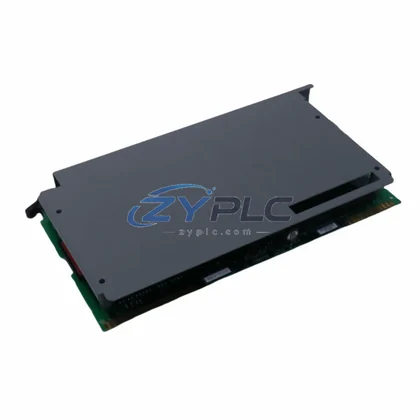
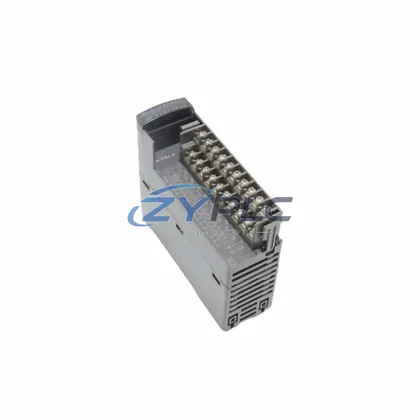
The Triconex 3481S2 is a high-reliability analog output module engineered for the Tricon Triple Modular Redundancy (TMR) safety system — one of the most trusted fault-tolerant control architectures deployed across oil & gas, petrochemical, power generation, and advanced manufacturing environments. As a critical node in the industrial data chain, the 3481S2 bridges the gap between the safety controller and field actuators, enabling precise, real-time signal delivery across the plant floor while maintaining the integrity demanded by SIL 2/3 certified safety loops.
In a modern smart factory, data does not flow in isolation. The 3481S2 sits at the intersection of field-level signal output and upper-layer supervisory control, converting digital commands from the Tricon TMR controller into calibrated 4–20 mA analog signals that drive control valves, variable frequency drives, and process actuators. Its native Modbus RTU/TCP protocol support ensures seamless integration with SCADA platforms, DCS gateways, and HMI systems — making it a foundational component in any plant-wide data transparency initiative.
Compatibility & Integration Notes
| Parameter |
Specification |
| SKU / Part Number |
3481S2 (AO 3481S2) |
| Brand / Manufacturer |
Triconex (Schneider Electric) |
| Series |
Tricon TMR (Triple Modular Redundancy) |
| Module Type |
Analog Output Module |
| Communication Protocol |
Modbus RTU / Modbus TCP |
| Interface Type |
4–20 mA Analog Output |
| Output Channels |
8 Channels (isolated) |
| Network Compatibility |
Tricon TMR Backplane, TriStation 1131, Modbus Master/Slave |
| System Application |
Safety Instrumented Systems (SIS), DCS Integration, SCADA, HMI |
| Safety Rating |
SIL 2 / SIL 3 Capable |
| Country of Origin |
United States |
| Warranty |
Warranty and support terms confirmed before quote — Tested Before Shipping |
Connected Automation Data Flow
Understanding the 3481S2 requires tracing the full data path from the control layer to the physical process. Within a Tricon TMR architecture, the Triconex 3481S2 receives validated output commands from the Tricon main chassis — typically a Triconex 3008 or 3006 Main Processor Module — after the TMR voting logic has confirmed signal integrity across all three redundant channels. This fault-tolerant handoff ensures that no single-point failure can corrupt the analog output signal sent downstream.
From the 3481S2’s output terminals, 4–20 mA signals travel to field devices including Fisher or Emerson control valves, ABB or Siemens variable frequency drives (VFDs), and precision flow control actuators. These devices respond in real time, adjusting process variables such as flow rate, pressure, and temperature based on the controller’s commands — closing the loop between digital intelligence and physical process control.
On the network side, the Modbus TCP interface of the Tricon system allows the 3481S2’s output status and diagnostic data to be polled by upstream systems. A Moxa NPort 5150 or similar industrial serial-to-Ethernet gateway may be deployed to bridge legacy Modbus RTU segments into the plant’s Ethernet backbone, feeding data into Wonderware InTouch, Ignition SCADA, or Siemens WinCC HMI platforms. Operators at the control room level gain real-time visibility into each output channel’s status, loop current value, and fault diagnostics — without interrupting the safety control loop.
For remote I/O expansion, the Tricon system may interface with Triconex TRICON Remote I/O (RIO) modules or third-party distributed I/O nodes via dedicated communication links. In larger installations, an industrial managed Ethernet switch — such as a Hirschmann RS20 or Cisco IE-2000 — provides the network backbone that connects the Tricon controller, engineering workstations running TriStation 1131 programming software, and the plant SCADA server into a unified, high-availability network segment.
Edge computing nodes, such as a Advantech UNO-2484G industrial edge gateway, can be deployed alongside the Tricon system to perform local data aggregation, protocol translation, and pre-processing before forwarding structured data to cloud-based MES or ERP platforms. This architecture supports the full IIoT data chain — from the 3481S2’s analog output signal at the field level, through the Modbus network layer, up to enterprise-level production analytics and OEE dashboards.
Solving Data Isolation in Industrial Sites
One of the most persistent challenges in legacy industrial environments is protocol fragmentation. Plants built over decades often operate a patchwork of proprietary control systems, each speaking a different communication dialect — Modbus, PROFIBUS, HART, Foundation Fieldbus, or vendor-specific protocols. The Triconex 3481S2, operating within the Tricon TMR ecosystem, addresses this by providing a stable, standards-based Modbus interface that most modern SCADA and DCS platforms can natively consume.
Data silos are broken down when the 3481S2’s output channel data — loop current, fault status, calibration state — becomes accessible to the plant’s supervisory layer in real time. Maintenance teams no longer need to walk the plant floor with handheld calibrators to verify output integrity; instead, they can monitor all 8 analog output channels remotely from the SCADA workstation, with alarm thresholds configured to trigger notifications the moment a channel drifts outside its acceptable range.
For plants pursuing production line transparency, the 3481S2 enables a continuous data stream from the safety controller to the historian server, building a time-series record of every output command and its corresponding process response. This data becomes the foundation for predictive maintenance models, process optimization algorithms, and regulatory compliance reporting — all without modifying the safety-certified control logic.
System expansion is equally straightforward. The Tricon TMR chassis supports hot-swap module replacement, meaning the 3481S2 can be replaced or added to an existing system without shutting down the safety loop. Combined with the module’s built-in self-diagnostics and the Tricon system’s continuous online testing capability, plant engineers can scale analog output capacity as process requirements grow — maintaining safety integrity throughout.
Every Triconex 3481S2 unit supplied by ZYPLC undergoes full functional testing prior to shipment, including channel-by-channel output verification, Modbus communication validation, and visual inspection. Units are shipped with a warranty and support terms confirmed before quote, backed by Availability confirmed by RFQ inventory for rapid deployment to minimize plant downtime.
Industrial Connectivity FAQ
Q1: What communication protocol does the Triconex 3481S2 support, and how does it integrate with SCADA systems?
The 3481S2 operates within the Tricon TMR system, which supports Modbus RTU and Modbus TCP as its primary communication protocols. Most industrial SCADA platforms — including Ignition, Wonderware, and Siemens WinCC — include native Modbus drivers, enabling direct integration without additional protocol converters. For legacy serial Modbus segments, a serial-to-Ethernet gateway can bridge the connection to the plant’s Ethernet-based SCADA network.
Q2: How does the Tricon TMR architecture ensure network stability and prevent communication failures?
The Tricon Triple Modular Redundancy design uses three independent processing paths that continuously vote on output values. If one path detects an anomaly, the other two maintain control without interruption. This architecture eliminates single-point failures at the controller level, ensuring that the 3481S2’s analog output signals remain stable and accurate even during partial hardware faults — a critical requirement for SIL 2/3 safety loops.
Q3: Can the Triconex 3481S2 be integrated into an existing DCS or expanded alongside other I/O modules?
Yes. The 3481S2 is designed for the Tricon TMR chassis and can coexist with other Triconex I/O modules — including digital input, digital output, and analog input modules — within the same backplane. The Tricon system supports online module addition and hot-swap replacement, allowing system expansion without process shutdown. Integration with third-party DCS platforms is achieved via Modbus gateway interfaces or OPC server bridges.
Q4: What pre-shipment testing and warranty coverage does ZYPLC provide for the Triconex 3481S2?
Every 3481S2 unit is functionally tested before shipment, including analog output channel verification across all 8 channels, Modbus communication response testing, and physical inspection for connector and board integrity. ZYPLC provides a warranty and support terms confirmed before quote covering hardware defects and functional failures. Availability and shipment timing are confirmed by RFQ, supporting urgent plant maintenance and unplanned replacement scenarios.