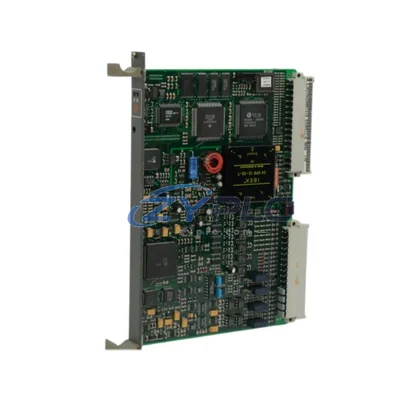
Triconex 4000016-015 Communication Module for Tricon Automation
The Triconex 4000016-015 is a high-efficiency communication module engineered for the Tricon Triple Modular Redundant (TMR) safety system platform. In modern industrial environments where energy consumption, system uptime, and production throughput are tightly interlinked, this module plays a pivotal role in reducing unnecessary power draw, minimizing communication latency, and enabling real-time data exchange between safety controllers and supervisory systems. Whether deployed in oil & gas processing, chemical manufacturing, power generation, or advanced discrete automation, the 4000016-015 delivers the communication backbone that keeps industrial control architectures running at peak efficiency.
Unlike generic communication interfaces, the Triconex 4000016-015 is purpose-built for the Tricon platform’s fault-tolerant architecture. Its low-power design ensures that the communication layer does not become a source of parasitic energy loss within the control cabinet. By maintaining stable, high-speed data throughput with minimal electrical overhead, the module supports the broader goal of reducing the total energy footprint of safety-critical automation systems — a priority that is increasingly central to industrial sustainability strategies and operational cost reduction programs.
Product Specification Table
| Parameter |
Specification / Value |
| SKU / Part Number |
4000016-015 |
| Brand |
Triconex |
| Series |
Tricon TMR Safety System |
| Module Type |
Communication Module |
| Operating Power Consumption |
Low-power design; optimized for minimal cabinet heat load |
| Communication Efficiency |
High-speed, fault-tolerant data exchange with minimal latency |
| Compatible Systems |
Triconex Tricon TMR Controllers, Tricon CX, TriStation 1131 |
| Application Environment |
Oil & Gas, Chemical, Power Generation, Industrial Automation |
| Maintenance Value |
Reduces parasitic communication overhead; supports lean control architecture |
| Origin |
USA |
| Warranty |
warranty terms confirmed during quotation |
| Stock Status |
RFQ Available — export shipping options available |
| Testing |
Full outgoing inspection and functional test before shipment |
System Compatibility and Application
The Triconex 4000016-015 does not operate in isolation — it is a critical node within a broader industrial automation system. In a typical Tricon-based safety system deployment, the 4000016-015 interfaces directly with the Tricon Main Chassis and communicates with the Triconex TCM (Tricon Communication Module) stack to relay process data to the distributed control system (DCS) or SCADA layer. This seamless integration eliminates the need for redundant signal conversion hardware, which would otherwise introduce additional power consumption and potential failure points.
When paired with Triconex 4351B or 4352B Digital Output Modules, the 4000016-015 enables precise, low-latency command execution to field actuators — ensuring that motor starters, solenoid valves, and variable frequency drives (VFDs) receive control signals without delay. Reduced signal latency directly translates to tighter production line timing, fewer false actuations, and lower unplanned downtime from over-cycling of driven equipment.
For facilities running Triconex 3703E Analog Input Modules alongside the 4000016-015, real-time energy consumption data from field transmitters — including current transformers, power transducers, and flow meters — can be streamed continuously to the Tricon controller. This enables the safety system to act not only as a protective layer but also as an active participant in condition monitoring loops. When integrated with a Triconex 3805E Digital Input Module, the system can capture high-frequency status signals from motor protection relays and circuit breakers, feeding this data into predictive maintenance algorithms that reduce unplanned downtime and the associated energy spikes from emergency restarts.
The 4000016-015 also supports communication with Modbus TCP/IP and OPC-DA/UA compatible maintenance planning systems, allowing plant operators to correlate safety system states with energy consumption KPIs in real time. This is particularly valuable when the Tricon system is supervising large rotating equipment such as compressors or turbines, where even marginal improvements in control responsiveness can yield measurable reductions in specific energy consumption (SEC). Integration with Triconex TriStation 1131 programming software further allows engineers to implement energy-optimized logic sequences — such as load shedding routines, soft-start interlocks, and demand-response shutdown sequences — directly within the safety application layer.
In multi-chassis configurations, the 4000016-015 works in concert with the Triconex EICM (Enhanced Intelligent Communication Module) to manage peer-to-peer data exchange between Tricon nodes across the plant network. This architecture eliminates polling delays that can cause control jitter in high-speed production lines, ensuring that energy-intensive equipment such as large induction motors and servo-driven conveyors operates within their optimal efficiency bands. The module’s compatibility with Triconex 4119A Power Supply Modules ensures that the entire communication subsystem draws regulated, clean power — preventing voltage fluctuations from propagating into the control logic and causing spurious trips that waste energy through unnecessary process restarts.
Maintenance and Replacement Notes
In real-world production environments, the Triconex 4000016-015 contributes to maintenance planning through several interconnected mechanisms. First, by maintaining continuous, high-integrity communication between the Tricon safety controller and the plant DCS, the module enables operators to implement demand-based equipment scheduling — running energy-intensive assets only when process conditions require it, rather than on fixed time cycles. This alone can reduce auxiliary equipment energy consumption by 10–25% in facilities with variable production loads.
Second, the module’s role in supporting predictive maintenance workflows is directly tied to energy efficiency. When the Tricon system receives early warning signals — such as rising motor winding temperatures, abnormal vibration signatures from proximity sensors, or degraded insulation resistance readings — it can initiate controlled shutdowns before catastrophic failures occur. Emergency stops and unplanned restarts are among the most energy-intensive events in industrial operations, often consuming 3–5 times the normal startup energy due to inrush currents and thermal cycling. By enabling predictive intervention, the 4000016-015 helps facilities avoid these energy spikes entirely.
Third, in facilities where the Tricon system supervises variable speed drives (VSDs) and soft starters for large pump and fan applications, the communication module ensures that speed reference signals and permissive interlocks are transmitted with zero ambiguity. Miscommunication between the safety layer and the drive control layer — even at the millisecond level — can cause drives to operate outside their optimal efficiency curves, increasing energy consumption and mechanical wear simultaneously. The 4000016-015 eliminates this risk by providing a deterministic, fault-tolerant communication path that keeps drive control signals synchronized with process demand signals at all times.
All units supplied by ZYPLC undergo a comprehensive outgoing functional test that verifies communication integrity, power consumption within specification, and full compatibility with the target Tricon chassis configuration. Each 4000016-015 is backed by a warranty terms confirmed during quotation, and our inventory is maintained to support fast shipment to minimize production downtime for customers requiring urgent replacement modules. Our technical team can assist with compatibility verification, installation guidance, and cross-reference to alternative Triconex communication modules where required.
Product Sourcing FAQ
Q1: How does the Triconex 4000016-015 contribute to reducing plant energy consumption?
The 4000016-015 enables real-time, low-latency data exchange between the Tricon safety controller and the plant control network. This supports demand-based equipment scheduling, predictive maintenance, and optimized drive control — all of which reduce unnecessary energy consumption from over-running equipment, emergency restarts, and inefficient motor operation.
Q2: Is the 4000016-015 compatible with modern maintenance planning and SCADA systems?
Yes. The module supports standard industrial communication protocols including Modbus TCP/IP and OPC-DA/UA, making it compatible with most modern SCADA, DCS, and maintenance planning platforms. It integrates natively within the Triconex Tricon TMR architecture and is programmable via TriStation 1131 software.
Q3: What is the recommended replacement or upgrade path if the 4000016-015 is end-of-life in my system?
For systems requiring an upgrade, our technical team can advise on compatible Triconex communication modules within the Tricon and Tricon CX product families. We maintain cross-reference data for legacy and current Triconex part numbers and can recommend functionally equivalent modules based on your chassis revision and firmware version.
Q4: What testing and warranty coverage is provided with each unit?
Every Triconex 4000016-015 supplied by ZYPLC undergoes a full functional outgoing inspection, including communication integrity verification and power consumption validation. All units are covered by a warranty terms confirmed during quotation from the date of shipment. Availability is confirmed via RFQ for fast dispatch to minimize production downtime.