Weidmuller UR20-4AI-RTD-DIAG Industrial Network Interface for U-Remote Systems: Precision RTD Data Acquisition Across the Smart Factory Data Link
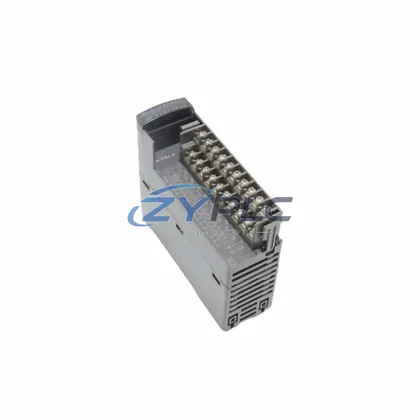
The Weidmuller UR20-4AI-RTD-DIAG is a high-precision 4-channel RTD analog input module engineered for the U-Remote distributed I/O platform. Designed to operate at the intersection of field instrumentation and industrial Ethernet networks, this module delivers accurate temperature and resistance measurement data directly into PROFINET and EtherNet/IP control architectures — making it an essential node in any smart factory data chain. Whether deployed in process automation, energy management, or condition monitoring applications, the UR20-4AI-RTD-DIAG ensures that thermal data from the plant floor reaches PLC controllers, SCADA systems, and HMI displays with minimal latency and maximum reliability.
In modern industrial environments, the ability to capture, transmit, and act on real-time sensor data is the foundation of operational intelligence. The UR20-4AI-RTD-DIAG supports PT100, PT200, PT500, PT1000, Ni100, Ni120, and a range of other RTD sensor types, enabling flexible deployment across diverse measurement scenarios. Its integrated diagnostic capability — indicated by the DIAG suffix — provides channel-level fault detection, wire-break monitoring, and overrange/underrange alerts, all of which are transmitted upstream to the controller and SCADA layer for immediate alarm response and remote diagnostics.
Compatibility & Integration Notes
| Parameter |
Specification |
| SKU / Part Number |
UR20-4AI-RTD-DIAG |
| Brand / Manufacturer |
Weidmuller |
| Series |
U-Remote Distributed I/O |
| Module Type |
4-Channel RTD Analog Input with Diagnostics |
| Supported Protocols |
PROFINET, EtherNet/IP, Modbus TCP (via U-Remote gateway) |
| RTD Sensor Types |
PT100, PT200, PT500, PT1000, Ni100, Ni120, Cu10, and more |
| Measurement Range |
-200°C to +850°C (sensor dependent) |
| Interface / Backplane |
U-Remote I/O backplane bus |
| Diagnostic Functions |
Wire break, overrange, underrange, channel fault |
| Network Compatibility |
PROFINET IO, EtherNet/IP, Industrial Ethernet |
| System Application |
PLC, SCADA, HMI, DCS, Edge Gateway integration |
| Origin |
Germany |
| Warranty |
Warranty and support terms confirmed before quote |
| Availability |
Confirmed via RFQ before quotation |
Connected Automation Data Flow
The UR20-4AI-RTD-DIAG sits at the signal acquisition layer of the industrial data chain. RTD sensors installed on motors, heat exchangers, pipelines, and process vessels feed resistance measurements into the module’s four input channels. The module digitizes these signals and places the engineering-unit values onto the U-Remote backplane bus, where the UR20-PF-O-1DI-SIL power feed module and the U-Remote coupler — such as the UR20-COU-PN-2TX-M12 PROFINET coupler — aggregate and transmit the data over Industrial Ethernet to the upstream controller.
At the PLC level, Siemens S7-1500 or Allen-Bradley ControlLogix controllers receive the RTD process values via PROFINET or EtherNet/IP cyclic data exchange. The controller executes PID loops, alarm logic, and interlocking functions based on the live temperature data. Simultaneously, the data is mirrored to a Weidmuller IE-SW-VL08MT-8TX industrial managed Ethernet switch, which distributes the process data stream to the SCADA server, historian, and HMI terminals on the plant network.
On the HMI layer, Siemens SIMATIC TP1200 Comfort or Weintek cMT series panels display real-time temperature trends, alarm states, and channel diagnostic status sourced directly from the UR20-4AI-RTD-DIAG. Operators can acknowledge wire-break faults or overrange conditions without leaving the control room. The SCADA system — whether Ignition by Inductive Automation, Wonderware AVEVA, or Siemens WinCC — logs all RTD values to the historian database, enabling trend analysis, predictive maintenance scheduling, and energy consumption reporting.
For remote monitoring and edge computing applications, an IE-GW-MBPN-2TX Modbus-to-PROFINET gateway or a Weidmuller u-link industrial router can bridge the U-Remote network segment to cloud-based IoT platforms or MES systems. Variable frequency drives — such as the Danfoss FC302 or Siemens SINAMICS G120 — connected on the same PROFINET ring can receive temperature setpoints derived from the UR20-4AI-RTD-DIAG measurements, enabling closed-loop thermal management of motor-driven processes. Remote I/O expansion using additional U-Remote modules, including the UR20-4AO-UI-16 analog output module or the UR20-16DI-P digital input module, extends the data acquisition network without requiring additional fieldbus infrastructure.
Solving Data Isolation in Industrial Sites
One of the most persistent challenges in industrial automation is the fragmentation of sensor data across incompatible protocols and isolated network segments. Legacy RTD transmitters connected via 4–20 mA loops or proprietary fieldbus systems often cannot communicate directly with modern PROFINET or EtherNet/IP controllers, creating data silos that prevent real-time visibility and remote diagnostics.
The UR20-4AI-RTD-DIAG resolves this by integrating directly into the U-Remote I/O platform, which supports multiple industrial Ethernet protocols through a single coupler module. This means that RTD data from PT100 sensors on a legacy process line can be made available on a PROFINET network without replacing existing sensor wiring — only the I/O module and coupler need to be added. The result is immediate protocol unification: temperature values that were previously trapped in standalone transmitters are now visible to the PLC, SCADA, HMI, and MES simultaneously.
The integrated DIAG functionality addresses the remote monitoring challenge by providing proactive fault detection at the channel level. Rather than waiting for a process upset to reveal a failed sensor or broken wire, the UR20-4AI-RTD-DIAG continuously monitors each input channel and reports diagnostic status to the controller. Maintenance teams receive alarm notifications through the SCADA system before a fault escalates to a production stoppage, enabling condition-based maintenance and reducing unplanned downtime.
For production line transparency, the module’s high-resolution measurement data feeds directly into OEE (Overall Equipment Effectiveness) dashboards and energy management systems. Plant managers gain visibility into thermal performance across the entire production line — from raw material processing to finished goods packaging — without deploying additional measurement infrastructure. System expansion is equally straightforward: additional UR20-4AI-RTD-DIAG modules can be added to the U-Remote station at any time, and the coupler automatically recognizes the new module and maps its data to the controller’s I/O table without requiring network reconfiguration.
Industrial Connectivity FAQ
Q1: What communication protocols does the UR20-4AI-RTD-DIAG support, and is it compatible with existing PROFINET networks?
The UR20-4AI-RTD-DIAG is a backplane module that communicates via the U-Remote internal bus. Protocol support — including PROFINET IO, EtherNet/IP, and Modbus TCP — is determined by the U-Remote coupler module installed at the head of the station. The UR20-COU-PN-2TX-M12 coupler provides PROFINET IO Device functionality, making the UR20-4AI-RTD-DIAG fully compatible with any PROFINET-capable PLC or controller. Switching to EtherNet/IP requires only a coupler swap, with no changes to the I/O module wiring.
Q2: How does the DIAG function reduce communication latency and improve network stability in real-time monitoring applications?
The diagnostic functions in the UR20-4AI-RTD-DIAG operate independently of the cyclic data exchange, meaning fault detection does not add latency to the process data transmission. Channel diagnostics are reported via PROFINET alarm mechanisms, which are handled asynchronously by the controller. This architecture ensures that real-time temperature data continues to flow at the configured update rate — typically 1–10 ms cycle times on PROFINET — while diagnostic alarms are processed in parallel without disrupting the control loop.
Q3: Can the UR20-4AI-RTD-DIAG be integrated into an existing SCADA or HMI system without replacing the entire I/O infrastructure?
Yes. Because the U-Remote platform presents all I/O data through a standard PROFINET or EtherNet/IP interface, the UR20-4AI-RTD-DIAG can be added to any existing control system that supports these protocols. SCADA platforms such as Ignition, WinCC, and AVEVA System Platform can access the RTD data through standard OPC-UA or direct driver connections to the PLC. No custom drivers or middleware are required, and the module’s GSD/EDS files are available for immediate import into the engineering tool.
Q4: What does the warranty and support terms confirmed before quote cover, and how is pre-shipment testing conducted?
Every UR20-4AI-RTD-DIAG unit supplied by ZYPLC is Warranty terms are confirmed during quotation. Prior to shipment, each module undergoes functional verification testing to confirm channel accuracy, diagnostic response, and backplane communication integrity. Units are shipped in original or equivalent protective packaging with full documentation. For RFQ, lead time confirmation, or technical support, contact ZYPLC at +86 19859288691 or plc.sales@zyplc.com.