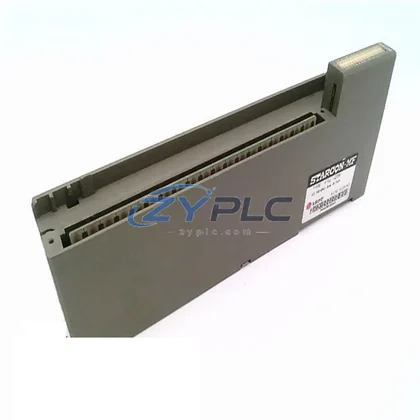
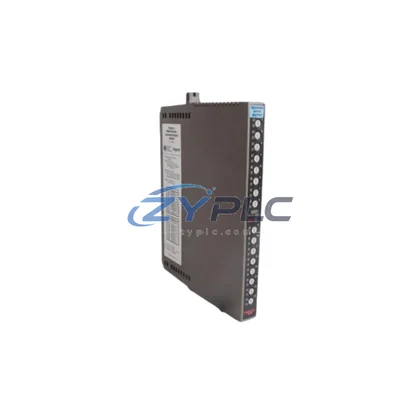
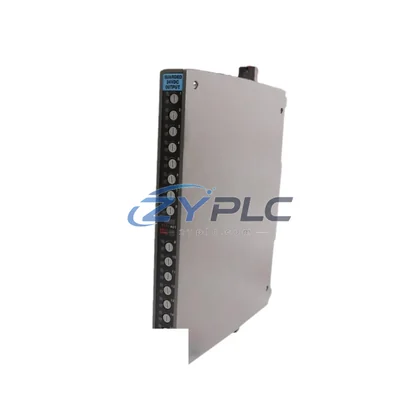
Woodward 5466-253 Timer Relay for MicroNet Automation
The Woodward 5466-253 is a precision-engineered Timer Relay Module designed for the MicroNet distributed control platform, purpose-built to help industrial facilities reduce unnecessary energy consumption, tighten production cycle timing, and extend the operational lifespan of connected drive and motor systems. In energy-intensive manufacturing environments — from turbine control rooms to compressor stations and process automation lines — uncontrolled relay switching and poorly sequenced start/stop cycles are among the leading causes of excess power draw and premature equipment wear. The 5466-253 addresses these challenges directly through deterministic timing logic, low-power standby operation, and seamless integration with Woodward’s broader MicroNet control ecosystem.
Product Specification Table
| Parameter |
Specification |
| SKU / Part Number |
5466-253 |
| Brand / Series |
Woodward / MicroNet |
| Product Category |
Timer Relay Module |
| Operating Voltage |
24 VDC (typical MicroNet I/O bus) |
| Power Consumption |
Low-standby design; energized only during active timing cycles |
| Timing Accuracy |
High-precision, configurable via MicroNet software toolset |
| Running Efficiency |
Eliminates redundant relay chatter; reduces switching losses |
| Compatible Systems |
Woodward MicroNet, MicroNet Plus, MicroNet TMR platforms |
| Application Environment |
Turbine control, compressor automation, power generation, process industries |
| Value |
Optimizes motor start/stop sequencing; reduces idle-state power draw |
| Origin |
USA |
| Warranty |
Warranty and support terms confirmed before quote — tested and verified before shipment |
System Compatibility and Application
Within a fully integrated MicroNet control architecture, the Woodward 5466-253 Timer Relay Module functions as a critical sequencing node that governs when and how downstream equipment is energized. Rather than allowing motors and actuators to start simultaneously — a common source of inrush current spikes and peak demand charges — the 5466-253 enforces staggered, time-controlled activation sequences that smooth power consumption curves across the production line.
In a typical turbine or compressor control cabinet, the 5466-253 works alongside the Woodward MicroNet Plus Controller as the central processing unit, receiving setpoint commands and translating them into precisely timed relay outputs. The Woodward 5466-258 Digital Input Module feeds real-time field signals — limit switch states, pressure confirmations, and permissive interlocks — into the control loop, ensuring the timer relay only activates when system conditions are verified safe and maintenance-focused. Paired with the Woodward 5466-260 Analog Output Module, the system can simultaneously modulate variable-speed drives and proportional control valves in synchrony with the timer’s switching events.
For drive-level maintenance planning, the 5466-253 integrates naturally with Woodward EasyGen generator controllers and third-party variable frequency drives (VFDs) via hardwired relay contacts, enabling soft-start sequencing that reduces mechanical stress and lowers energy demand during motor acceleration phases. On the communications side, the MicroNet platform supports Modbus RTU and Modbus TCP/IP protocols, allowing the 5466-253’s timing states to be monitored and adjusted remotely through a SCADA HMI or distributed control system (DCS) without interrupting live production. The Woodward 5466-556 Power Supply Module provides stable, conditioned 24 VDC to the relay module and adjacent I/O cards, protecting timing accuracy from upstream voltage fluctuations that could otherwise introduce false triggers or missed switching events.
For facilities running parallel condition monitoring, the 5466-253’s relay outputs can be wired to power quality meters and energy data loggers to capture per-cycle consumption data, enabling engineering teams to correlate timer events with actual kWh usage and identify further optimization opportunities. This data-driven approach transforms the timer relay from a simple switching device into a measurable contributor to the plant’s overall energy key performance indicators (KPIs).
Maintenance and Replacement Notes
On a gas turbine control skid, uncoordinated auxiliary equipment start-up — lube oil pumps, cooling fans, fuel valve actuators — can generate demand spikes that inflate utility bills and stress the facility’s electrical infrastructure. By deploying the Woodward 5466-253 to sequence these auxiliary loads with configurable inter-stage delays, plant engineers have reported measurable reductions in peak demand charges and a smoother ramp-up profile that extends bearing and seal life across rotating equipment.
In compressor station automation, the 5466-253 governs the timing between compressor motor start commands and downstream valve open confirmations. This prevents the motor from running against a closed discharge valve — a scenario that wastes energy, generates heat, and accelerates wear on both the motor windings and the valve actuator. The result is a tighter production cycle, lower idle-state energy consumption, and a reduced maintenance interval for high-wear components.
For power generation facilities managing multiple generator sets, the timer relay module coordinates load transfer sequences, ensuring that generators are brought online in a controlled, staggered fashion rather than simultaneously. This approach reduces fuel consumption during synchronization events and minimizes the risk of frequency excursions that can trip sensitive downstream equipment. Combined with predictive maintenance data collected via the MicroNet platform’s diagnostic registers, maintenance teams can schedule relay module inspections based on actual switching cycle counts rather than fixed calendar intervals — further reducing unnecessary downtime and parts consumption.
Every Woodward 5466-253 unit supplied by ZYPLC undergoes full functional testing prior to shipment, verifying timing accuracy, contact integrity, and communication handshake with the MicroNet controller. Units are held in climate-controlled inventory to preserve component integrity, and all orders are Warranty terms are confirmed during quotation.
Product Sourcing FAQ
Q1: How does the Woodward 5466-253 contribute to measurable operational stability on a production line?
The 5466-253 enforces precise, configurable time delays between equipment start commands, eliminating simultaneous motor starts that cause inrush current spikes and peak demand charges. By staggering load activation, facilities can reduce peak kW demand, lower utility demand charges, and extend motor and drive service life — all of which translate directly into lower operating costs.
Q2: Is the 5466-253 compatible with existing MicroNet and MicroNet Plus control systems?
Yes. The Woodward 5466-253 is designed as a native MicroNet I/O module and is compatible with MicroNet, MicroNet Plus, and MicroNet TMR platforms. It integrates directly into the MicroNet backplane and is configurable through the standard Woodward MicroNet software toolset without requiring additional hardware adapters or protocol converters.
Q3: What is the recommended replacement or upgrade path if the 5466-253 is end-of-life on our system?
For systems where the 5466-253 is being replaced due to age or failure, ZYPLC recommends verifying the MicroNet platform firmware version and I/O slot assignment before installing a replacement unit. In cases where the MicroNet platform itself is being upgraded, Woodward’s current-generation digital I/O and timer function blocks within newer controller firmware may provide equivalent functionality. Contact ZYPLC’s technical team for a compatibility assessment.
Q4: What testing and warranty coverage does ZYPLC provide for the Woodward 5466-253?
Every 5466-253 unit shipped by ZYPLC is tested for timing function, relay contact continuity, and MicroNet communication response prior to dispatch. Warranty terms are confirmed during quotation. In the event of a warranty claim, ZYPLC provides advance replacement support to minimize production downtime, subject to fault verification.