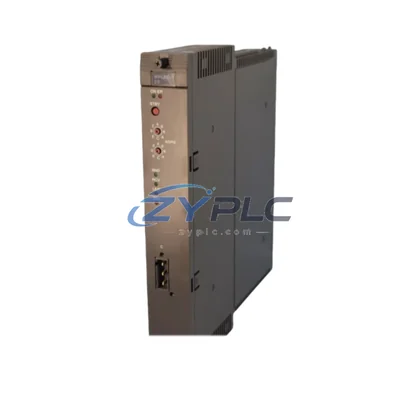
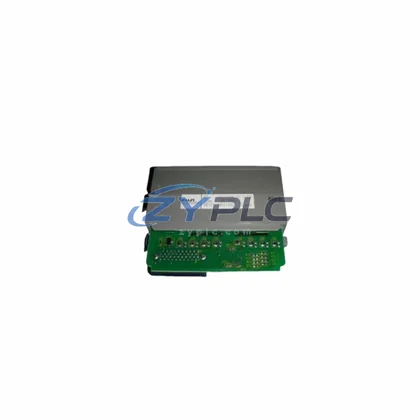
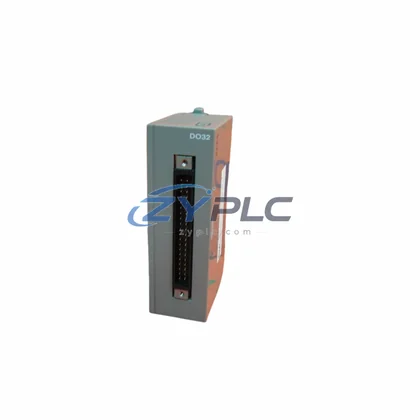
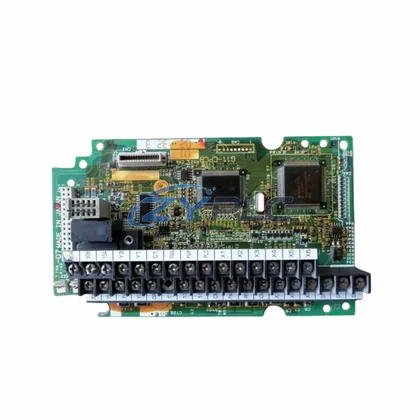
Yaskawa JZRCR-YPP01-1 Industrial Network Interface: Powering Smart Factory Data Links in DX100/DX200 Systems
The Yaskawa JZRCR-YPP01-1 is a high-performance robot controller communication board engineered for the Motoman DX100 and DX200 robot controller platforms. As a critical industrial network interface, this board serves as the backbone of real-time data exchange between robotic end-effectors, PLC control layers, remote I/O modules, HMI terminals, SCADA supervisory systems, and upper-level MES/ERP platforms. In modern smart factory environments where data latency, protocol compatibility, and network stability directly impact production throughput, the JZRCR-YPP01-1 delivers the communication reliability that industrial automation demands.
From signal acquisition at the servo drive level through to protocol conversion and upstream data transmission, this board ensures that every motion command, alarm event, and diagnostic packet travels across the automation network with precision and speed. Whether your facility runs DeviceNet, PROFIBUS-DP, EtherNet/IP, or Yaskawa’s proprietary MECHATROLINK-III motion bus, the JZRCR-YPP01-1 is designed to integrate seamlessly within multi-protocol industrial architectures.
Compatibility & Integration Notes
| Parameter |
Specification |
| SKU / Part Number |
JZRCR-YPP01-1 / JZRCR-YPP21-1 / SRDA-SDB95A01A-E |
| Compatible Platform |
Yaskawa Motoman DX100, DX200 Robot Controllers |
| Protocol Support |
DeviceNet, PROFIBUS-DP, EtherNet/IP, MECHATROLINK-III, CC-Link |
| Interface Type |
PCB Communication Board (Internal Controller Slot) |
| Transmission Capability |
Real-time cyclic and acyclic data exchange; high-speed servo feedback loop |
| Network Compatibility |
Compatible with Siemens PROFINET gateways, Rockwell EtherNet/IP scanners, Mitsubishi CC-Link masters |
| System Application |
Robotic welding cells, palletizing lines, assembly automation, SCADA-integrated robot cells |
| Power Supply |
DC 24V (internal controller bus) |
| Origin |
Japan |
| Warranty |
Warranty and support terms confirmed before quote — Tested before shipment, full functional verification |
Connected Automation Data Flow
In a typical DX100 or DX200 robot cell, the JZRCR-YPP01-1 sits at the heart of the communication architecture, bridging the gap between the robot’s internal servo control bus and the plant-wide industrial network. At the field device level, Yaskawa SGDV series servo drives and SGMJV servo motors generate continuous position, torque, and velocity feedback data. This data is captured by the JZRCR-YPP01-1 board and formatted for upstream transmission via MECHATROLINK-III or EtherNet/IP, depending on the network topology of the facility.
On the PLC side, controllers such as the Yaskawa MP3300 Machine Controller or third-party Siemens S7-1500 PLCs act as network masters, polling the robot controller for real-time status data. The JZRCR-YPP01-1 responds to these cyclic polling requests with sub-millisecond latency, ensuring that the PLC’s ladder logic can react to robot state changes — such as job completion signals, error codes, or I/O handshake flags — without introducing control loop delays.
Remote I/O expansion modules, including Yaskawa SI-EP3 EtherNet/IP option cards installed in peripheral servo drives, extend the network reach of the DX100/DX200 system to distributed field devices located across the production floor. Conveyor encoders, vision system triggers, and pneumatic valve banks all feed their signals back through the network to the robot controller, with the JZRCR-YPP01-1 managing the protocol translation and data buffering required for reliable multi-device communication.
At the HMI layer, Yaskawa DX200 Pendant (YRC1000 compatible HMI terminals) and third-party WEINTEK or Proface HMI panels connect to the robot controller via Ethernet, displaying live robot status, alarm histories, and production counters sourced directly from the JZRCR-YPP01-1’s communication registers. SCADA platforms such as Ignition by Inductive Automation or Wonderware System Platform subscribe to OPC-UA or EtherNet/IP data tags exposed by the robot controller, enabling plant-wide visibility of robot cell performance metrics, cycle times, and fault events.
For facilities integrating variable frequency drives (VFDs) into robot-coordinated conveyor systems, Yaskawa A1000 and V1000 series drives communicate their speed references and fault status back to the DX100/DX200 controller via DeviceNet or PROFIBUS-DP, with the JZRCR-YPP01-1 acting as the protocol gateway that normalizes these signals into the robot’s internal data map. Edge gateway devices, such as the Moxa MGate MB3480 Modbus gateway, can further extend legacy Modbus RTU devices into the EtherNet/IP network managed by the JZRCR-YPP01-1, ensuring that older sensors and actuators remain integrated within the smart factory data flow without requiring hardware replacement.
Solving Data Isolation in Industrial Sites
One of the most persistent challenges in industrial automation is the fragmentation of communication protocols across different generations of equipment. A facility running Yaskawa DX100 robot controllers alongside Siemens PROFINET PLCs, Mitsubishi CC-Link remote I/O, and legacy Modbus RTU sensors faces a data isolation problem: each subsystem speaks a different protocol, and without a capable network interface board, data cannot flow freely between them.
The JZRCR-YPP01-1 directly addresses this challenge by providing multi-protocol support within the DX100/DX200 controller platform. By installing this communication board, system integrators can configure the robot controller to participate in EtherNet/IP, PROFIBUS-DP, or DeviceNet networks simultaneously — or sequentially, depending on the network architecture — eliminating the need for external protocol converters that introduce additional latency and failure points.
Remote monitoring and diagnostics are equally critical in modern smart factory deployments. With the JZRCR-YPP01-1 enabling real-time data exposure to SCADA and MES systems, maintenance engineers can monitor robot cell health from a central control room or even remotely via VPN-connected SCADA clients. Alarm events generated by the DX100/DX200 controller — including servo fault codes, communication timeout errors, and I/O mismatch alarms — are transmitted upstream in real time, allowing rapid fault diagnosis without requiring a technician to physically access the robot controller cabinet.
Production line transparency is another key benefit. By integrating the JZRCR-YPP01-1 into a SCADA-connected robot cell, plant managers gain access to live OEE (Overall Equipment Effectiveness) data, cycle time trends, and predictive maintenance indicators derived from servo load data and communication error rates. This level of visibility supports data-driven decision-making and enables proactive maintenance scheduling that reduces unplanned downtime.
System scalability is also simplified. As production lines expand and new robot cells are added, the JZRCR-YPP01-1’s standard industrial network interfaces allow new DX100/DX200 controllers to be integrated into the existing network infrastructure without requiring changes to the SCADA or PLC configuration — only new device nodes need to be added to the network master’s device table.
Industrial Connectivity FAQ
Q1: What communication protocols does the JZRCR-YPP01-1 support, and is it compatible with third-party PLC networks?
The JZRCR-YPP01-1 supports multiple industrial protocols including DeviceNet, PROFIBUS-DP, EtherNet/IP, and MECHATROLINK-III, depending on the specific variant installed. It is compatible with third-party PLC networks from Siemens, Rockwell Automation, Mitsubishi Electric, and others, provided the network master supports the corresponding protocol. Protocol compatibility should be verified against the specific DX100 or DX200 controller firmware version in use.
Q2: How does the JZRCR-YPP01-1 ensure network stability in high-cycle robot applications?
The board is designed for continuous industrial operation with deterministic communication timing. In EtherNet/IP and MECHATROLINK-III modes, cyclic data exchange is synchronized to the robot controller’s motion control cycle, ensuring that network communication does not introduce jitter into servo control loops. The board also supports watchdog timeout detection, which triggers a controlled robot stop if network communication is interrupted, preventing unsafe robot motion in the event of a network fault.
Q3: Can the JZRCR-YPP01-1 be used to connect the DX100/DX200 to a SCADA or MES system for remote monitoring?
Yes. When configured for EtherNet/IP or PROFIBUS-DP communication, the JZRCR-YPP01-1 exposes robot controller data — including job status, alarm codes, I/O states, and servo feedback values — as network data objects that can be read by SCADA platforms, OPC-UA servers, or MES data collection agents. This enables real-time remote monitoring, alarm notification, and production data logging without requiring direct access to the robot controller cabinet.
Q4: What does the warranty and support terms confirmed before quote cover, and is pre-shipment testing performed?
Every JZRCR-YPP01-1 unit supplied by ZYPLC is subject to functional verification testing prior to shipment, including communication interface checks and power-on diagnostics. The warranty and support terms confirmed before quote covers manufacturing defects and functional failures under normal operating conditions. Units are shipped via DHL or FedEx with full tracking, and our technical team provides post-sale support for installation and network configuration queries.